Things to do in Stavanger
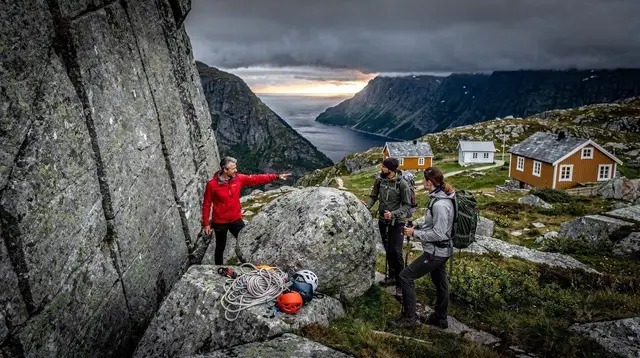
From the 8 km hike out to Preikestolen's cliff-edge plateau to a Lysefjord cruise beneath 1,000 m rock walls and the sandy beaches of Jæren, Stavanger packs an unusual range of landscape into a small corner of south-west Norway.
Signature experiences
The categories that define a first trip to Stavanger — the hike to Preikestolen, a Lysefjord cruise, Kjeragbolten, RIB safaris and hiking trails, and Stavanger's own old town.

Preikestolen hikes
Preikestolen is a flat plateau at 604 m above the Lysefjord, with no railing at the cliff edge. The standard trail is about 8 km round trip, 4-5 hours, and roughly 350 m of elevation gain from the Preikestolen fjellstue trailhead, reached from Stavanger by a ferry-and-bus combination or a direct seasonal bus. Parking at the trailhead is paid; the plateau and trail themselves are free. With visitor numbers in the order of 300,000 a year, this is one of Norway's most-hiked trails — expect a crowded path and plateau in summer.
9 guides
Lysefjord cruises
Boat trips from Stavanger's Vågen harbour run the length of the Lysefjord, around 42 km with rock walls exceeding 1,000 m in places, passing beneath Preikestolen and Kjeragbolten without the climb. It's the region's second most-booked tour category after the Preikestolen hike, typically run as sightseeing catamarans lasting a few hours round trip. Some routes continue on to Flørli, where a disused 4,444-step wooden staircase — the longest of its kind — climbs from the shore.
6 guides
Kjeragbolten hikes
Kjeragbolten is a different undertaking from Preikestolen: about 10-12 km round trip, 6-8 hours, with three steep sections secured by chains and a real fall risk documented in past accidents — never a casual add-on to a fjord cruise. The trailhead sits at Øygardstølen, at the end of the Lysebotn road's hairpin climb from the fjord floor, and that road closes with the winter snow, cutting off access for a large part of the year. Sturdy boots, an early start and settled weather all matter more here than on the region's other hikes.
4 guides
RIB safaris
High-speed rigid inflatable boat trips out of Stavanger cover the Lysefjord and the skerries around the city faster than a sightseeing cruise, often adding a stop at Flørli or a close pass beneath Preikestolen from the water. Life jackets and weatherproof suits are standard issue, since even a short trip means spray and speed on open fjord water. Trips run in the one-to-three-hour range, shorter and more physical than a standard sightseeing cruise on the same water.
4 guides
Hiking trails
Beyond Preikestolen and Kjeragbolten, Rogaland's hiking runs from short forest walks near Stavanger to the Ryfylke high country around Frafjord and Sirdal. Dalsnuten, above Sandnes, is a popular short climb with a view back over the city and fjords, workable as a morning outing. Trail difficulty and marking vary a lot outside the two headline hikes, so checking a route's grading before setting out matters more here than at Preikestolen.
5 guides
City walking tours
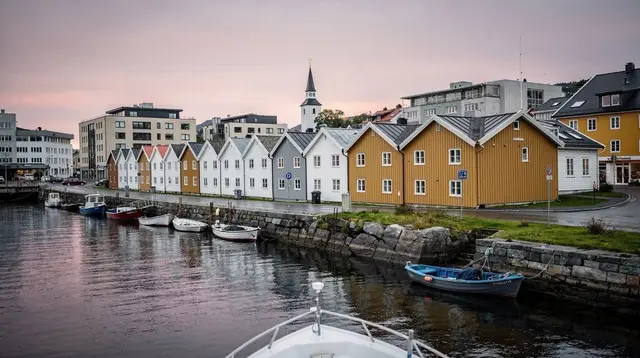
Guided walks through Gamle Stavanger's roughly 170 preserved 18th- and 19th-century wooden houses, the colourful shopfronts of Øvre Holmegate, and the harbour at Vågen cover the compact old town on cobbled streets, easily managed as a half-day loop. Stavanger Cathedral, consecrated around 1125 and the only medieval Norwegian cathedral still standing without a major rebuild, sits on most routes. Self-guided and small-group formats both run, since the city centre is small enough to see most of it on foot.
3 guidesMore ways to experience the region
Specialist interests and practical planning — kayaking, waterfalls, Viking history, the Jæren beaches, and the comparisons every first-time visitor searches for.

Day trips
Preikestolen, the Lysefjord and Kjeragbolten anchor most day trips from Stavanger, alongside the Jæren beaches, the Ryfylke waterfalls around Frafjord and Månafossen, and the Viking sites around Haugesund and Karmøy. Distances stay short by Norwegian standards, with most of these destinations reachable within an hour or two, but a Kjeragbolten day needs a very early start given the hike's 6-8 hour length. Most visitors pick one main destination per day rather than combining two of the longer hikes.
5 guides
Kayaking & paddling
Guided kayak trips launch from Stavanger's harbour and from points along the Lysefjord, a calmer way to see the fjord's walls and waterline caves than a powered boat allows. Half-day trips are the standard format, with no experience required on the sheltered stretches close to the city. Conditions on the open fjord change quickly with wind, so guided rather than independent paddling is the norm for visitors.
2 guides
Waterfalls
Månafossen, at around 92 m the tallest waterfall in Rogaland, drops near Frafjord and is reached by a moderate hiking trail through farmland and forest. It's the region's best-known waterfall hike outside the Lysefjord corridor, a half-day outing rather than the full-day commitment of Preikestolen or Kjeragbolten. Flow is heaviest during spring snowmelt and after autumn rain, thinner in a dry summer stretch.
2 guides
Sightseeing bus tours
Coach tours cover Stavanger's compact centre and, on longer routes, run out to Sandnes or along the Jæren coast without needing a hire car. They suit visitors short on time or unwilling to drive Rogaland's narrower rural roads, trading flexibility for a fixed route and schedule. Coverage is thinner than in a larger Norwegian city, since Stavanger's centre is walkable enough that many visitors skip a bus tour altogether.
2 guides
Climbing & adventure parks
Skogsprett, near Sandnes, is the region's main treetop climbing and zip-line park, with courses graded for both children and adults among the trees. It's a rain-or-shine alternative for a day when the Lysefjord hikes aren't appealing, and a rare regional adventure-sport option that doesn't depend on a fjord or a cliff. Bookings run seasonally, closing over the coldest winter months.
1 guide
Viking history
Avaldsnes, on Karmøy, was a Viking-age royal seat with a reconstructed longhouse at the Nordvegen Viking farm, while Stavanger's Viking House uses VR to recreate the Battle of Hafrsfjord. That battle, traditionally dated to 872 CE, is marked in the city itself by Sverd i Fjell — three bronze swords roughly 10 m tall, planted point-down at Hafrsfjord in 1983. Together the sites cover the unification of Norway under Harald Fairhair, a founding story with real archaeology behind part of it.
2 guides
Food & drink
Stavanger's harbour restaurants lean on North Sea seafood, from the fish market at Vågen to dining rooms overlooking the water. Norway's prices run high across the board, and food is no exception — a sit-down dinner costs noticeably more here than in most of continental Europe. Card payment is near-universal, so carrying cash for meals is rarely necessary.
2 guides
Museums & galleries
The Norwegian Petroleum Museum, opened in 1999 on Stavanger's harbour in a building shaped to evoke an offshore platform, covers the industry that transformed the city after the Ekofisk field's discovery in 1969. Viking House covers the region's earlier history, and Stavanger's street-art scene, built up since the Nuart festival started in 2001, doubles as an open-air gallery around the centre. Most of the city's museums are small enough to combine two or three in a single day.
2 guides
Escape games & city quests
A handful of escape rooms and self-guided city-quest apps operate in central Stavanger, aimed at groups looking for an indoor activity on a rainy afternoon — no shortage of those, given the city's rainfall. They're a minor category next to the region's outdoor draws, and best treated as a fallback rather than a trip centrepiece.
1 guide
Fishing trips
Sea-fishing charters run out of Stavanger's harbour and smaller Ryfylke and Jæren ports, targeting cod, mackerel and other North Sea species on half-day and full-day trips. Gear is normally supplied, and no license is required for the recreational sea angling these trips offer. Trips depend on weather and sea state more than season, though summer and early autumn see the most departures.
1 guide
Cycling
The flat farmland and coast road of Jæren, south of Sandnes, is the region's best cycling terrain, a contrast to the steep fjord-side roads elsewhere in Rogaland. Rental bikes are available in Stavanger and Sandnes for shorter rides along the harbour and out toward Sola. Longer coastal routes toward Orre and Borestranden beaches suit a full day out of the saddle rather than a quick loop.
1 guide
Winter activities
Rogaland's winter is mild and wet rather than snowy at sea level — Stavanger's January average sits around 1-2°C — so Preikestolen and Kjeragbolten see far fewer visitors, and the Lysebotn road to Kjerag closes entirely with snow. Sirdal, inland toward the Setesdal mountains, is the region's nearest option for snow-based activities when conditions allow. Anyone hiking to Preikestolen outside roughly May to September should expect ice and snow underfoot and plan for winter equipment.
2 guides
Multi-day tours
Multi-day itineraries typically pair Stavanger and the Lysefjord with Bergen or the Setesdal valley, using the region as a one- or two-night base rather than a full week. They suit visitors combining Rogaland with a wider Norway trip rather than those focused on Stavanger alone. Fixed-departure group tours are less common here than around Bergen or the western fjords further north.
1 guide
Sailing
Stavanger's sheltered skerries and the wider fjord system around Ryfylke give sailing a natural home, with charter and crewed options departing from the city's marinas. It's a slower, quieter alternative to a powered fjord cruise or RIB safari, and depends more on wind and weather for how far a trip actually reaches. Summer, with its longer daylight and calmer average conditions, is the main season for sailing charters here.
1 guide
Jæren beaches
Jæren's long sandy beaches — Orre, Borestranden and Solastranden among them — are a genuine exception in a country whose coastline is otherwise dominated by fjords and rock. The coast pairs beaches with lighthouses at Kvassheim and Obrestad and flat farmland inland around Bryne, all reachable from Stavanger or Sandnes in well under an hour. Swimming is a summer activity only — the North Sea here stays cold even in July.
2 guides
Combo tours
Packages pairing a Lysefjord cruise with a Preikestolen hike, or a RIB safari with a stop in Stavanger's old town, are the region's most-booked format, saving a separate transfer for each leg. Full-day combos built around Kjeragbolten are less common, since the hike alone already fills most of a day. These packages suit visitors with limited time who want two headline experiences without arranging transport twice.
1 guide
Getting there & around
Sola airport (SVG) sits about 14 km from central Stavanger, with Kolumbus running the local bus network, including routes and ferries out into Ryfylke. Reaching Preikestolen or Lysefjord boat departures from Stavanger typically means a ferry-and-bus combination or a seasonal direct bus, while Kjeragbolten requires a hire car or organised transport out to Lysebotn. A hire car gives the most flexibility for Jæren, Ryfylke and the Dalane coast, all of which sit outside the reach of a quick city bus.
2 guides
Street art
Stavanger's street-art scene has grown since the Nuart festival began in 2001, leaving large-scale murals scattered through the city centre alongside more established sights. Self-guided routes and guided walking tours both cover the main pieces, most within easy walking distance of Vågen harbour. New work appears most visibly around each year's Nuart festival dates.
1 guide
Sauna & wellness
Floating and harbourside saunas have become a fixture of Stavanger's waterfront in recent years, often booked by the hour for small groups with a cold plunge into the fjord alongside. It's a low-key, weather-independent activity that works in any season, unlike most of the region's outdoor categories. Bookings concentrate on evenings and weekends, so reserving ahead matters more than for most activities on this list.
1 guide
Helicopter flights
Scenic helicopter flights out of Stavanger cover the Lysefjord, Preikestolen and Kjeragbolten from above in well under an hour, the fastest way to see all three landmarks in a single outing. It's a premium-priced alternative to hiking or a boat cruise, aimed at visitors short on time or unable to manage the trails on foot. Flights depend on clear weather, so scheduling flexibility matters when booking one.
1 guide
Lighthouses & coast
Kvassheim and Obrestad lighthouses mark the Jæren coastline south of Stavanger, both open to visitors and paired with the surrounding beaches and dune landscape. Further south, Jøssingfjord and the Magma Geopark add a rockier, more exposed stretch of coast with a different geological story than the sandy beaches to the north. These sites suit a slower coastal drive rather than a single-stop excursion.
1 guide
Family activities
Skogsprett's graded treetop courses, the beaches of Jæren, and Stavanger's flatter harbourfront walks all suit families better than the region's headline hikes. Preikestolen is walkable with older, fit children given the 8 km round trip, but Kjeragbolten's chained sections and exposure rule it out for young kids. Indoor options like the Norwegian Petroleum Museum and Viking House give a rained-out day a fallback.
2 guides
Season by season
Stavanger sits at nearly 59°N, too far south for reliably visible northern lights and too far south for a midnight-sun summer — neither phenomenon is a realistic draw here. Summers run cool, around 16-17°C in July, and winters mild for the latitude, around 1-2°C in January, with rain a near-constant across the year rather than a single wet season. May to September is the practical window for Preikestolen and Kjeragbolten; outside it, expect snow, ice and the Lysebotn road closed.
3 guides
Trip planning
Norway is outside the EU and the eurozone, so prices run in Norwegian kroner (NOK), not euros — and Norway is a genuinely expensive country for food, tours and hire cars, worth budgeting for rather than assuming Nordic prices are close to Western European ones. Card payment is near-universal, and carrying cash is rarely necessary anywhere in the region. Booking a Lysefjord boat, a Preikestolen shuttle or Kjerag transport ahead matters most in the short summer high season.
3 guides
Comparisons
Preikestolen versus Kjeragbolten is the region's most-searched comparison: an 8 km, 4-5 hour trail with no technical difficulty against a longer, chain-secured route with real exposure and a seasonal road closure. A Lysefjord boat cruise versus hiking to one of the cliffs is the other common choice, trading the climb for a lower-effort view from the water. Both comparisons come down to time, fitness and how much exposure a visitor is comfortable with.
2 guidesBrowse by destination
Tours and activities organised by where you're headed — the best of each city and region.
Good to know about things to do in Stavanger
This hub arranges Stavanger-area activities into more than a dozen categories, because a fjord city, a mountain plateau and a sandy coastline don't fit under one label. Fjord cruises & RIB boats cover the Lysefjord itself, around 42 km long with walls over 1,000 m in places. Hiking splits by destination: Preikestolen, an 8 km round trip to a 604 m plateau with no safety railing, and Kjeragbolten, a longer, harder route past three chained sections to a boulder at around 984 m — never a beginner outing. Other hikes cover Dalsnuten near Sandnes and Himakånå above Haugesund. The Flørli staircase is its own category: 4,444 wooden steps, the longest such staircase in the world.
Waterfalls centres on Månafossen, at 92 m the tallest in Rogaland. Beaches covers the Jæren coast — Orre, Borestranden, Kvassheim — an outlier in a country better known for fjords. City walking & Gamle Stavanger covers the roughly 170 preserved wooden houses of the old town, while street art follows the Nuart festival, running since 2001. Museums groups the Norwegian Petroleum Museum and Viking House; Viking heritage covers Sverd i Fjell at Hafrsfjord and Avaldsnes on Karmøy. Islands & gardens, family activities, day trips, transport, seasons and planning round out the rest, since whether the Lysebotn road is open changes what's actually possible on a given day.
Frequently asked questions about things to do in Stavanger
What are the main categories on this hub?
Fjord cruises, hiking (split between Preikestolen and Kjeragbolten), other hikes, the Flørli staircase, waterfalls, beaches, city walking, street art, museums, Viking heritage, islands & gardens, family activities, day trips, transport and seasons.
Is Kjeragbolten suitable for beginners?
No. It's a long, exposed hike with three chained sections and a real fall risk — fatal falls have occurred there — and should never be treated as an easy walk.
What is the Flørli staircase?
A disused wooden staircase of 4,444 steps built for a hydropower station on the Lysefjord, described as the longest wooden staircase in the world.
Is Preikestolen free to visit?
Yes — the plateau and trail are free; only the parking at the Preikestolen fjellstue trailhead is paid, and there is no railing at the cliff edge.
What's the best way to see the Lysefjord itself?
By boat or RIB cruise from Stavanger, or from above at Preikestolen or Kjeragbolten. The Lysebotn road also runs along part of it but closes in winter.
tours.boat-tours
Verified deep-linked GetYourGuide tours. Book through these links and we earn a small commission at no cost to you.
GetYourGuide does not provide a product photo for this activity — the image shows the meeting point, photographed by us.