What the Lysefjord actually is
Most people arrive in Stavanger already picturing one thing: a flat rock high above blue water, a crowd of people sitting near the edge, taking the same photograph everyone else takes. That rock is Preikestolen, and it is genuinely worth the trip.
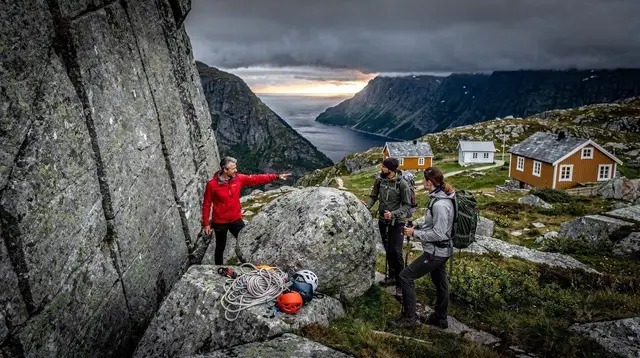
But it is a viewpoint, not the fjord itself, and treating it as the whole story means missing what the Lysefjord actually is: roughly 42 km of water carved between rock walls that in places rise more than 1,000 m straight up, with the fjord floor dropping to around 400 m below the surface at its deepest. Seen from above, at Preikestolen or Kjeragbolten, you get one fixed frame of it. Seen from the water, you get the whole corridor, wall after wall, for an hour or more.
This page is about the fjord as a body of water and as a place you travel through, not about the two famous hikes above it. If you’re planning the walk out to Preikestolen’s plateau, that trail, its timing and its crowds have their own page. If Kjeragbolten and its chained sections are what you’re weighing, that’s covered separately too. Here, the question is simpler: how do you actually get onto or alongside the Lysefjord, and what do you see when you do.
The pitfall: a cruise is not a substitute for a hike, and vice versa
The single most common confusion about the Lysefjord is treating a boat cruise and a mountain hike as interchangeable ways to “do” the same thing. They aren’t, and the site’s own guide on whether the view from the fjord is enough exists because so many people ask this exact question before they arrive.
A cruise takes you along the water, looking up at the cliffs, including the underside of the Preikestolen plateau and the general area below Kjerag. You will not stand on either rock. You need no fitness, no hiking boots, and no several hours of trail time — you need a ticket and roughly two to three hours of your day. A hike to Preikestolen or Kjeragbolten does the opposite: it puts you on top, looking down at the water, after several hours of real trail effort, in the case of Kjeragbolten with genuinely serious, chain-assisted sections and a well-documented history of fatal falls. Neither replaces the other. Many visitors do both, on different days, because the two experiences don’t overlap as much as the postcards suggest.
If your time or your knees only allow for one, that’s a reasonable decision to think through in advance rather than discover on the trailhead. A cruise is the accessible option; a hike above the fjord is a separate commitment with its own gear, weather and time requirements.
Seeing the Lysefjord from the water
This is the most straightforward way to experience the fjord, and it’s also the most flexible, since boats leave from more than one town.
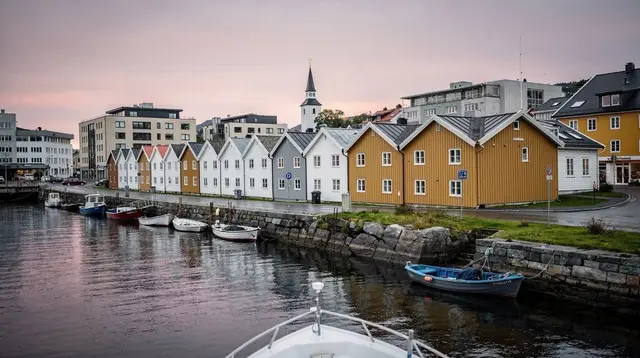
From Stavanger. Several operators run cruises directly from the city harbour, sailing out past Vågen and into the fjord system before turning into the Lysefjord itself. These are usually the longest sailings, since Stavanger sits furthest from the fjord’s inner sections, and they suit anyone based in the city without a rental car. The dedicated guide to cruising from Stavanger breaks down departure points and rough timings in more detail than fits here.
From Forsand. Forsand sits much closer to the fjord’s mouth, which shortens the sailing time and puts more of the trip inside the dramatic, narrow stretch of water rather than in open approach. A short guided cruise from here works well as a standalone half-day, and it’s also the standard drop-off and pick-up point for people combining a boat trip with the Preikestolen trail on the same day.
From Sandnes. Sandnes offers another departure option, generally positioned between the Stavanger and Forsand routes in both distance and price. If you’re staying on that side of the conurbation, it’s worth checking the Sandnes departure guide before defaulting to a Stavanger-based tour.
For a straightforward, classic sightseeing sail:
a Lysefjord boat trip from Forsand that sails beneath the Preikestolen cliffs covers the core stretch of water without requiring a hike at all.
RIB safaris: the faster, wetter version
If a standard cruise feels too sedate, a RIB (rigid inflatable boat) tour covers similar ground at higher speed, with an open boat, wind, and spray rather than a covered deck. These trips are shorter, louder, and noticeably more physical — you’ll want to know what to actually expect and what to wear before booking one, since standard city clothing gets soaked fast. They also tend to depart from more than one point around Stavanger and Sandnes, so it’s worth checking departure options rather than assuming you’ll leave from wherever you’re staying.
For this faster option:
a Lysefjord RIB tour departing from Sandnes is built around speed and the open-air feel rather than a slow, narrated cruise.
There’s also a version that departs from Sandnes and combines the water approach with views up toward Pulpit Rock:
a Lysefjord and Pulpit Rock boat tour from Sandnes is a middle option between a full RIB safari and a slower sightseeing cruise.
If you’re trying to decide between the two boat formats generally, the comparison guide on cruise versus RIB safari is written specifically to settle that choice rather than sell you on one over the other.
Combining a cruise with the Preikestolen hike
A large share of visitors don’t choose between the boat and the trail — they do a version of both, usually a cruise that ends near the Preikestolen trailhead, or a package that bundles the boat crossing with the guided hike itself.
a combined Lysefjord cruise and guided Preikestolen hike departing from Stavanger packages both halves of the day — the water and the climb — into one booking rather than two separate ones.
In winter, when the standard unguided ascent becomes considerably less predictable, a guided version that pairs the fjord cruise with a supervised winter hike is worth knowing about:
a winter cruise-and-guided-hike combination to Preikestolen exists specifically for the months when going up alone is a worse idea.
If you’re weighing whether to add the hike at all after a cruise, the guide on how long the Preikestolen hike actually takes and the one on seeing it from the water instead cover that decision from both directions.
The Lysebotn road: seeing the fjord’s far end by land
There’s a third way to experience the Lysefjord that doesn’t involve a boat or a trail at all: driving the road down to Lysebotn, the small settlement at the fjord’s innermost point. The descent is a genuine mountain road, with tight hairpin turns cut into the cliffside, dropping you down to water level after starting from high mountain terrain near Kjeragbolten’s trailhead at Øygardstølen.
This road is seasonal. It closes with the first serious snow and doesn’t reopen until conditions allow, which typically means it’s only usable through the warmer months — check the Lysebotn road opening and closing dates before building a trip around it, especially if you’re visiting in spring or autumn near the margins of the season. When it’s open, driving down (or up) is one of the more memorable land routes in Rogaland, and it puts you at the fjord’s edge from a completely different angle than any boat trip covers, since Lysebotn sits at the far end from Stavanger.
A ferry also connects Lysebotn to the outer fjord for parts of the year, which means a genuinely comfortable itinerary is to drive one direction and take the water the other, seeing both the road and the fjord surface without backtracking the same route twice.
Flørli: a stop, not a destination in itself
Roughly midway along the fjord sits Flørli, a small former hydropower settlement, and most cruises either point it out from the water or stop briefly. Its wooden staircase — thousands of steps built to service the old power station — is a genuinely striking sight and has its own detailed page for anyone planning to actually climb it.
From a standard Lysefjord cruise, though, Flørli is usually a landmark you sail past rather than a place you disembark and explore at length, so don’t build an entire day around it unless you’ve specifically booked a tour that includes stopping there. The blog piece on Flørli’s empty steps is a useful read if you want the fuller picture of what the settlement is (and isn’t) before deciding whether to add it to your plans.
Choosing a season
The Lysefjord is sailed and driven year-round, but conditions differ enough by season to plan around. From roughly May to September, daylight is long, boat schedules run at full frequency, and the Lysebotn road is reliably open. Outside that window, fewer sailings run, some operators pause entirely, and the mountain road above Lysebotn typically closes, cutting off that access route until the following spring. If a cruise is the centrepiece of your trip, the guide on the best season for a Lysefjord cruise goes into the month-by-month detail; the short version is that summer gives you every option, while shoulder seasons and winter narrow the choices to boat cruises only, weather permitting.
Rogaland’s coastal climate means rain is a normal part of any season here, not a sign of bad luck — pack for it regardless of when you go, since cruises generally run rain or shine and only cancel for genuinely rough conditions.
Sailing and kayaking: the slower alternatives
For visitors who want more time on the water rather than a fixed two-hour tour, sailing trips on the Lysefjord offer a quieter, wind-powered alternative to the motorised cruises and RIB boats covered above — see the dedicated sailing the Lysefjord guide for how that differs in pace and cost. Kayaking is a further step down in speed and up in physical involvement, putting you at water level rather than on a deck; the Lysefjord kayaking guide covers routes and what experience level is realistically needed.
Where the Lysefjord fits into a longer Rogaland trip
If the fjord is the centrepiece of a multi-day visit rather than a single afternoon, it’s worth planning it as its own block of time rather than squeezing it between other stops. The three-day Lysefjord-by-water itinerary is built around exactly that approach — cruise, road, and one of the elevated viewpoints spread across separate days instead of rushed into one.
For a broader loop that also takes in waterfalls and the Ryfylke region further inland, the Ryfylke and Månafossen day trip connects naturally onward from a Lysefjord cruise, since both areas share the same fjord system and much of the same access road network. The construction that changed how easily this whole area connects back to Stavanger is itself worth a read — the Ryfylketunnelen story explains why the drive to Forsand and the trailheads got dramatically shorter after 2019.
For general planning around the fjord as a category rather than one specific tour, the fjord cruises listing groups the main operators and formats side by side.
| Option | Physical effort | Typical length | Season |
|---|---|---|---|
| Standard cruise (Stavanger, Sandnes or Forsand) | Low | 2-3 hours | Best May-September, some winter sailings |
| RIB safari | Moderate (wind, spray, cold) | 1.5-2.5 hours | Best May-September |
| Cruise + guided Preikestolen hike | High (includes the hike) | Full day | May-September mainly, winter version guided |
| Lysebotn road (self-drive) | Low (driving only) | Half day, one-way plus return | Seasonal — closes in winter |
| Sailing or kayaking | Low to moderate | Half day to full day | May-September |
Lysefjord: frequently asked questions
Is the Lysefjord the same thing as Preikestolen?
No. The Lysefjord is the roughly 42 km body of water; Preikestolen is one specific viewpoint, a 604 m plateau, on the cliffs above it. You can see the fjord without ever hiking to Preikestolen, and you can hike to Preikestolen without ever taking a boat on the fjord — they’re two different ways of experiencing the same landscape.
Do I need to hike to see the Lysefjord?
No. A boat cruise or RIB tour from Stavanger, Sandnes or Forsand covers the fjord itself and needs no hiking fitness or gear. Hiking to Preikestolen or Kjeragbolten adds an elevated viewpoint looking down at the water, but it’s a separate, more demanding activity, not a requirement for seeing the fjord.
How long does a Lysefjord cruise take?
Most standard cruises run around two to three hours round trip, depending on the departure point — sailings from Forsand tend to be shorter since that town sits closer to the fjord mouth, while Stavanger-based cruises add extra sailing time getting to and from the fjord itself.
Can I combine a cruise with the Preikestolen hike in one day?
Yes, and it’s a common approach. Several tours package a fjord cruise with a guided walk up to the Preikestolen plateau, often departing from Forsand where boats and the trailhead sit close together. Doing both independently, timing your own cruise and hike separately, also works if you prefer more flexibility.
Is the Lysebotn road open all year?
No. It’s a seasonal mountain road that closes with the first significant snowfall and reopens once conditions allow, generally putting it out of use for a large part of winter and into spring. Check current opening and closing dates before planning a trip around driving it.
What’s the best month to see the Lysefjord?
May through September gives the most reliable boat schedules, the longest daylight, and an open Lysebotn road. Outside that window, cruises still run in reduced numbers, but the road access and some tour options narrow considerably.
Is a RIB safari better than a standard cruise?
Neither is objectively better — they’re different experiences. A RIB safari is faster, louder, and more exposed to wind and spray, generally shorter in duration; a standard cruise is slower, more sheltered, and usually includes narration. Choose based on how much you want the trip itself to be part of the thrill versus a calmer sightseeing pace.
Can I see Flørli’s famous staircase from a Lysefjord cruise?
Most cruises pass Flørli and point it out, but stopping to actually climb the 4,444-step staircase generally requires a tour specifically built around that stop, or arriving independently by boat or on the Lysebotn road. Treat it as a landmark on a standard cruise rather than an included activity.