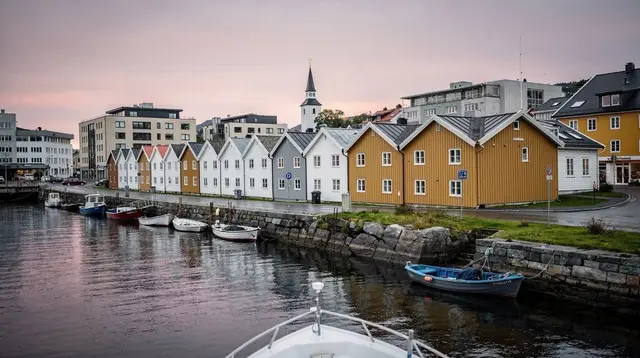
Sandnes and Stavanger: One Urban Area, Two Names
If you have read that Stavanger is Norway’s 4th-largest urban area, the number you are actually looking at belongs to a conurbation, not a single town. It combines Stavanger with its neighbour Sandnes, plus the built-up stretch of coastline that runs between them without much of a gap. The two municipalities have separate town halls, separate main streets and separate identities, but from a train window the boundary is invisible — houses, industrial estates and shopping centres simply continue from one into the other.
That matters for a visitor mostly in one practical way: describing Sandnes on its own terms is harder than it sounds, because it was never built to be a tourist stop. It grew as an industrial and residential town alongside the oil-driven expansion of the wider region, and it still functions that way today. There is no verified population figure for Sandnes alone that we are comfortable printing here — what is solid is the conurbation’s rank, not a standalone city number — so treat any specific count you see elsewhere with some caution and lean on the regional context instead.
For the purposes of a trip, think of Sandnes less as a destination and more as Stavanger’s other half: a real place with its own harbour and high street, sitting close enough that the distinction barely changes your itinerary.
Getting Between Sandnes and Stavanger
The two centres are connected by the Jærbanen local train, a service that also continues south toward Jæren and the town of Bryne. The ride between Sandnes and Stavanger takes around 15 minutes and runs frequently on weekdays, less often late at night and on Sundays. Kolumbus buses cover the same corridor and are a reasonable backup if you miss a train.
Neither town requires a car to reach the other, and neither requires one to reach Sola airport, which sits roughly between them and is served by its own bus and train connections — see our guide to getting from the airport into town for the practical details. A car becomes more useful once you start looking past the two towns, toward Ryfylke’s fjords or the Jæren coastline, where public transport thins out considerably.
If you are trying to decide whether you even need a rental car for the trip as a whole, our piece on driving versus not driving around Stavanger walks through where a car helps and where it is dead weight.
What Sandnes Actually Offers
Sandnes has a working harbour, a pedestrianised main street, a handful of older wooden buildings that survived the town’s industrial growth, and the kind of everyday Norwegian town life — bakeries, a library, a Saturday market rhythm — that central Stavanger has largely handed over to tourism. It is a reasonable place to eat a normal meal at a normal price, restock groceries, or simply spend an evening away from the cruise-ship crowds that fill Vågen harbour in high season.
What it does not have is a preserved historic quarter on the scale of Gamle Stavanger, a cathedral dating to the medieval period, or a museum district. If you arrive expecting a second Stavanger in miniature, you will be looking for something that was never built. Sandnes earns its place on an itinerary through logistics and value, not through standalone sightseeing.
Several boat-based tours also use Sandnes as a departure point rather than Stavanger’s own harbour, which is worth knowing if you are choosing where to base yourself for a fjord day. A RIB fjord tour departing from Sandnes covers much of the same water as the Stavanger-based equivalents, often with a shorter transfer if you are already staying nearby.
Using Sandnes as a Base for Lysefjord and Ryfylke
This is where Sandnes earns its keep. The Lysefjord is reachable from Sandnes almost as easily as from Stavanger, and several operators run their boats from Sandnes specifically. A boat tour to Lysefjord and Pulpit Rock departing from Sandnes lets you see the cliff face of Preikestolen from the water without ever setting foot in Stavanger, and a scenic fjord cruise into Lysefjorden covers similar ground at a gentler pace.
If your interest runs further into Ryfylke — toward Månafossen waterfall, the villages around Forsand, or the subsea Ryfylketunnelen — Sandnes sits marginally closer to the tunnel entrance than central Stavanger does, which shaves a few minutes off a drive that otherwise looks identical from either town. Our Ryfylke and Månafossen day-trip guide covers the route regardless of which town you start from.
For hikers weighing up a Sandnes base against Stavanger, the honest answer is that it rarely changes which trailhead you can reach or how long the drive takes. It changes what your evening looks like and how much your bed costs, which for a multi-day trip adds up.
Day Trips Within Reach — Without Repeating Them Here
Two of the closest outings from Sandnes already have their own dedicated pages on this site, and we won’t repeat their detail here. The long sandy beaches of Jæren — including Orre and the lighthouse at Kvassheim — start a short drive south of Sandnes and are covered fully in our Jæren beaches day-trip guide. The hill of Dalsnuten, a popular short climb with a view back over the whole conurbation, is covered in its own Dalsnuten hike guide.
Both are arguably more convenient from Sandnes than from central Stavanger, simply by a few kilometres of driving distance, but the experience itself does not change depending on which town you slept in the night before. If either is the main draw of your trip, read the linked guides directly rather than treating this page as the source on them.
Further afield, Haugesund and Karmøy to the north make a longer but manageable day trip, detailed in our Haugesund and Karmøy day-trip guide, and the historic Viking-era site at Avaldsnes sits on the same route.
Where to Eat and Stay
Sandnes does not compete with Stavanger’s harbourfront restaurant scene, and it isn’t trying to. What it offers instead is ordinary, reasonably priced food — bakeries, casual lunch spots, a supermarket on most corners — without the tourist-season markup that creeps into prices around Vågen in July and August. If you are travelling on a tighter budget, or simply tired of paying visitor prices for a coffee, an evening in Sandnes can feel like a small relief.
Accommodation follows the same pattern: hotels and guesthouses in Sandnes are frequently a notch cheaper than equivalent options in central Stavanger, particularly during the peak Preikestolen season when Stavanger’s rooms fill up fastest and price accordingly. The trade-off is a 15-minute train ride each way if your plans are centred on Stavanger’s old town or harbour in the evenings.
| Where you sleep | Typical price level | Distance to Stavanger centre | Evening atmosphere |
|---|---|---|---|
| Central Stavanger | Higher, especially in summer | None | Harbour bars, restaurants, tourist buzz |
| Sandnes centre | Often somewhat lower | About 15 min by train | Quiet, local, few tourists |
Prices in both towns are quoted in Norwegian kroner (NOK) — Norway is outside the eurozone, so budget in kroner rather than converting mentally from euros as you go.
Sandnes for Different Kinds of Travellers
| Traveller type | Does Sandnes make sense? |
|---|---|
| First-time visitor, 2-3 days | Usually not — stay in Stavanger for easy walking access to the sights |
| Budget traveller, longer stay | Yes — the price difference adds up over several nights |
| Family with a rental car | Yes — more space for the money, and the car erases the distance |
| Hiker focused on Ryfylke and Kjerag | Marginal advantage — slightly closer to the tunnel and inland roads |
| Cruise passenger, one day only | No — stay near the port in Stavanger itself |
Practical Tips for Basing Yourself in Sandnes
Buy train or bus tickets through the Kolumbus app before boarding where possible; it tends to be simpler than working out an unfamiliar ticket machine on the platform. If you are catching an early boat tour or fjord cruise from Sandnes harbour, check the departure point carefully, since some operators use the Sandnes quay and others use Stavanger’s — the two are not interchangeable even though both are marketed under similar names.
Winter changes the calculus somewhat. Fewer fjord cruises run, daylight is short, and the appeal of a quiet, low-cost base fades when there is less to do outdoors either side of the fjord regardless of which town you are in. If you are travelling between October and April, weigh Sandnes’s savings against the reduced tour schedule before committing to it as a base — see our notes on Stavanger in winter for what is realistically still running.
For a short, no-car itinerary that treats the conurbation as a single unit rather than two separate stops, our one day in Stavanger without a car guide and the broader question of how many days you actually need in the area are both useful starting points before you decide how much time, if any, to allot to Sandnes specifically.
If your priority is simply covering the essentials on a tight budget, our free and low-cost things to do guide applies just as well whether you are sleeping in Sandnes or Stavanger, since almost everything on it is reached the same way from either town. And if you want a city-focused introduction to Sandnes itself rather than a fjord trip, a guided walking tour covering Sandnes’s city highlights is a low-effort way to get oriented in an hour or two.
Questions About Basing Yourself in Sandnes
Is Sandnes worth staying in instead of Stavanger?
Sandnes sits about 15 minutes from central Stavanger by train and is part of the same urban area, which is why the two are counted together as Norway’s 4th-largest urban area. It works as a slightly cheaper, quieter base, but has less of a historic core than Stavanger, so most visitors still spend most of their time there.
How do you get between Sandnes and Stavanger?
The Jærbanen local train connects the two centres in around 15 minutes and runs frequently through the day. Kolumbus buses cover the same route and continue on to other parts of the region, including toward Jæren.
Is Sandnes cheaper than Stavanger?
Accommodation in Sandnes is often somewhat cheaper than equivalent options in central Stavanger, partly because it draws less tourist traffic. Food, drink and organised tours are priced at the same regional level either way, since Norway is expensive by most standards regardless of which town you sleep in.
Does Sandnes have its own sights worth seeing?
Sandnes has a working harbour, a compact town centre and some older wooden buildings, but nothing on the scale of Gamle Stavanger or Stavanger Cathedral. Most people treat it as a functional base rather than a sightseeing destination in its own right.
Can you do the Lysefjord and Preikestolen trips from Sandnes?
Yes. Several fjord cruises and RIB tours depart directly from Sandnes, and the Preikestolen trailhead is reachable by car or connecting transport in a similar time to the route from Stavanger.
Do you need a car if you’re based in Sandnes?
Not for Stavanger or the Lysefjord boat trips, which run on public transport and organised transfers. A car becomes useful if you plan to explore Ryfylke, Jæren or Dalane at your own pace, since those areas have limited bus coverage.
How many days should you spend in Sandnes?
Most travellers need no more than a day, or simply pass through it. It earns an overnight stay mainly as a lower-cost sleeping base for a multi-day Stavanger and Lysefjord trip, not as a standalone stop.