RIB Safari on the Lysefjord: What to Expect
What happens on a Lysefjord RIB safari?
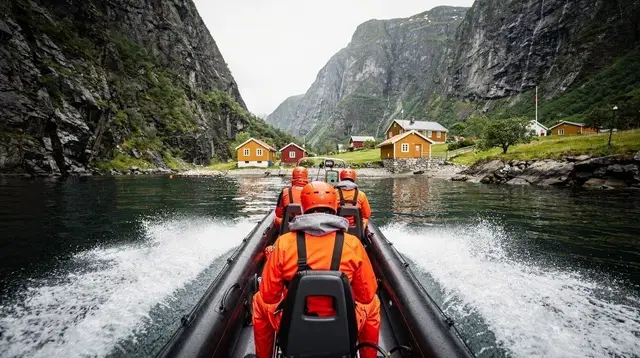
A RIB safari is a fast, open rigid inflatable boat ride from Stavanger, Sandnes or Forsand into the Lysefjord, typically 2-3 hours long. Expect real speed, cold spray, a few slow photo stops under the cliffs and near Preikestolen, and a noticeably more physical, hands-on-the-grab-rail experience than a standard sightseeing cruise.
A RIB safari is not a smaller, faster edition of a Lysefjord cruise. It is a different kind of outing built around a different sensation: an open rigid inflatable boat, a driver who actually opens the throttle, and a fjord that suddenly feels a lot closer and a lot bigger at the same time. If you want to understand what the ride actually feels like once the ropes come off, this is the guide. For a side-by-side comparison of which format suits your trip, that is covered separately in the Lysefjord cruise versus RIB safari guide rather than here.
Before You Board: Check-In, Suits and Safety Briefing
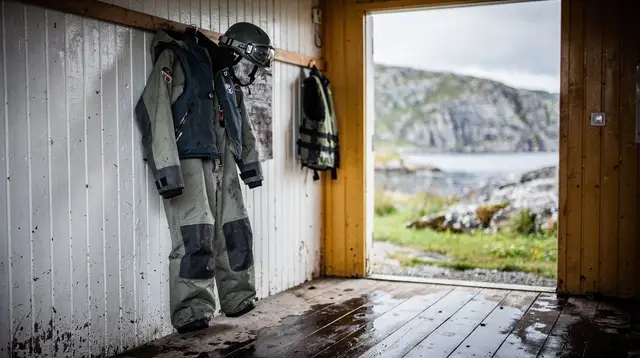
Every operator running a RIB safari on the Lysefjord starts the same way: check-in at the departure point, a short safety briefing, and a full-body flotation suit that goes on over your own clothes. The suits are bulky and not flattering, but they matter — they keep you warm and add buoyancy if you go into cold fjord water, which sits well below body temperature even in summer.
Departure points differ by operator. Some boats leave from central Stavanger harbour, which is convenient if you are already staying in the city. Others depart from Sandnes or directly from Forsand, which sits closer to the fjord’s mouth and shortens the run out. A dedicated guide on departure points from Stavanger and Forsand walks through which makes sense for your itinerary, since the choice affects both total trip time and how much open fjord you actually cover.
Guides also run through hand signals, where to grip, and what to do if the boat slows suddenly. This is not paperwork theatre. At the speeds these boats reach, an unexpected wake or gust can throw an unbraced passenger off balance, and the crew wants everyone holding a rail or strap before the engines open up.
The First Stretch: Leaving the Harbour and Building Speed
Once everyone is suited and briefed, the boat idles out of the harbour at a sedate pace — this part looks a lot like any other boat tour. That changes fast. Once clear of moored boats and the no-wake zone, the driver opens the throttle, and the boat’s nose lifts as it comes up onto plane. This is the moment that separates a RIB safari from a sightseeing cruise: you are sitting low, close to the waterline, in the open air, with nothing but a windscreen and a grab rail between you and the fjord rushing past.
Cruising speeds vary with conditions but often sit in the 30 to 50 knot range on open stretches. The number understates how it feels. Spray comes off the bow even on a calm day, wind noise makes conversation difficult, and the boat responds to every ripple in the water with a jolt through your seat and spine. People who expect a smooth ride are usually surprised; people who booked precisely for this reaction usually grin the entire way.
The Lysefjord itself sets the stage for this: roughly 42 km long, with rock walls exceeding 1,000 m in places, it narrows and opens in a way that makes speed feel purposeful rather than gratuitous — you are covering a lot of dramatic terrain quickly, not just circling a harbour for thrills.
Under the Walls: Slowing Down for the Cliffs
The speed does not run continuously for the whole trip. As the boat approaches the fjord’s steepest sections, drivers throttle back and the RIB settles into the water, moving at a walking pace or drifting. This is where the trip’s other half happens: looking straight up at rock walls that rise more than 1,000 m from the waterline, with waterfalls threading down the cliff face after rain and birds nesting on ledges you would never notice from a road.
Most itineraries include a stop more or less beneath Preikestolen, positioned so passengers can look up and pick out the plateau 604 m above — the same cliff edge that hikers stand on, seen from entirely the opposite direction. It is a genuinely different way to register the scale of the place: from below, the plateau looks impossibly small against the rock face, and the height feels more abstract and more real at the same time than any photo taken from the top.
Depending on the operator and route, a second stop often comes near Flørli, the small fjordside settlement known for its disused staircase of 4,444 wooden steps, built originally to service a hydropower station and still described as the longest wooden staircase in the world. From the water, the staircase is visible as a thin zigzag line climbing an implausible distance up the hillside — a detail easy to miss unless you know where to look.
These stops are short, usually a few minutes each, enough for photos and a guide’s commentary over the boat’s speaker, not a full landing or extended pause. If you want unhurried time at any single spot, a RIB safari is the wrong tool; that patience belongs to a slower cruise or a kayaking trip on the Lysefjord instead.
How Physical It Actually Is
This is the point worth being honest about: a RIB safari is a physical activity, not a passive sightseeing ride. You brace against a grab rail or strap for extended stretches at speed. Your core and legs work to absorb the boat’s bounce over wake and chop. Cold wind and spray hit exposed skin repeatedly. None of this is dangerous for a healthy adult, but it is a genuinely different kind of tired than stepping off a calm sightseeing boat.
A companion guide goes into more depth on exactly how rough the ride tends to be across different conditions, and another covers what to actually wear underneath the supplied suit — both worth reading the night before if you are unsure what you are signing up for.
| Factor | RIB safari | Typical sightseeing cruise |
|---|---|---|
| Typical duration | 2-3 hours | 3-4 hours |
| Seating | Open, low to the water | Enclosed or covered deck |
| Speed | Fast bursts, slow photo stops | Steady, moderate throughout |
| Physical demand | Moderate to high | Low |
| Weather exposure | High (spray, wind) | Low to moderate |
| Best for | Adrenaline, close-up cliff views | Relaxed sightseeing, families |
Weather and Season: What Changes the Experience
Rogaland’s climate shapes every outdoor activity here, and a RIB safari is no exception. Stavanger sees around 1,180-1,250 mm of rain a year, so operators run in a wide range of conditions — a bit of rain rarely cancels a departure, since you are already wearing a full flotation suit and getting wet from spray regardless.
Wind is the bigger variable. Strong wind on open stretches of fjord can turn a fast, fun ride into an uncomfortably rough one, and operators will slow down, alter the route, or in rare cases postpone a departure if conditions are unsafe. Summer (June through August) generally offers the calmest window and the longest daylight, but it is also the busiest, with boats running multiple departures a day to keep up with demand. Shoulder months bring quieter water traffic and often a more personal, less rushed trip, at the cost of colder air and shorter daylight.
Because so much depends on real-time conditions, the best season for a fjord outing generally is covered in more detail elsewhere, and it applies almost as well to RIB safaris as to standard cruises.
Choosing a Departure and a Route
Several operators run RIB safaris on the Lysefjord, and the differences between them mostly come down to departure point, route length, and whether a stop involves stepping ashore. A Stavanger-based option keeps logistics simple if you are already in the city centre:
a Pulpit Rock RIB safari departing from Stavanger runs the classic route under Preikestolen and back, built as a fixed-length outing rather than a flexible charter.
For a departure closer to the fjord itself, cutting down on transfer time,
a Lysefjord RIB fjord tour leaving from Sandnes puts you on the water faster, which matters if you are short on time or arriving by train rather than car.
Groups or travellers who want the boat to themselves, without sharing the ride and photo stops with other passengers, tend toward
a private RIB safari cruise into the Lysefjord from Stavanger, which allows more flexibility on pacing and photo stops, at a higher price than a shared departure.
A route that adds a stop at a historic boathouse along the fjord, rather than only cliff and waterfall views, is worth considering if a single theme of “fast boat, big walls” feels thin for a full outing:
a Lysefjord RIB boat tour from Stavanger that includes a boathouse visit breaks up the ride with a short stop on land.
Sandnes departures also run a more standard fjord tour without the boathouse stop, priced closer to the entry-level Stavanger options, worth comparing directly against departure times and total trip length before booking.
Practical Notes Before You Go
A few logistics apply across almost every operator. Bring closed shoes rather than sandals — bare feet or open shoes inside a flotation suit are uncomfortable and offer no grip on a wet, moving deck. Secure glasses and hats; anything loose has a real chance of ending up in the fjord at speed. Cameras and phones need a dry bag or a genuinely waterproof case, not just a splash-resistant one, since spray at speed reaches everything not sealed.
Motion sensitivity matters more here than on a standard cruise. The Lysefjord’s water is calmer than open sea, which helps, but the repeated jolting motion at speed affects some people more than a gentle rolling swell does. If you are prone to motion sickness, sit centrally in the boat rather than at the bow, and consider medication ahead of time if you know it helps.
Minimum ages are common, often somewhere around 6 to 8 years old, and several operators exclude pregnant travellers because of the impact-heavy ride. If you have back, neck or joint issues, it is worth a quick check with the operator before booking rather than finding out mid-fjord.
In peak summer months, popular departure times can sell out a few days ahead, particularly around midday when Stavanger’s day-tripper traffic is highest. Booking ahead is the safer option from June through August; shoulder-season availability is generally more relaxed.
If your plan includes a Preikestolen hike as well as time on the water, a two-day itinerary that pairs the plateau hike with a Lysefjord boat outing is a sensible way to see the fjord from both directions without cramming everything into a single exhausting day.
RIB Safari on the Lysefjord: Frequently Asked Questions
How fast does a RIB actually go on the Lysefjord?
Cruising speeds are often in the 30-50 knot range on open stretches of water, though guides slow down considerably near cliffs, other boats and photo stops. It feels faster than the number suggests because you sit low, in the open air, close to the water.
Will I get wet on a RIB safari?
Yes, expect spray on your face and hands even on a calm day, and a soaking if the fjord has any chop. Operators supply flotation suits, but bring a hat you can secure, glasses on a strap, and accept that your camera bag will get damp unless it is in a dry bag.
Is a RIB safari safe for people who get seasick?
The Lysefjord is sheltered compared to open sea, which helps, but the bouncing motion at speed affects some people more than the gentle roll of a bigger cruise boat. If you know you get motion sick, sit near the centre of the boat and consider medication in advance.
Can children or older travellers do a RIB safari?
Most operators set a minimum age, commonly around 6 to 8 years, and some exclude pregnant travellers because of the jolting ride. Anyone with back or neck problems should check with the operator before booking, since the boat can slam over waves at speed.
How long does a Lysefjord RIB safari last?
Most departures run 2 to 3 hours door to door, including safety briefing, suiting up and the return trip. That is shorter than a typical sightseeing cruise, which often runs closer to 3 to 4 hours.
Where do RIB safaris depart from?
Departure points vary by operator: some leave from central Stavanger harbour, others from Sandnes or directly from Forsand, which sits closer to the fjord mouth and cuts driving or transfer time.
Do I need to book in advance?
In July and August, popular departures can sell out days ahead, especially around midday. Booking a day or two in advance is a reasonable minimum in peak season; shoulder season is more forgiving.
What should I wear on a RIB safari?
Layers under the supplied flotation suit, closed shoes, and nothing loose that the wind can grab. A separate guide on the site covers packing for a RIB safari in more detail.
tours.rib-safaris
Verified deep-linked GetYourGuide tours. Book through these links and we earn a small commission at no cost to you.
GetYourGuide does not provide a product photo for this activity — the image shows the meeting point, photographed by us.