Kayaking the Lysefjord: A Slow Way Under the Cliffs
What does kayaking the Lysefjord actually involve?
Guided sea kayaking trips paddle short, sheltered stretches of the Lysefjord near Forsand or Lysebotn, moving at walking pace beneath walls that rise past 1,000 m. It suits paddlers with some prior experience rather than complete beginners, and on a fjord this size, with active boat traffic and cold water, going out unguided is not something this site recommends.
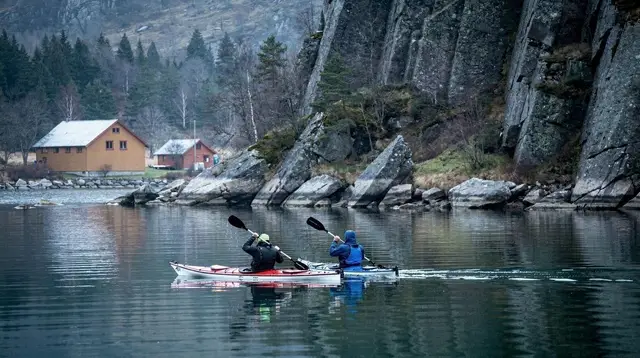
There is a version of the Lysefjord that most visitors never see: the one that moves at the speed of a paddle stroke. From a cruise deck or a RIB, the fjord’s walls go by in minutes. From a kayak sitting a few centimetres above the water, those same walls, some of them over 1,000 m tall, stay in view for hours, and the only sound is water against the hull. This guide is about that slower way of experiencing the Lysefjord — what it takes, why it is not a beginner’s outing on this particular body of water, and how to fit it into a Rogaland trip.
Why Paddle the Lysefjord Instead of Riding It
Kayaking removes the engine noise, the schedule, and the crowd of other passengers that come with a boat trip. A guided group typically covers a few kilometres in a couple of hours, hugging the shoreline where the current is gentler and the cliffs feel closest.
You notice details that blur past from a boat: waterfalls no wider than a garden hose threading down the rock, the abandoned farms clinging to impossibly steep ledges, the shift in light as the sun drops behind a thousand metres of granite in the middle of the afternoon. It is a way of seeing the fjord, not a faster way of covering it — if your priority is distance and scenery per hour rather than pace and quiet, a boat trip suits that better, and this guide does not try to relitigate that choice here.
What a Guided Kayaking Trip on the Lysefjord Looks Like
Guided departures generally start from a calm stretch of the fjord near Forsand or Jørpeland, sometimes further in toward Lysebotn for longer or more advanced routes. A typical session opens with a safety briefing on shore covering strokes, capsize recovery, and what to do if the wind picks up, followed by three to four hours on the water with a break at a beach or jetty partway through.
a guided half-day kayaking trip on the Lysefjord is the standard way to do this: small groups, a qualified guide reading conditions in real time, and equipment matched to the day rather than to a fixed itinerary. Guides adjust the route depending on wind and boat traffic, which is one more reason a fixed self-planned route is the wrong way to think about this fjord.
The Skill Level and Safety Margin This Fjord Actually Requires
This is the part worth being blunt about. The Lysefjord is roughly 42 km long, up to about 400 m deep, and lined with walls exceeding 1,000 m in places — it is not a sheltered lake or a slow river, and it should never be presented as a place for a first-ever kayaking attempt. Three things make experience and guiding non-negotiable here rather than optional extras:
- Scale. A fjord this long and deep generates its own local wind patterns, sometimes funnelling gusts down from the cliffs with little warning, even on an otherwise calm day lower down.
- Traffic. The Lysefjord carries cruise boats, RIB safaris and local ferries throughout the season. A kayak sits low in the water and is easy to miss from a larger vessel’s wheelhouse; route choice and visibility matter as much as paddling ability.
- Water temperature. Even in the warmest months the water stays cold, often in the single digits to low teens Celsius. An unplanned swim here is a real cold-shock risk, not a minor inconvenience, which is exactly the scenario a guide’s equipment and drills are built around.
None of this means kayaking the Lysefjord requires expert-level skill. It means it requires some prior paddling experience, basic swimming ability, and — on this fjord specifically — a guide who knows the water. Treat any offer of unguided kayak rental on the open Lysefjord with real caution, and treat “no experience necessary” claims for this stretch of water with the same caution.
Comparing the Main Ways to Get on the Water
| Option | Typical duration | Who it suits |
|---|---|---|
| Guided kayaking, sheltered stretch | 3-4 hours | Paddlers with some prior experience, seeking a slow, quiet trip |
| Guided kayaking, longer route toward Lysebotn | Full day | Confident paddlers wanting more distance and remoteness |
| Kayaking combined with a short shore hike | Half day | Visitors who want water time plus a stretch of legs on land |
Durations vary by operator and by conditions on the day; guides commonly shorten or reroute a trip if the wind is against them, which is a normal and expected part of how these outings run on this fjord.
Best Season and Conditions for Kayaking the Lysefjord
Guided kayaking on the Lysefjord runs mainly from spring through early autumn, when daylight is long and water conditions are more predictable, broadly the same window that keeps the Lysebotn road and Kjerag access open. Outside that window, shorter days, colder water and less predictable wind make trips harder to run safely, and some operators pause kayaking departures altogether over winter. If you are travelling in the colder months, a boat-based alternative such as a winter cruise and guided hike combination on the Lysefjord is a more realistic way to see the fjord than trying to kayak it.
Even in summer, mornings tend to be calmer than afternoons, and guides often schedule departures early for exactly that reason. Rain is common in Rogaland year-round, and a kayaking trip does not necessarily cancel for rain alone — wind and visibility matter far more to a guide’s decision than a grey sky does.
Where Trips Start: Forsand, Lysebotn and Beyond
Most operators launch from the Forsand side of the fjord, which sits within easy reach of Stavanger and Sandnes and offers calmer water for shorter, more accessible routes. Trips heading further into the fjord toward Lysebotn cover more dramatic scenery — sheerer walls, fewer other boats, longer stretches of silence — but demand more stamina and, again, more prior paddling experience.
Some routes pass close enough to Flørli to see its 4,444-step wooden staircase rising from the shoreline, though actually climbing it is a separate outing on foot, not something you do from the water. Paddlers heading deep into the fjord may also get glimpses of the terrain below Kjeragbolten and the cliffs beneath Preikestolen, seen from an angle almost nobody standing at either viewpoint ever gets.
Combining Kayaking With the Rest of Rogaland
Because a guided kayaking session usually fills only half a day, it pairs naturally with other activities rather than standing alone as a full-day plan. Visitors building a longer stay around Lysefjord sometimes follow a morning on the water with an easier walk on land — the itinerary for three days on the Lysefjord by water sketches one way to sequence a stay like this without over-scheduling any single day.
For travellers who want the height and drama of the fjord’s clifftop viewpoints as well as time on the water, a guided hike around the Preikestolen area is a reasonable way to add a land-based day either side of a kayaking session, rather than trying to combine paddling and a major hike in the same day — the two draw on different muscles and different energy levels, and stacking them tends to leave people exhausted rather than satisfied with either.
Guides, Groups and What to Expect on Arrival
Guided departures are almost always small groups, often single-digit numbers of kayaks per guide, which keeps the group manageable if conditions change mid-trip. Expect a fitting session for the drysuit or wetsuit, a run-through of paddle strokes for anyone rusty, and a clear explanation of what to do if a kayak capsizes — standard practice on cold, exposed water, not a sign that the trip is riskier than advertised. Guides also carry radios and know the fjord’s boat traffic patterns, which matters more on the Lysefjord than it would on a small inland lake.
What to Pack and Expect on the Water
Most operators supply the technical kit: drysuit or wetsuit, buoyancy aid, spray skirt and paddle. What is worth bringing yourself:
- Warm base layers to wear under a wetsuit or drysuit, since the water stays cold even mid-summer
- A warm hat, gloves and a full change of clothes for before and after the trip
- Sun protection — reflected light off the water can be stronger than it looks on an overcast day
- A dry bag or waterproof phone pouch if you want to bring a phone for photos
- Sturdy, closed footwear rather than sandals, for getting in and out at rocky launch points
Food and drink for the day are worth sorting out in Stavanger or Forsand before heading out, since options near most launch points are limited. Anyone unsure whether kayaking suits their fitness or comfort level should also read what a longer land-based trip into Ryfylke demands, since the honest comparison of effort helps set expectations before booking either.
Is Kayaking the Right Choice for Your Trip?
If what you want from the Lysefjord is maximum distance covered and the widest possible view in the shortest time, a cruise or a shorter guided fjord cruise toward Pulpit Rock will show you more of the fjord’s length in less time.
If what you want is a slow, physical, quiet few hours close to the water with the cliffs directly overhead, and you have some paddling background or are willing to build it up on a short lesson first, guided kayaking on the Lysefjord delivers something a boat trip cannot. It is not, on this particular fjord, a spontaneous rent-a-kayak afternoon — treat it as an activity that rewards planning, a guide, and a realistic read of your own experience.
Questions About Kayaking the Lysefjord
Do you need previous kayaking experience for the Lysefjord?
Yes, at least some flatwater or sea kayaking experience is expected, along with basic swimming ability and comfort being on open water for several hours. Guided departures on the Lysefjord are not built as a first-ever kayaking outing, even though no white water is involved.
Why can’t you just rent a kayak and go out alone?
The Lysefjord is a working fjord roughly 42 km long with boat and RIB traffic, wind that can funnel unpredictably between the cliff walls, and water cold enough year-round to make an unplanned swim genuinely dangerous. Guided trips carry safety equipment, know local wind patterns, and can call for help quickly, which is why independent paddling here is discouraged.
How long does a guided kayaking trip on the Lysefjord last?
Most guided sessions run about half a day, roughly three to four hours on the water including a safety briefing and a break on shore, though some operators offer shorter tasters or longer routes further into the fjord.
What is the water and weather actually like?
Water stays cold even in summer, typically single digits to the low teens Celsius, and Rogaland’s rain and wind can arrive with little warning, so guided trips are sometimes rescheduled at short notice for safety.
Can you combine kayaking with Preikestolen or Kjeragbolten on the same day?
Kayaking and the big hikes draw on different energy and different parts of the day, so most visitors treat them as separate outings rather than combining them, though pairing an easy morning on the water with a shorter afternoon walk is realistic on a longer stay.
Is kayaking a good way to see Flørli’s staircase?
Some guided routes paddle close enough to Flørli to see the 4,444-step staircase from the water, but climbing it is a separate, strenuous activity on land, not something done from a kayak.
What should you wear kayaking on the Lysefjord?
Operators typically supply a drysuit or wetsuit, a buoyancy aid and a paddle, but bringing warm layers, a hat and gloves for before and after paddling on cold, wind-exposed water still matters.
tours.kayaking-paddling
Verified deep-linked GetYourGuide tours. Book through these links and we earn a small commission at no cost to you.
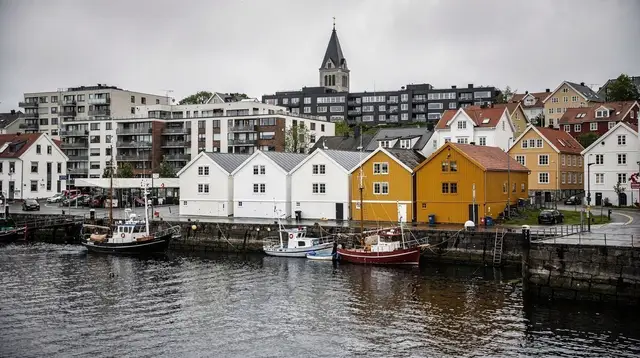
GetYourGuide does not provide a product photo for this activity — the image shows the meeting point, photographed by us.