RIB Safari Departure Points: Stavanger vs Forsand and Lauvvik
Should I book a RIB safari departing from Stavanger or from Forsand/Lauvvik?
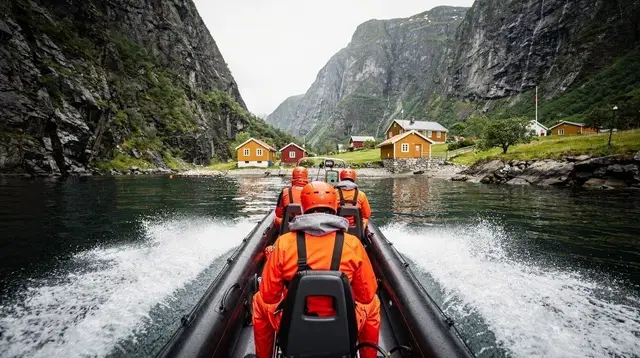
Both exist, and neither is objectively better. Stavanger departures add roughly 45-60 minutes of boat transit each way through open water before reaching the Lysefjord, but need no car. Forsand and Lauvvik sit at the fjord's mouth, so the boat time on the water itself starts almost immediately — useful if you're already driving through Ryfylke or short on time.
Two harbours, one fjord, different mornings
Search for a RIB safari on the Lysefjord and you’ll find listings that leave from Stavanger’s own harbour and others that leave from Forsand or Lauvvik, on the Ryfylke side of the water. Neither is a typo and neither is the “real” one. They’re genuinely different departure points, roughly 25-30 kilometres apart by road, and choosing between them changes your morning more than most people expect before they book.
This page is not about what happens once the boat is moving — the ride itself, the speed, what you’ll see near Preikestolen and further into the fjord, is covered in a dedicated guide to what a RIB safari is actually like. What matters here is the part that happens before the engines start: where you show up, how long it takes to get there, and what that does to the rest of your day in Stavanger or Ryfylke.
Departing from Stavanger: no car, more open water
A departure from Stavanger’s Vågen harbour is the default choice for most visitors, and for a practical reason: it needs nothing extra. If you’re staying in the city, the meeting point is a walk or a short bus ride away, not a drive. There’s no rental car to arrange, no parking to find near a fjord-side quay, and no need to time a ferry.
The trade-off is on the water, not on land. A boat leaving Stavanger has to cross open coastal water — past Tau, past Judaberg, along a stretch that is scenic but is not yet the dramatic, walled-in Lysefjord itself — before it reaches the section most people are picturing when they book a RIB safari. That transit typically adds somewhere in the range of 45 to 90 minutes to the round trip compared with a departure closer to the fjord’s mouth, depending on the operator’s route, boat, and exact turnaround point.
For a lot of itineraries this simply doesn’t matter. If you have a full day in Stavanger and no onward driving planned, spending extra minutes on the water is not a cost — it’s more time seeing the coast. Where it does matter is on a tight schedule: a cruise-ship call, a single free afternoon, or a day already carrying a Stavanger airport transfer at one end of it.
Departing from Forsand or Lauvvik: closer to the fjord, further from the city
Forsand and neighbouring Lauvvik sit essentially at the point where the coastal water narrows into the Lysefjord proper. A RIB safari that starts here spends little or no time on the open crossing that a Stavanger departure has to make — the dramatic fjord walls begin much sooner after leaving the quay.
The cost is reaching Forsand or Lauvvik in the first place. Neither is realistically walkable or bus-friendly from central Stavanger the way the city harbour is; getting there generally means driving, taking a taxi, or timing a ferry connection, which is exactly the kind of logistics a Stavanger departure lets you skip. For visitors without a car, this is usually the deciding factor on its own, independent of how appealing the shorter fjord run sounds.
Where a Forsand or Lauvvik departure earns its extra effort is when you’re not coming from central Stavanger to begin with. If you’re already driving through Ryfylke — heading toward Jørpeland, the Preikestolen trailhead area, or further inland — starting the RIB safari from Forsand means you’re not backtracking into the city and back out again. In that case the “extra” driving to reach Forsand isn’t extra at all; it’s the road you were already on.
Comparing the two side by side
| Stavanger harbour | Forsand / Lauvvik | |
|---|---|---|
| Getting to the meeting point | Walk or local bus, no car needed | Car, taxi, or ferry connection generally needed |
| Time on open coastal water | Longer — roughly 45-90 min extra round trip | Minimal — fjord starts almost immediately |
| Best for | City-based visitors, cruise-ship days, no-car travellers | Drivers already touring Ryfylke, tighter fjord-focused trips |
| Combines easily with | A day otherwise spent in central Stavanger | Stops at Jørpeland or a Ryfylke loop |
| Typical downside | Less time actually inside the fjord walls per hour spent | Extra driving before and after, awkward without a car |
Treat the table as a starting point, not a fixed rule — some operators shorten the Stavanger crossing with a faster boat, and some Forsand departures still add a meaningful drive from where you’re staying. Always check the specific meeting point listed on your booking confirmation rather than assuming it matches the operator’s home city.
Matching the departure point to the kind of trip you’re taking
A cruise-ship day is the clearest case for Stavanger. With a fixed number of hours in port, the last thing you want is to spend a chunk of them driving to and from Forsand before the RIB safari has even started — a one-day Lysefjord cruise itinerary built around the city harbour keeps the whole outing self-contained.
A multi-day Ryfylke trip tips the other way. If you’re spending three days exploring the fjord by water or driving a wider loop that already includes Sandnes or Jørpeland, a Forsand or Lauvvik departure slots into the route you’re already driving rather than pulling you back into Stavanger traffic.
Travellers without a car, regardless of how many days they have, are usually better served by Stavanger. It’s the one variable that most reliably decides the question: no car makes Forsand a real inconvenience, while having a car makes it a minor detour at most. For a broader look at whether renting one makes sense at all for your stay, see the guide on driving versus not driving in Stavanger.
Families with young children, or anyone prioritising the calmest possible morning, often lean toward whichever option removes the most steps — usually Stavanger, since it removes the driving step entirely, leaving only the boat itself to plan around.
If you’re driving to Forsand or Lauvvik yourself
The route from central Stavanger to Forsand runs through the Ryfylketunnelen, the subsea tunnel that opened in 2019 connecting Stavanger to the Ryfylke side without a ferry crossing — a genuine improvement over the ferry-dependent access of years past. Drive time from central Stavanger is commonly in the range of 30-40 minutes depending on traffic and exactly which quay in Forsand or Lauvvik your operator uses, though this varies enough between companies that it’s worth confirming the exact address on your booking rather than assuming.
Parking at small Ryfylke quays is typically informal and limited compared with anything in central Stavanger — arriving with a buffer of 15-20 minutes before departure is a reasonable habit, especially in peak summer months when several tour groups may be using the same stretch of shoreline around the same time.
If you don’t have your own car, a taxi from Stavanger to Forsand is workable but adds a cost that a Stavanger-departure RIB safari simply doesn’t carry, and public transport connections into Forsand and Lauvvik are far thinner than the frequent city buses run by Kolumbus within Stavanger itself.
Booking either departure point
Whichever side of the water suits your day, a RIB safari from Stavanger and its Forsand-side counterparts both ultimately head into the same fjord, so the choice comes down to logistics rather than to missing out on a different set of sights. If a fast, wind-in-your-face run beneath Pulpit Rock is what you’re after, a RIB safari from Stavanger that runs beneath Pulpit Rock covers that classic route without requiring you to arrange a separate trip to Ryfylke first.
For a trip that starts from the Ryfylke side and gets you onto the water with barely any coastal transit at all, a boat trip to Preikestolen departing from Forsand itself is built around exactly that shorter run. And for a smaller-group, less fixed-schedule option that can sometimes be arranged around either harbour, a private RIB charter into the Lysefjord gives more flexibility on departure point at a higher price point.
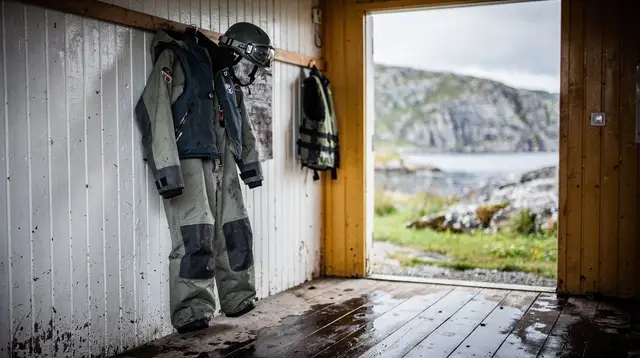
Whichever you choose, dress for open water and wind regardless of which harbour you leave from — the boat itself doesn’t know or care where the trip started, and neither does the weather. Details on what to actually wear are covered separately in the RIB safari clothing guide, and if you’re wondering how physically demanding the ride itself is once you’re moving, see how rough a RIB safari really is.
A final word on picking a side
There is no universally correct departure point for a Lysefjord RIB safari, and any guide that tells you otherwise is oversimplifying a choice that genuinely depends on where you’re starting from and how you’re getting around. Stavanger trades a longer boat ride for zero logistics; Forsand and Lauvvik trade a car journey for a shorter, more fjord-focused time on the water. Match the choice to your itinerary rather than to whichever option happens to appear first in a search result, and check the exact meeting point on your confirmation either way — operators do occasionally use a quay other than the one their marketing photos suggest.
If you’re still deciding between a RIB safari altogether and a slower, larger-boat Lysefjord cruise, that comparison is worth settling before the departure-point question, since it affects both how long you’ll be on the water and which harbours are even offered as options.
RIB Safari Departure Points: Common Questions
Is a RIB safari from Stavanger slower than one from Forsand?
Yes, in total elapsed time. A Stavanger departure spends extra time crossing open water past Tau and Judaberg before entering the narrower Lysefjord, while a Forsand or Lauvvik departure is already at the fjord’s edge. The difference is commonly 45 to 90 minutes round trip, depending on the operator’s exact route and boat speed.
Is Forsand or Lauvvik easier to reach without a car?
No. Stavanger city centre is the easier option without a car, since it’s walkable from hotels and served by Kolumbus buses and the airport transfer. Forsand and Lauvvik are on the Ryfylke side of the fjord and effectively require a car, a taxi, or a connecting ferry/bus, which adds friction that offsets the shorter boat leg.
Do all RIB safari operators offer both departure points?
No. Some operators run exclusively from Stavanger’s Vågen harbour, others run from Forsand, and a few offer both as separate bookable trips or seasonal options. Always check the specific meeting point on your confirmed booking rather than assuming — it varies by company and by season.
Does the departure point change what you see on the RIB safari itself?
Not fundamentally. Both departure points ultimately head into the same Lysefjord toward Preikestolen and often further to Kjerag. What changes is how much of the transit is spent on open coastal water versus fjord scenery, not the core sights reached once inside the fjord.
Can I combine a Forsand departure with other Ryfylke stops?
Yes, and it’s one of the better reasons to choose Forsand. Since you’re already driving into Ryfylke, a Forsand or Lauvvik departure pairs naturally with a stop at Jørpeland, a hike toward Preikestolen’s trailhead, or a longer loop toward Månafossen, without backtracking into Stavanger first.
Is there a price difference between Stavanger and Forsand departures?
Prices vary by operator, boat size, and trip length rather than by departure point alone, so there’s no fixed rule that one location is cheaper. Compare the specific tour length and route rather than assuming location dictates price.
Which departure point is better for a short stopover, like a cruise ship day?
Stavanger, in almost every case. A cruise ship day gives you a fixed number of hours in port, and reaching Forsand or Lauvvik and back eats into that window before the RIB safari even starts. Departing directly from Stavanger’s harbour keeps the whole outing inside the city.
tours.rib-safaris
Verified deep-linked GetYourGuide tours. Book through these links and we earn a small commission at no cost to you.
GetYourGuide does not provide a product photo for this activity — the image shows the meeting point, photographed by us.