Lysefjord Cruise: What You Actually See From the Water
What does a Lysefjord cruise actually let you see?
You see Preikestolen's cliff face from below, Flørli's 4,444-step staircase up close from the water, and on clear days a distant glimpse of the Kjerag plateau — but you never get near Kjeragbolten itself. The boulder and the view from on top are only reached by hiking.
Setting Expectations Before You Book
A lot of people book a Lysefjord cruise assuming it will feel like a condensed version of the Preikestolen hike, or that it will get them close to Kjeragbolten without the six-hour walk. Neither is true, and it is worth being precise about what the boat actually shows you before you hand over money for a ticket.
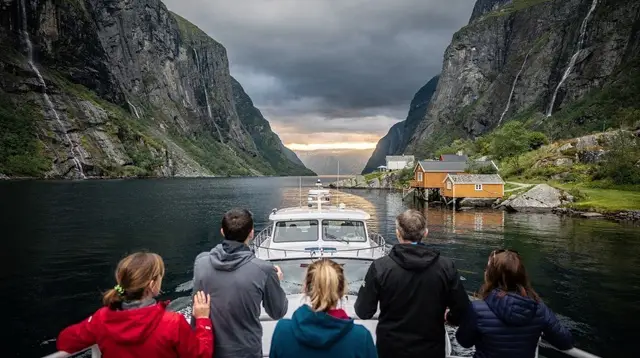
What you get on a cruise is a genuinely different vantage point on the same fjord that Preikestolen and Kjeragbolten overlook from above. You see the walls of the Lysefjord rising past 1,000 metres on either side, the water narrowing and widening as the boat moves deeper in, and two of the region’s most famous landmarks from an angle almost nobody photographs: from directly below. That is a real and worthwhile experience. It is just not the same experience as standing on top of the rock, and no cruise operator can change that geometry.
This guide goes through, section by section, exactly what a standard sightseeing cruise puts in front of you, what stays out of reach, and how to calibrate your expectations so the two or three hours on the water feel like the right choice rather than a disappointing substitute for a hike you didn’t have time for.
Preikestolen From Below: The View You’ll Actually Get
The single most reliable moment on almost every Lysefjord cruise is the pass beneath Preikestolen. The boat slows, sometimes stops, directly under the 604-metre plateau, and passengers crane their necks up at the sheer rock face and the famous overhang that so many photographs from the top look down across.
It is a striking sight — the scale of the cliff is much easier to grasp from the water than from photos taken on the plateau itself, where the drop is somewhat abstracted by distance. But it is worth being clear about what this moment does and does not deliver. You are looking up at the underside of the rock, not out across the fjord from its summit. The panoramic view that makes Preikestolen famous — the long sightline down the Lysefjord from 604 metres up — belongs entirely to people who make the 8 km round-trip hike from the Preikestolen fjellstue trailhead. No boat route reaches that vantage point, because it does not exist at water level.
If you are trying to decide whether the view from the fjord is “enough” without doing the hike, that trade-off deserves its own consideration — see our guide on whether the view from the fjord is enough for a fuller comparison of what each option gives up.
Several cruise operators build their entire route around this one landmark, departing from Forsand, Stavanger or Sandnes and turning back once the boat has circled beneath the cliff. Others continue further up the fjord toward Lysebotn, in which case Preikestolen becomes the first stop rather than the destination.
Flørli and the 4,444 Steps, Seen From the Deck
Further along the fjord, most longer cruise routes pass the small settlement of Flørli, and this is where the trip tends to surprise people who came only for Preikestolen. Flørli’s wooden staircase — 4,444 steps built for a hydropower station and often described as the longest wooden staircase in the world — runs almost the full height of the mountainside directly above the handful of buildings at the water’s edge.
Unlike Preikestolen, where the boat only shows you the base of something whose real payoff is at the top, Flørli’s staircase is genuinely visible in full from the fjord. The zigzagging structure climbing the slope is legible as a whole, which is not something you can say for most mountain features viewed from a boat. If your route includes a stop here, it is worth having a camera ready — the staircase reads clearly in photos in a way many fjord landmarks don’t.
Some cruises stop long enough for passengers to disembark and at least start up the steps; most sightseeing-only routes simply pass close by without landing. If actually climbing the staircase interests you, that is a separate outing worth planning on its own — see our dedicated Flørli 4,444 steps hike guide for what that involves, since it is a demanding climb in its own right and not something to improvise from a passing cruise.
Kjerag in the Distance — and Why You Won’t Get Close
This is the point where expectations most often go wrong, so it is worth stating plainly: a standard Lysefjord sightseeing cruise does not take you anywhere near Kjeragbolten, and in most cases does not offer a clear view of it at all.
On a clear day, further up toward Lysebotn, some longer routes offer a distant sightline toward the general massif that Kjerag belongs to — a high, pale ridge far above the fjord, one landform among several. The boulder itself, wedged in its crevasse at roughly 984 metres, is not visible from the water under any circumstances; it sits in a fold of the mountain that no fjord-level angle can reach, cloud cover permitting or not. If a cruise description implies otherwise, treat that as marketing rather than geography.
Reaching Kjeragbolten requires the hike from Øygardstølen at the end of the Lysebotn road — a serious 10-12 km round trip with three chain-secured sections, not a casual add-on to a boat trip, and one that has claimed lives. If a cruise is marketed as a way to “see Kjerag,” read that as seeing the mountain range from a distance, not the crag or the boulder.
For how the two landmarks actually compare as experiences, our guide on Kjeragbolten versus Preikestolen lays out the real differences in difficulty and payoff. And because the Lysebotn road closes in winter, Kjerag access is off the table for a large part of the year regardless of how you’d try to reach it.
What the Boat Ride Itself Feels Like
Away from the two headline landmarks, a good deal of the value in a Lysefjord cruise is simply the fjord itself: rock walls closing in overhead, waterfalls threading down the cliffs after rain, the water changing colour with the light, and the particular quiet of a narrow fjord compared with open coastline. None of this requires a specific landmark to be worthwhile, and it is the part that photographs least well but tends to stick with people longest.
Most boats used for these routes are enclosed, heated vessels with outdoor deck space, which matters given how often the Lysefjord sees rain — Rogaland’s climate is wet by any standard, and a cruise is one of the more comfortable ways to see the fjord regardless of weather, since you are not exposed to it the way a hiker is. Commentary, where offered, usually covers the geology of the fjord walls, the history of Flørli’s hydropower station, and background on Preikestolen’s formation.
A short comparison of typical routes:
| Departure point | Typical duration | Reaches Preikestolen | Reaches Flørli | Kjerag visible |
|---|---|---|---|---|
| Forsand | ~2 hours | Yes | Rarely | No |
| Stavanger | ~2-3 hours | Yes | Sometimes, on longer routes | Distant, weather permitting |
| Sandnes | ~2.5-3 hours | Yes | Sometimes | Distant, weather permitting |
Exact durations and stops vary by operator and season, so always check the specific route description before booking rather than assuming every “Lysefjord cruise” covers the same ground. For a fuller breakdown of how the different lengths and departure points stack up, see which cruise and how long.
Choosing a Departure Point
Where you start matters more than it might seem, mostly because it changes how much of the fjord you actually cover. A cruise leaving from Forsand starts already inside the fjord, so the trip to Preikestolen is short but the route rarely extends far beyond it. Departures from Stavanger or Sandnes cover more distance and are more likely to include Flørli, at the cost of a longer day.
For visitors staying centrally and without a car, a direct Stavanger departure such as the Stavanger fjord cruise to Lysefjord and Pulpit Rock is usually the simplest option logistically. Travellers based in Sandnes, or looking for a slightly different route up the fjord, might prefer the scenic Sandnes fjordcruise to Lysefjorden and Preikestolen, which starts further along the water.
Those wanting a shorter, more direct route from the Forsand side of the fjord can look at the Lysefjord boattrip to Preikestolen from Forsand. More detail on how the departure points compare, including which one suits a given base of stay, is in the Stavanger departure guide and the Sandnes departure guide.
Season also shapes the experience more than most people expect — waterfalls along the fjord walls are far more dramatic after rain or snowmelt, and daylight hours limit how late in the year scheduled cruises run at all. Our guide to the best season for a Lysefjord cruise goes into which months tend to deliver the clearest views and the fullest waterfalls.
Who a Cruise Is Actually For
A Lysefjord cruise suits a fairly specific traveller: someone who wants to see the fjord’s defining landmarks without committing half a day and several hundred metres of elevation gain to a hike, or who is travelling with people unable or unwilling to hike, or who simply doesn’t have a full day free in Stavanger. It is not a workaround for skipping the Preikestolen hike while still claiming its view, and it is not a way to see Kjeragbolten at all.
If your main goal is standing on Preikestolen’s plateau, plan the hike separately and treat a cruise as a complementary, lower-effort way to see the same cliff from a different angle — many visitors do the cruise and the hike on different days of the same trip, using our three-day Lysefjord by water itinerary or the shorter one-day Lysefjord cruise itinerary as a starting point.
If your time in Rogaland is limited to a single day and a hike isn’t realistic, a cruise is a genuinely efficient way to see more of the fjord’s landscape than a short walk from Stavanger would allow — the things to do on the Lysefjord overview lists cruises alongside the other ways to experience the fjord, including RIB safaris, which take a rougher, faster, more exposed approach to the same water and are covered separately in our cruise versus RIB safari comparison.
Two further options worth knowing about if a slower sightseeing boat doesn’t sound right: the electric fjord cruise to Lysefjord and Preikestolen runs on a quieter, lower-emission vessel and follows a similar route, while operators also run winter and shoulder-season departures combining the cruise with a guided walk for travellers visiting outside peak summer months. Browse the full fjord cruises category for the complete current list of departures and route lengths.
Lysefjord Cruise FAQ: What You’ll See and What You Won’t
Will I see Kjeragbolten from a Lysefjord cruise?
No. From the water you may see the general area of the Kjerag massif on a clear day, far off and high above the fjord, but the boulder itself is invisible from below. Standing on it requires the 10-12 km hike from Øygardstølen.
How close does the boat get to Preikestolen?
Close enough to look straight up at the cliff face and the overhang, from directly beneath the plateau. You see the rock from underneath, not the view from the top, which only the hike itself provides.
Can you actually see Flørli’s staircase from the water?
Yes, clearly. The wooden staircase runs up the mountainside right above the small settlement, and most cruise routes pass close enough to see its full 4,444-step length against the slope.
How long does a typical Lysefjord cruise take?
Most sightseeing cruises from Stavanger or Sandnes run about 2 to 3 hours round trip, depending on the departure point and how far up the fjord the route goes.
Does the Lysefjord cruise run all year?
Most scheduled sightseeing cruises operate from spring through autumn, roughly April to October, when daylight and weather make the return trip practical; check exact dates before booking outside that window.
Is a cruise a substitute for hiking Preikestolen?
Not really — it is a different view of the same landscape, not a replacement. A cruise shows the cliff from below in a couple of hours with no walking; the hike shows the view from the top and takes 4-5 hours of real effort. Many visitors do both on separate days.
Which departure point should I choose, Stavanger or Sandnes or Forsand?
Stavanger departures are the most frequent and convenient for visitors without a car. Sandnes and Forsand routes tend to be shorter or cheaper, since they start further up the fjord — worth considering if you already have transport there.
tours.fjord-cruises
Verified deep-linked GetYourGuide tours. Book through these links and we earn a small commission at no cost to you.
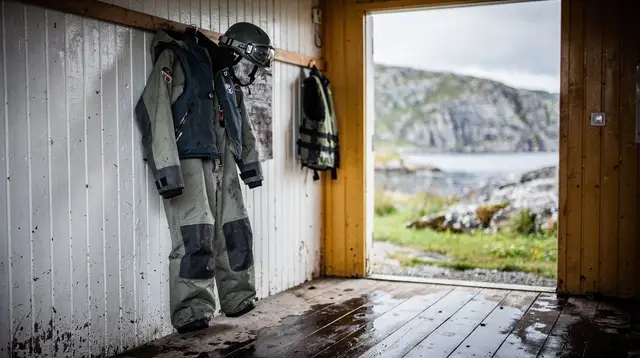
GetYourGuide does not provide a product photo for this activity — the image shows the meeting point, photographed by us.