Three Days: Preikestolen and the Lysefjord by Boat
Preikestolen gets the postcard, but the Lysefjord underneath it is 42 kilometres long, and most visitors only ever see the last few hundred metres of it from the cliff edge. This plan spends a whole extra day fixing that: a full cruise deep into the fjord, past walls that rise more than 1,000 metres straight out of the water, to the small settlement of Flørli and its famous wooden staircase — seen from the deck, not climbed.
It stays car-free from start to finish. The Preikestolen shuttle and the Lysefjord cruise boats both depart from Stavanger city centre, so nothing in these three days requires renting a car or driving the Lysebotn road. That trade-off is deliberate: it means leaving out Kjeragbolten and the inland Ryfylke sights around Frafjord, which both sit at the end of a road that closes for winter. If those are on your list, the four-day car itinerary through Ryfylke covers them alongside the same Preikestolen and Lysefjord highlights.
Day 1: Stavanger and Gamle Stavanger
Use the first day to land, get oriented, and walk off the flight before the more physical day ahead. Sola airport is about 14 kilometres from the centre, and Kolumbus buses run the route regularly, so there’s no need to arrange a car transfer.
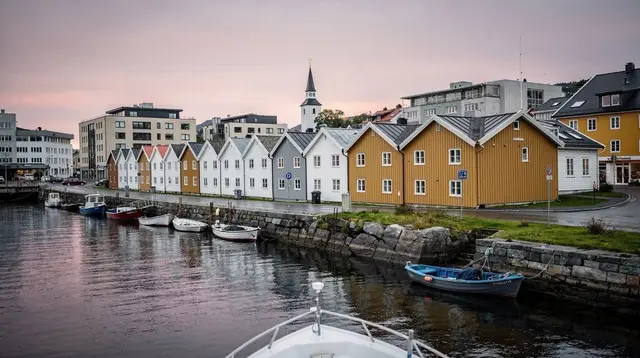
Spend the afternoon in Gamle Stavanger, the old town on the west side of Vågen harbour: around 170 white wooden houses from the 18th and 19th centuries, still lived in rather than preserved as a museum piece, on cobbled lanes that cost nothing to wander. It’s the largest concentration of preserved wooden houses in Northern Europe, and a self-guided walk through it takes an hour or two at an easy pace — see the self-guided walk guide for a route that doesn’t backtrack.
From there, walk around the harbour to Øvre Holmegate, the street of brightly painted houses that has become one of the most photographed corners of the city, then up to Stavanger Cathedral, consecrated around 1125 and the only medieval Norwegian cathedral still standing and in use without a major rebuild. Climbing Valbergtårnet nearby gives a rooftop view over the harbour for getting your bearings before tomorrow’s hike.
If there’s energy left, the Norwegian Petroleum Museum on the harbourfront explains what changed here after the Ekofisk discovery in 1969 — useful context for a city whose skyline and economy are both shaped by oil, even if the old town gives no hint of it. Have dinner around Vågen; the eating around Vågen harbour guide has options at a range of prices, which matters in a country where meals out are not cheap.
Where to sleep: central Stavanger, ideally within walking distance of the bus terminus, since both the Preikestolen shuttle and the fjord cruise boats leave from there.
Day 2: Preikestolen
This is the physically demanding day, so it goes second, while you’re still fresh from a rest night rather than tired from travel.
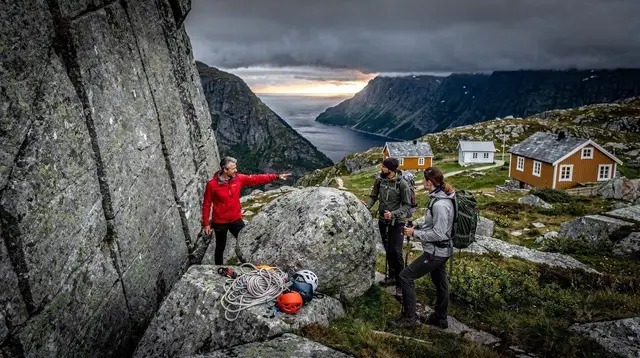
The shuttle bus to the Preikestolen trailhead leaves from central Stavanger; the shuttle bus guide covers timetables and where to catch it, and the how long does it take guide is worth reading the night before so the schedule isn’t a surprise. The hike itself is roughly 8 kilometres round trip with about 350 metres of elevation gain, generally taking four to five hours at a normal pace. The trail is well marked and heavily used — on the order of 300,000 people a year make this walk — but it is real, uneven terrain, not a paved path, and there is no barrier at the cliff edge itself.
Parking at the trailhead is paid; the trail and the plateau are not. Booking a spot with a guide, rather than going solo, adds context on the geology and history of the fjord along the way — see a small-group guided hike from the Preikestolen trailhead if that appeals, or a combined option that pairs the hike with a fjord cruise on the way back, covered below.
Preikestolen itself is a flat plateau at 604 metres above the Lysefjord, with drops on three sides. It rewards an early start: the trail is at its least crowded in the first couple of hours after the shuttle’s earliest departures, and the light on the fjord walls below is usually better in the morning than at midday.
Back in Stavanger by evening, an early night makes sense — day three starts with a morning departure and runs several hours on the water.
Alternative for a shorter or repeat visit: a helicopter flight over Preikestolen and the Lysefjord covers the same terrain from the air in under an hour, which is worth knowing about if weather or time cuts the hiking day short.
Day 3: The Lysefjord by boat, to Flørli and back
This is the day that separates this itinerary from the standard two-day version, and the reason to give the trip a third day at all.
Preikestolen from below looks different from Preikestolen from above, and a cruise into the Lysefjord shows both the scale of the fjord — roughly 42 kilometres long, up to about 400 metres deep, with walls exceeding 1,000 metres in places — and the cliff you stood on the day before, this time as a speck against the rock face.
The Lysefjorden cruise and Preikestolen hike combination is one way to link the two days if you’d rather not book them separately; on its own, a dedicated cruise gives more time on the water and is the better choice for the Flørli leg of this plan. The what you actually see guide and the how long, which one guide are worth checking before booking, since routes and running times vary by operator and season.
Most cruises out of Stavanger sail past Preikestolen’s cliff, continue deeper into the fjord, and turn at or near Flørli, a small former hydropower settlement known for its wooden staircase of 4,444 steps — the longest wooden staircase in the world. Here is the trap worth naming clearly: the staircase is disused infrastructure, not a maintained hiking trail, and it is not something to plan to climb during a standard visit. Most cruises don’t stop long enough for it, some don’t dock at all, and climbing it is a serious undertaking in its own right, not an add-on to a day already built around a boat schedule.
The realistic way to experience Flørli on this trip is from the water, looking up at the staircase running up the mountainside, or from the lower path near the jetty if the boat does dock — the Flørli hike guide covers what a genuine ascent involves for anyone planning a separate, dedicated visit later.
A useful table for planning which boat option fits the day:
| Option | Typical duration | What you see |
|---|---|---|
| Lysefjord cruise from Stavanger | 3-4 hours round trip | Preikestolen cliff, fjord walls, Flørli from the water |
| Cruise + Preikestolen hike combo | Full day | Both the plateau and the fjord below it, on one ticket |
| Boat to Preikestolen from Forsand | Shorter transfer | A one-way approach to the trailhead by water instead of the shuttle bus |
For travellers who’d rather approach Preikestolen itself by water instead of the shuttle bus, a boat trip from Stavanger to the Preikestolen trailhead via Forsand is a different way to reach the same hike — not a fit for this particular three-day sequence, since day two is already spent on the hike, but worth knowing about if replanning the order.
Back in Stavanger by early evening, this is a good last night for a slower dinner around the harbour — the boat day is markedly less strenuous than day two, so there’s little reason to rush.
Why Kjeragbolten and inland Ryfylke are left out
It’s worth being direct about the trade-off this itinerary makes. Kjeragbolten, the boulder wedged at around 984 metres above the fjord, is reached via Øygardstølen at the end of the Lysebotn road — a route that closes for winter and, even in season, effectively requires a car and a full day on top of the 10-12 kilometre hike itself, with three chain-secured sections that make it a serious undertaking rather than a casual add-on. The same road access problem rules out a comfortable visit to Månafossen waterfall and the Frafjord area in three car-free days.
Neither absence is a flaw in Rogaland — it’s a reason this region rewards a second trip. Anyone who wants Kjerag, Frafjord and Månafossen alongside Preikestolen and the Lysefjord should look at the four-day car itinerary through Ryfylke, which adds a rental car and a fourth day to reach them properly, or the five-day Kjerag and Jæren itinerary for a longer version that also reaches the coast south of the city.
Practical notes for these three days
Norway is not in the EU and doesn’t use the euro — the currency is the Norwegian krone, and card payment covers nearly everything, so there’s rarely a reason to carry cash. It’s also a genuinely expensive country for food, drink and organised tours, worth budgeting for rather than being surprised by.
Pack for rain regardless of season: Stavanger sees around 1,180 to 1,250 millimetres of precipitation a year, and both the Preikestolen trail and an open-deck cruise are more pleasant with a proper waterproof layer than without one. Winters are mild for the latitude (January averages roughly 1-2°C) and summers are cool (around 16-17°C in July), so the packing list changes less by season here than in much of Norway — see the hiking pack list for Rogaland for specifics.
For browsing more of the fjord’s boat and hiking options side by side before committing, the fjord cruises category and the Pulpit Rock hikes category both list current operators and departure points in one place.
Questions about this Preikestolen and Lysefjord boat itinerary
Do you need a car for this three-day Lysefjord itinerary?
No. Every leg — the city walk, the Preikestolen shuttle and the Lysefjord cruise — starts from central Stavanger, so you can do all three days on foot, by bus and by boat.
Can you walk up the 4,444 steps at Flørli on this trip?
Not as part of a standard visit. The staircase is a disused hydropower structure, not a maintained trail, and most boats do not stop long enough for the climb. See it from the water or from the lower path near the jetty instead.
Why isn’t Kjeragbolten included in this itinerary?
Kjeragbolten is reached via the Lysebotn road, which closes for winter and takes a full day with a car even in season. This plan is built around Stavanger’s two car-free anchors, Preikestolen and the fjord cruise, not Kjerag.
What if I also want to see Frafjord and Månafossen waterfall?
Those are inland Ryfylke sights that need a car. Use the four-day car itinerary through Ryfylke instead, which adds Frafjord and Månafossen to the same Preikestolen and Lysefjord highlights.
How long is the Lysefjord cruise to Flørli?
Most Lysefjord cruises from Stavanger run three to four hours round trip, sailing past Preikestolen’s cliff and on to Flørli before turning back, though exact routes and stops vary by operator and season.
Is three days enough for Stavanger, Preikestolen and the Lysefjord?
It is enough to do all three properly at an unhurried pace — one day in the city, one day hiking, one day on the water — without the long car days that Kjerag or inland Ryfylke would require.
What’s the best order for the three days?
Start with the city on day one to adjust and get logistics sorted, do the more demanding Preikestolen hike on day two while you’re fresh, and save the boat day for last, since it needs the least early-morning effort.
tours.3 days
Verified deep-linked GetYourGuide tours. Book through these links and we earn a small commission at no cost to you.
GetYourGuide does not provide a product photo for this activity — the image shows the meeting point, photographed by us.