What to Wear on a Lysefjord RIB Safari
What should you wear on a Lysefjord RIB safari?
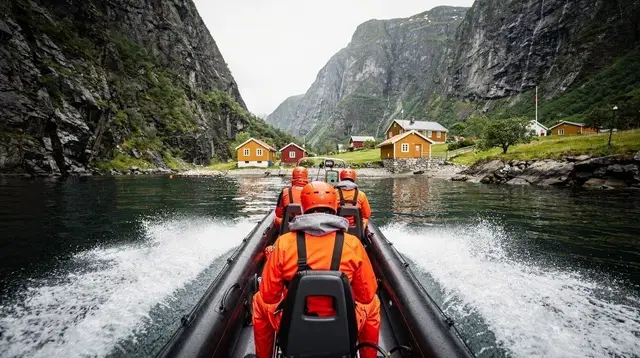
Warm base and mid layers under the flotation suit the operator provides, plus a hat, gloves and closed shoes you don't mind getting wet. A flotation suit blocks water and wind but adds almost no insulation of its own, and boat speed turns even 16-17°C air into a genuinely cold ride.
Every operator running a RIB safari across the Lysefjord hands you a flotation suit before you step on board, and that single fact leads a lot of people to under-pack. The suit is real protection against water and wind, but it is not insulation, and it is not a substitute for thinking about what you put on underneath it.
This guide is only about that layer — clothing, footwear, and how to keep a phone or camera working through an hour of spray — not about the route, the stops, or how the boat handles the water, which are covered in the RIB safari roughness guide and the departure points guide.
Why the Suit They Give You Isn’t the Whole Story
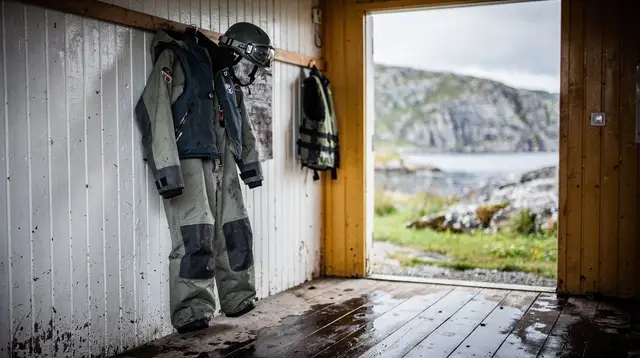
A flotation suit is a windproof, waterproof outer shell with a small amount of built-in buoyancy foam. It does an excellent job of stopping spray and wind from reaching your body directly, and it will keep you afloat if you ever ended up in the water, which is its actual purpose. What it does not do is add meaningful warmth of its own. Put it on over a t-shirt on a cool, breezy day on the Lysefjord and you will still be cold within twenty minutes, because the suit is doing its job — blocking wind and water — while your body has nothing underneath to hold heat against.
This matters more on the Lysefjord than it would on a warm-water tourist boat elsewhere, because Rogaland’s summer is genuinely cool. July averages sit around 16-17°C on land, and a boat travelling at 30-40 knots across open fjord water generates wind chill on top of that. The air moving past you at speed feels considerably colder than the thermometer reading, and spray thrown up by the hull adds an evaporative cooling effect on any exposed skin. None of this is dangerous under normal conditions with the suit provided, but it is enough to turn an under-dressed hour into a genuinely miserable one, and it is the single most common complaint operators hear from people who assumed “a jacket” would be sufficient.
Layering Underneath the Flotation Suit
Think of this the way you would dress for a cold, windy hike rather than a boat trip in summer clothes. Three layers cover almost every date on the calendar:
- Base layer — a long-sleeve top and leggings in merino wool or a synthetic base-layer fabric, not cotton. Cotton holds moisture against skin and stops insulating once it’s damp, which happens easily in a boat throwing up spray.
- Mid layer — a fleece or a light wool jumper. This is the layer doing most of the actual warming, and it’s the one people most often skip because it doesn’t look necessary standing on dry land at the harbour.
- Outer layer — your own jacket and trousers go on before the suit, not instead of it. The suit is the true weatherproof shell; your outer layer is there for the extra warmth, not to keep water out on its own.
A useful way to check you’ve got this right: dress as if you were going for a brisk, windy coastal walk in early autumn at home, then add the suit on top of that. If your own clothing alone would feel slightly too warm standing still indoors, that’s roughly the right amount for the boat.
A Quick-Reference Packing List
| Item | Why it matters | Skip if… |
|---|---|---|
| Non-cotton base layer (top + bottom) | Stays warm even if damp | Never skip this one |
| Fleece or wool mid layer | Main source of warmth under the suit | Trip is in peak summer heat on land |
| Warm hat or buff | Suit hood alone isn’t very insulating | You run consistently warm |
| Waterproof gloves or liners | Hands get cold fastest in wind and spray | Operator’s gloves fit you well |
| Closed, wet-friendly shoes | Boat floor and jetty are both wet | — never skip |
| Sunglasses with a strap | Glare off the water, won’t blow off | Overcast, no wind |
| Waterproof phone pouch or dry bag | Spray gets past pockets at speed | You’re leaving devices behind |
| Change of socks (left in the car/hotel) | Feet often end up damp | Short trip, no onward plans |
Footwear: The Detail People Get Wrong Most Often
Sandals, flip-flops, and anything backless are the wrong choice here, even in the middle of summer. The boat deck and the jetty you board from are both routinely wet, sometimes with a film of algae, and the ride itself involves bracing your legs against sudden movement — not something you can do safely or comfortably in open shoes. Trainers, hiking shoes, or neoprene water shoes all work well. None of them need to be waterproof in the technical sense, because your feet are going to get damp regardless once spray finds its way in; what matters is that they stay on your feet and give you something to brace against. Bring a dry pair of socks to change into afterwards if you have anywhere to be next — feet are usually the last thing to dry out.
Hands, Head and Face
Hands lose heat fastest of any part of the body exposed to wind at speed, and gripping a rail or seat handle for an hour doesn’t help. Some operators supply gloves with the suit; if yours doesn’t, or if you run cold, bring a thin pair of waterproof or windproof gloves of your own — thin ski gloves work well, as do simple neoprene ones.
For your head, the suit’s hood blocks water but is not particularly warm on its own, so a hat or buff underneath it makes a noticeable difference, especially for anyone sensitive to cold ears. Sunglasses are worth packing on a bright day for the glare bouncing off the water, but choose a pair with a retaining strap or be prepared to hold them — a gust or a bump over wake can take a loose pair straight into the fjord.
Protecting Phones and Cameras
This is where a lot of otherwise well-dressed passengers still end up disappointed. Spray at 30-40 knots doesn’t behave like rain; it gets driven horizontally and finds its way into pocket flaps, unsealed zips, and the seams of bags that would keep a phone perfectly dry on a wet afternoon walk. A phone in a jeans pocket under a flotation suit might survive an hour untouched, or it might not — it depends on wave conditions, wind direction and how many times you reach for it.
The safer approach is a dedicated waterproof phone pouch, the kind with a roll-top or a clip seal rated for full submersion, worn on a lanyard around your neck or clipped to a strap so it can’t be dropped over the side. For a proper camera, a small dry bag or a purpose-made rain cover is worth the extra bulk, and it’s worth deciding in advance whether you’ll be taking it out at all during the fastest sections — most people find they get their best photos at the slower moments near Preikestolen itself, rather than mid-crossing.
If you don’t own waterproof cases already, a resealable freezer bag around a phone is a genuinely workable backup — not elegant, but it keeps the screen usable through the plastic and stops most spray. What doesn’t work well is trusting a “water-resistant” phone rating on its own; those ratings are usually tested against submersion or a shower, not sustained horizontal spray combined with the phone being handled with wet, cold fingers.
Peak Summer vs Shoulder Season
The core list above doesn’t change much across the season, but how many layers you actually put on does.
June through August is when most RIB safaris run and when the fjord is at its calmest and busiest. Air temperatures around 16-17°C still mean a base layer plus a mid layer under the suit is the sensible default, not an overcautious one — plenty of visitors expecting a warm Norwegian summer are surprised by how cold the crossing feels compared to standing on dry land in Stavanger. For a fuller picture of how conditions shift across the year, the best season for a Lysefjord cruise guide covers RIB safaris and slower cruise boats together.
Shoulder season (May and September), where operators run it, calls for an extra layer again — a heavier mid layer or a second thin layer, warmer gloves, and less tolerance for skipping the hat. Air temperatures on land are noticeably lower than midsummer, and the wind-chill effect from boat speed stacks on top of that the same way it does in July, just starting from a colder baseline.
What Not to Bring
A few things are worth leaving behind rather than packing:
- Loose scarves or long unsecured layers — anything that can flap or catch is a minor hazard on an open, moving boat.
- A full backpack of valuables — storage space is limited, and what isn’t on your body typically goes into a hatch or dry storage rather than staying within reach. Pack a small waterproof pouch instead of a full bag.
- Anything you’d be devastated to lose — jewellery, an expensive watch you don’t want wet, a passport. The fjord doesn’t need much of an excuse to take something from an open boat.
- Only a thin windbreaker as your outer layer — this is the mistake worth repeating: it feels like enough on the jetty and stops feeling like enough about ten minutes into the ride, once boat speed turns a mild breeze into a cold one.
Putting It Together with the Rest of Your Trip
Once you’ve got the layering right, the rest of the RIB safari experience — the route past waterfalls and old farms, how close you get to Preikestolen from the water, and how it compares to a slower cruise boat — is covered separately. If you’re still deciding between a RIB safari and a calmer option, the RIB safari versus cruise comparison walks through the trade-offs, and the Lysefjord cruise “what you actually see” guide covers the sights themselves in more detail.
For a broader view of the region’s rib safaris and other ways onto the water, the things to do near the Lysefjord page and kayaking on the Lysefjord guide are useful next stops, and the general Rogaland packing guide is worth a look if you’re combining the boat trip with hiking on the same visit.
If your RIB safari is one stop on a longer day, the one-day Lysefjord cruise itinerary shows how it fits around the rest of a Stavanger day trip, and the notes on the weather app misreading conditions at height are a useful reminder that forecasts for Stavanger itself don’t always describe what you’ll feel out on the water.
Other than one more Lysefjord RIB fjord tour departing from Sandnes, a private RIB safari cruise for a smaller group, and a RIB boat tour that includes a boathouse visit, most of what separates one RIB safari operator from another is route and duration rather than what to wear — the clothing advice above holds regardless of which one you book.
Common Questions About Dressing for a Lysefjord RIB Safari
Do I need to bring my own wetsuit or drysuit for a RIB safari on the Lysefjord?
No. Every RIB safari operator on the Lysefjord provides a full flotation suit, and most also hand out gloves. Your job is what goes underneath it, not the suit itself.
What should I wear underneath the flotation suit?
Treat it like a cold-weather layering problem, not a rainy-day one. A base layer that isn’t cotton, a fleece or wool mid layer, and a warm hat under the hood the suit provides make a bigger difference than anything you put on top.
Is a waterproof jacket or windbreaker enough on its own?
Not really, even though it feels adequate standing on the quay. A boat doing 30-40 knots across open fjord water creates wind chill that a thin shell alone doesn’t stop, which is exactly why the operator issues a full suit over whatever you’re wearing.
Will my phone or camera survive the spray if I just keep it in a pocket?
Sometimes, but it’s a bet you don’t need to make. Spray at speed gets driven into zips and pocket flaps that stay dry in normal rain, so a dedicated waterproof pouch or a fully zipped dry bag is the safer choice for anything electronic.
What shoes work best on a RIB safari?
Closed shoes that can get wet and that you can stand in for an hour or more — trainers, hiking shoes or neoprene water shoes. Sandals and anything you’re precious about are the wrong choice; the floor of the boat and the jetty are both routinely wet.
Does the time of year change what I need to bring?
It changes how much, not the basic list. Rogaland summers only average around 16-17°C in July, so warm layers matter even in July and August, and shoulder-season trips in May or September call for an extra layer again plus warmer gloves.
Can I bring a backpack or a large camera bag on board?
Space is limited and everything not on your body gets wet or gets stowed, sometimes in an open hatch rather than a sealed one. Pack light, keep valuables in a small waterproof pouch you can hold, and leave anything you’d hate to lose back at your accommodation.
tours.rib-safaris
Verified deep-linked GetYourGuide tours. Book through these links and we earn a small commission at no cost to you.
GetYourGuide does not provide a product photo for this activity — the image shows the meeting point, photographed by us.