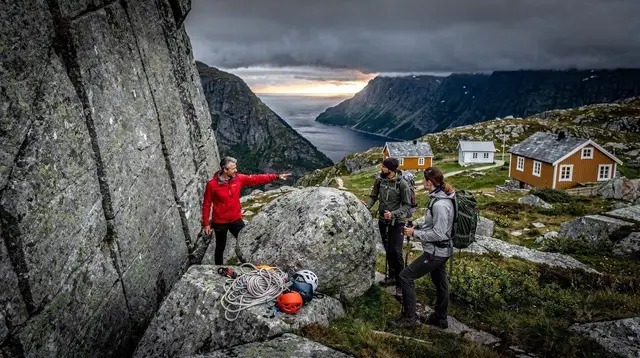
Five Days of Solo Hiking Around Stavanger
This is not a sightseeing week. It is five trailheads, five days, and one rule: a real hike every day, with a deliberate breather in the middle so the legs are still working on day four. Museums, the harbour, Gamle Stavanger’s wooden lanes — all of it is skipped on purpose. Anyone who wants that alongside a hike or two should look at the two-day Stavanger and Preikestolen itinerary instead; this one is built for a solo hiker who came for elevation, not architecture.
A rental car covers everything except day two. Preikestolen is the one trailhead a shuttle bus can reach directly from central Stavanger; Dalsnuten, Manafossen, Kjeragbolten and Himakana all start well outside the reach of a useful bus schedule. Base yourself in or near Stavanger for the first two days, then it makes sense to sleep closer to Ryfylke for the Månafossen and Kjerag days before finishing near Haugesund.
Day 1: Dalsnuten, a warm-up with a payoff
Dalsnuten sits just outside Sandnes, a short drive from Stavanger, and it earns its place as day one for a reason: steep enough to test your legs and your pack before the bigger days, short enough to leave the afternoon free for gear sorting and food shopping. The round trip runs a couple of hours from the Ravnedalen or Reiestad trailheads, climbing through pine forest to a bare granite summit with a wide view back over Sandnes, Gandsfjorden and, on a clear day, out toward the coast.
Treat this as a fitness and gear check, not a throwaway walk. Wear the boots you plan to wear on Kjeragbolten, carry the pack weight you plan to carry there, and notice what chafes or slips before it matters on a longer route. The full Dalsnuten hike guide covers the trailhead options and parking in more detail. Spend the rest of the day organizing food, water bladders and layers for the week — Rogaland’s weather does not care what the forecast said in the morning.
Day 2: Preikestolen, the one you can reach without a car
Preikestolen is the only trailhead on this itinerary served by a direct shuttle bus from Stavanger, which makes today the easiest day logistically even though the hike itself is not easy. The standard route runs about 8 km round trip, 4 to 5 hours, with roughly 350 m of elevation gain from the Preikestolen fjellstue trailhead. The trail is well marked and heavily used — on the order of 300,000 people a year make this walk — but it is real, uneven terrain over rock and boarded sections, not a paved path.
The plateau itself sits at 604 m directly above the Lysefjord, roughly 25 by 25 meters, with a sheer drop on three sides and no railing. Parking at the trailhead is paid; the trail and the plateau are free. Go early if you can — the crowding on the final approach and on the rock itself is the main complaint from people who hike it midday in July or August.
If you’d rather see the same cliff from below instead of walking to the top, the Preikestolen from the fjord guide compares that option, and a local operator also runs guided hikes around Preikestolen if you’d rather not navigate the trail alone on a first visit.
Sleep somewhere toward Forsand or Jørpeland tonight rather than back in central Stavanger — it shortens tomorrow’s drive to Frafjord and starts pulling you toward Ryfylke for the rest of the week.
Day 3: Månafossen, the recovery day that isn’t a rest day
This is the day that keeps the whole itinerary from backfiring. Preikestolen and Kjeragbolten are both multi-hour hikes with genuine elevation gain, and hiking them on consecutive days is one of the more common ways solo hikers exhaust themselves right before the harder of the two. Månafossen, near Frafjord in the Ryfylke area, is the deliberate buffer: a moderate trail to a genuinely striking payoff, at around 92 m the tallest waterfall in Rogaland, without the sustained climb of the days on either side.
The trail to the falls is shorter and gentler than Preikestolen or Dalsnuten, which is the point — legs get real recovery time while you still get outside and see something worth the drive. The Månafossen waterfall hike guide has trailhead and timing details, and best season to see it is worth checking since flow varies noticeably through the year.
If you want more than a walk today, a local operator runs a combined Månafossen waterfall and via ferrata bouldering day, and paddlers can add a guided kayak or SUP tour in Frafjord onto the same base. Either way, keep today shorter than yesterday and tomorrow — that’s what it’s for.
Day 4: Kjeragbolten, the day you don’t underestimate
Kjeragbolten is the hardest day on this itinerary and the one hikers most often get wrong by assuming it’s “just a boulder photo.” The round trip runs 10 to 12 km and 6 to 8 hours, with three steep sections secured by chains that demand real attention and a head for heights. Fatal falls have occurred here. This is not a hike to treat casually, and it is not one to start late in the day, in poor weather, or without checking conditions first.
The trailhead is Øygardstølen, at the end of the road down to Lysebotn — a road that closes with the first snow and often doesn’t reopen until late spring, which cuts Kjerag off from this itinerary outside roughly May to September. Before you commit the day, check the Lysebotn road opening and closing dates.
On the trail itself, the Kjeragbolten vs Preikestolen comparison is useful for calibrating expectations, and if you’re weighing whether to actually step onto the boulder rather than just reach it, should you stand on Kjeragbolten lays out what that decision actually involves. If solo feels like the wrong call once you’re there, do you need a guide for Kjeragbolten covers the guided alternative — a reasonable choice for a first exposed scramble, not a concession.
Start early, watch the forecast the night before, and if conditions look marginal, treat Månafossen as your buffer and push Kjerag a day rather than forcing it.
Day 5: Himakånå, the send-off near Haugesund
Himakånå, sometimes billed as the Trolltunga of Haugesund, closes the week with one more real climb rather than a soft final day. It’s a shorter drive north from Ryfylke toward Haugesund, and the trail itself delivers a rock outcrop payoff in the same spirit as Preikestolen and Kjerag, at a fraction of either one’s crowd or commitment. The Himakånå hike guide covers the current trailhead and route.
With Haugesund as your base for the last night, there’s room to unwind on the water instead of on foot if your legs are done climbing — a RIB safari out to the island communities or a calmer electric boat tour with a guide both run from town. From here, Sola airport is a manageable drive back south, or continue on into the Karmøy and Avaldsnes area if the week hasn’t worn you out yet.
FAQ: Solo Hiking Around Stavanger for Five Days
Can I do this itinerary without a car?
Only the Preikestolen day works without one, using the trailhead shuttle from central Stavanger. Dalsnuten, Månafossen, Kjeragbolten and Himakånå all start from trailheads that public transport does not reach on a useful schedule, so a rental car is effectively required for the rest of the week.
Is it safe to hike Kjeragbolten alone?
People do it every summer, but it is not a beginner solo hike. The chained sections are steep and exposed, fatal falls have occurred on this route, and there is no phone signal in parts of the valley. Go only in good weather, tell someone your return time, and consider the guided option if it is your first exposed scramble.
Why is there a waterfall day between Preikestolen and Kjeragbolten instead of back-to-back hiking?
Preikestolen and Kjeragbolten are both 4-8 hour hikes with real elevation gain, and stacking them on consecutive days is a common way visitors exhaust themselves before the harder of the two. The Månafossen day is deliberately shorter, giving legs a day to recover before Kjerag.
What if the Lysebotn road is closed?
The road to Øygardstølen, the trailhead for Kjeragbolten, closes with the first serious snow and often does not reopen until late spring. Outside roughly May to September, check the current status before building this itinerary around it, and have Månafossen or Dalsnuten as a fallback extra day.
Do I need hiking experience for all five days?
Dalsnuten and Preikestolen are demanding but non-technical and well marked. Månafossen is a moderate trail. Kjeragbolten and Himakånå both involve steeper, more exposed terrain and are where prior hiking experience actually matters.
Should I book a guide for any of these hikes?
It is optional for all five, but worth considering for Kjeragbolten specifically if you have never done an exposed chained scramble alone. A local guide adds route knowledge, pacing and a second point of judgment on the day’s weather.
What about Stavanger city itself?
This itinerary skips it almost entirely to keep five full days for trails. Anyone who also wants Gamle Stavanger, the cathedral and the harbour should pair this with a separate city stop, or start from the two-day Stavanger and Preikestolen itinerary instead.
tours.5 days
Verified deep-linked GetYourGuide tours. Book through these links and we earn a small commission at no cost to you.
GetYourGuide does not provide a product photo for this activity — the image shows the meeting point, photographed by us.