Stavanger with Kids: A Family Activity Guide
What are the best family activities in Stavanger?
Gamle Stavanger, Øvre Holmegate, the harbour and the Norwegian Petroleum Museum work for any age with zero elevation gain. Dalsnuten, a farm visit or Skogsprett Adventure Park suit kids who can handle a short walk. Kjeragbolten should never be attempted with children, and Preikestolen only makes sense once kids can reliably walk 8 km on uneven ground.
Stavanger is a manageable, compact city, and that alone makes it a good base for a family trip. The harder question is what to do with the days themselves, because the region’s two most famous attractions sit at opposite ends of the difficulty scale from most children’s abilities. This guide separates what works from what does not, treats each activity in its own entry with a realistic time and effort estimate, and is explicit about the one hike that should never appear on a family list at all.
One rule up front: Kjeragbolten, the boulder wedged above the Lysefjord, is not included here as an activity for children, and it should not be treated as a variant of Preikestolen. It involves 10-12 km of hiking with three chain-secured sections and a genuine fall risk, and fatal accidents have occurred there. If you see it recommended for families anywhere, that recommendation is wrong.
Gamle Stavanger: the easiest win in the city
Gamle Stavanger is the obvious starting point for a family day, and it costs nothing beyond your own time. Around 170 white wooden houses from the 18th and 19th centuries line cobbled streets on the west side of the harbour, and the whole area is flat, free to walk through, and short enough that a stroller or tired legs are not a problem. It is a living residential neighbourhood rather than a museum, so keep voices down and stay on the public lanes, but there is no admission, no opening hours and no route to plan beyond wandering.
Budget 30-45 minutes if you are moving with young children, longer if anyone wants to photograph doors and window boxes. It pairs naturally with the harbour, described below, since both sit within a few minutes’ walk of each other. A self-guided walk works well if you would rather not follow a group, or you can join a guided walking tour with old town and harbor if you would prefer a local telling the stories.
For families who like a bit more structure without extra walking distance, a guided walking tour through the old town and harbour keeps the pace gentle and adds context that self-guiding tends to miss, such as why the houses survived and who still lives in them.
Øvre Holmegate: five minutes, guaranteed photos
Øvre Holmegate is a short street painted in bright, saturated colours, and it is close to unbeatable for a five-to-ten-minute stop that keeps kids engaged without any planning at all. There are cafés along it if anyone needs a break, and it sits close enough to the harbour and Gamle Stavanger that it slots into the same outing rather than needing its own trip. There is no fitness requirement here and nothing to nuance by age; it is flat pavement from end to end. See the colourful street guide if you want the background on why the street looks the way it does.
Vågen harbour and the Norwegian Petroleum Museum
Vågen harbour is Stavanger’s working waterfront, lined with fishing boats, ferries and outdoor seating, and it is an easy place to let kids watch boats come and go while adults get a coffee. Directly on the harbour sits the Norwegian Petroleum Museum, opened in 1999 in a building shaped to echo an offshore platform. It covers the discovery of the Ekofisk field in 1969 and the industry that grew from it, with hands-on exhibits that tend to hold the attention of children from roughly age six upward better than a typical history museum. Budget an hour to ninety minutes indoors, which also makes it a solid option on a rainy day, and rain is common here.
The museum guide has more on what to expect inside if you want to judge whether it suits your children’s ages before you go.
Sverd i Fjell: a five-minute stop with a story
A short drive from the centre, Sverd i Fjell is three bronze swords, each about 10 m tall, planted point-down into rock at Hafrsfjord in 1983. They mark the Battle of Hafrsfjord, traditionally dated to 872 CE and credited with unifying Norway. There is no hike involved, just a short walk from parking to the site, and the scale of the swords tends to impress children more than the historical explanation does, which is fine. Fifteen to twenty minutes is enough unless you want to linger by the water. The swords guide covers the story in more depth for anyone who wants to explain it properly on site.
Flør og Fjære: a short boat ride into a garden
Flør og Fjære is reached only by boat, which is itself part of the appeal for children, and the gardens on the other side are laid out on paths flat enough for a stroller or unsteady toddler legs. It is one of the more reliably toddler-friendly outings in the region precisely because there is no hiking component at all once you land. Plan for half a day once you include the boat crossing and time to explore, and check the crossing itself suits your child before booking, since some younger kids find open-water boat trips more unsettling than the destination is worth.
Dalsnuten: the easy hike, if you want one
If you want the feeling of a hike without the commitment of Preikestolen, Dalsnuten is the standard local answer. It is a short, well-marked loop close to Sandnes with modest elevation gain and a real summit view at the top, usually finished in well under two hours even at a family pace. It is a genuinely good introduction to Norwegian hiking terrain for kids who have never walked on rock and root trails before, without the length or exposure of the bigger routes further into Ryfylke. The easy hikes guide lists a few comparable alternatives if Dalsnuten does not fit your day.
Skogsprett Adventure Park and Vitenfabrikken: rain-day backups
Two options are worth keeping in reserve for a wet or low-energy day. Skogsprett Adventure Park offers rope courses and climbing structures graded by age and height, which makes it one of the few genuinely active options that does not depend on weather cooperating. The adventure park guide has the height and age requirements you will need to check before arriving. Vitenfabrikken, a hands-on science centre, is a straightforward indoor fallback for a rainy morning, particularly for children in the primary-school range who enjoy pressing buttons and running experiments.
Jæren beaches: sand instead of fjords
The long sandy beaches of Jæren, a genuine exception on a coastline otherwise dominated by fjords and rock, are an easy half-day for families who want open space to run rather than a trail to follow. There is no fitness requirement beyond walking on sand, and the beaches are large enough that children can spread out. Wind and cool water are the realistic conditions here rather than a Mediterranean beach day, so plan for jackets even in July. The Jæren beaches day trip guide and the things to do hub both have more detail on which stretch of coast suits which kind of visit.
A farm visit and the water, for an activity-based day
Two bookable options fill out a family day with something more structured than sightseeing. Outside Haugesund, an apple picking and pressing visit at Odland Farm gives younger children a hands-on activity with a tangible result, and it runs at a gentle pace suited to a range of ages.
Near Frafjord, a guided kayak or paddleboard session works well for older kids and teenagers who are comfortable in the water and want something more active than a walk, though it is not a fit for non-swimmers or very young children. For families who enjoy the water without paddling themselves, a guided fishing trip with equipment included is a low-effort way to spend an afternoon on a boat, with gear provided so there is nothing to arrange in advance.
Preikestolen: the one that needs an age judgment, not a blanket answer
Preikestolen is the attraction most visitors ask about, and it deserves a straight answer rather than either a blanket yes or a blanket no. The standard trail is about 8 km round trip, takes 4-5 hours, and climbs roughly 350 m over uneven, rocky ground; the plateau at the top sits at 604 m with a sheer drop on three sides and no railing. None of that makes it as dangerous as Kjeragbolten, but it is a real hike, not a paved walk, and around 300,000 people a year make it one of the busiest trails in Norway, which means summer crowding on top of the physical demand.
In practice, this means Preikestolen suits children who can reliably walk 8 km on uneven terrain and who will listen closely to instructions near an unguarded cliff edge. That is usually somewhere from age seven or eight upward, but fitness and temperament matter more than a specific number. For younger children, or on a day when energy is already low, a Lysefjord cruise gives a view of the same cliff from the water with none of the walking, and the Preikestolen with kids guide goes into more detail on making that call for your own family. Parking at the trailhead is paid; the trail and plateau themselves are free.
Putting a family day together
The table below groups the options above by roughly how much time and effort each needs, which is more useful for planning than a simple age label.
| Activity | Time needed | Physical effort | Best for |
|---|---|---|---|
| Gamle Stavanger | 30-45 min | None | Any age |
| Øvre Holmegate | 5-10 min | None | Any age |
| Vågen harbour | 20-30 min | None | Any age |
| Norwegian Petroleum Museum | 60-90 min | None | Age 5+ |
| Sverd i Fjell | 15-20 min | Minimal | Any age |
| Flør og Fjære | Half day | Minimal (boat + flat paths) | Toddlers and up |
| Dalsnuten | 1.5-2 hours | Light hike | Age 5+ |
| Skogsprett Adventure Park | 2-3 hours | Moderate, age-graded | Age 4+ (by course) |
| Jæren beaches | Half day | None to light | Any age |
| Preikestolen | 4-5 hours | Real hike, no railing | Age 7-8+, case by case |
| Kjeragbolten | 6-8 hours | Serious, exposed | Not suitable for children |
A realistic pattern for a family trip is to pair one no-effort city stop with one active outing per day, using the city-centre options as a fallback whenever weather or energy runs low. If you want the itinerary version of this logic laid out day by day, the family itinerary builds a multi-day plan around exactly this mix, and the one-day Stavanger itinerary works as a shorter template if you only have a single day. For a broader look at what the region offers beyond families specifically, the family activities hub collects the categories this guide draws from.
tours.family-activities
Verified deep-linked GetYourGuide tours. Book through these links and we earn a small commission at no cost to you.
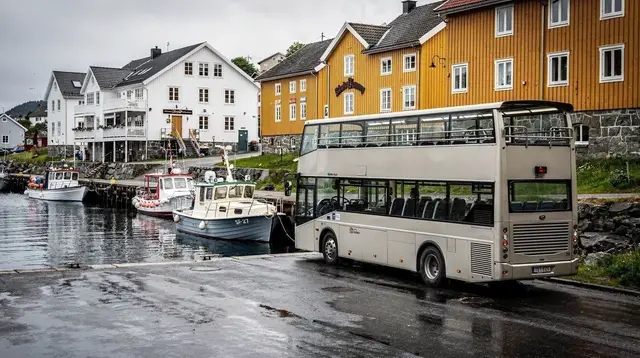
GetYourGuide does not provide a product photo for this activity — the image shows the meeting point, photographed by us.