Three Swords in the Rock, and What They Mark
On a low headland above the water at Hafrsfjord, on the western edge of greater Stavanger, three enormous bronze swords rise straight out of the bedrock. Each blade stands roughly 10 m tall, planted point-down as if driven into the ground by a giant’s hand, arranged in a loose triangle facing out across the fjord. There is no ticket booth, no fence, and no opening hours — the swords stand on open public ground, visible from the road and reachable on foot from a small car park a short walk away.
The monument is called Sverd i Fjell, “Swords in Rock,” and it was unveiled in 1983. It commemorates the Battle of Hafrsfjord, a sea battle fought on this stretch of water that Norwegian tradition credits with unifying the country’s petty kingdoms into one under a single king, Harald Fairhair. The three swords are usually read as representing the three regions or factions that fought here — one larger sword for the eventual unifier, two smaller ones for the losing side — though the sculptor’s own explanation has been described in slightly different ways over the decades, which is itself a small reminder of how much of this story is told rather than documented.
This page covers Sverd i Fjell on its own terms: what it is, how the battle it marks is remembered, how to get there, and how to fold a visit into a longer day around Stavanger. It does not cover the Norwegian Petroleum Museum or Stavanger Cathedral, both of which have their own dedicated pages on this site.
The Battle of Hafrsfjord: Tradition, Not an Established Fact
It matters to be precise about what is being commemorated here, because the story is often repeated as settled history when it is really a national tradition with a much softer archaeological footing.
The Battle of Hafrsfjord is traditionally dated to 872 CE. According to the saga tradition — chiefly Snorri Sturluson’s account, written more than three centuries after the events it describes — a coalition of local chieftains from the surrounding fjords gathered their fleets to resist a young ambitious ruler named Harald, who had vowed not to cut his hair until he controlled all of Norway. His fleet defeated theirs on the waters of Hafrsfjord, and the sagas present this victory as the moment Harald became sole king over a unified Norway, earning the name Harald Fairhair once he finally trimmed his famous hair.
That is the story as it has been told and retold, and it is a genuinely important piece of how Norway understands its own founding. But historians treat the details with real caution. The sagas were written long after the fact, drawing on oral tradition, and their dates and even the scale of “unification” they describe are debated.
Archaeology has not produced hard physical evidence pinning a decisive battle to this exact spot in this exact year — no wrecks, no mass grave, no contemporary inscription. Most current scholarship treats 872 and the Hafrsfjord battle as a traditional founding narrative rather than a precisely documented event, and treats “unification” itself as a longer, messier process than one battle could have accomplished on its own.
None of that makes the monument or the story pointless to visit — quite the opposite. Sverd i Fjell is honest about being a modern (1983) tribute to an old story, not a claim to have found the battlefield’s exact coordinates. Enjoy it as what it is: a striking piece of public art marking a foundational legend, on the same body of water the sagas name.
Getting to Hafrsfjord from Stavanger
Sverd i Fjell sits close enough to central Stavanger that it barely counts as a day trip — it is easily one stop on a half day that also takes in the harbour and the old town.
By car, it is roughly 15-20 minutes from the city centre, with free parking at a small lot near the site; from the car park it is a short, flat, well-marked walk down to the swords themselves. By public transport, Kolumbus buses run from central Stavanger toward the Madla/Hafrsfjord area, with a stop within reasonable walking distance of the monument — check current timetables before you go, since routes and stop names shift periodically. Travellers without a car can reasonably combine the trip with other nearby stops in a single outing; the practicalities of getting around without your own vehicle are covered in more depth on this site’s dedicated no-car guide.
If you are staying near Sola or arriving through Stavanger airport, Hafrsfjord is roughly on the way into the city, which makes it an easy first or last stop depending on your flight times.
| Getting there | Approximate time | Notes |
|---|---|---|
| By car from central Stavanger | 15-20 minutes | Free parking near the site |
| By Kolumbus bus | Varies by route | Check current timetable before travelling |
| On foot from nearby Sola area | Varies | Only realistic if you’re already staying close by |
| Combined with the airport | 10-15 minutes extra | Roughly on the route between Sola and the city |
What You’ll Actually See on Site
The three swords stand on a grassy, rocky rise a short walk from the car park, with open views out over Hafrsfjord. There’s an information plaque explaining the monument and the battle tradition in brief, and the site is popular at sunset, when the water and sky behind the blades pick up strong colour. It’s an easy, flat walk suitable for almost anyone, including children, though the swords themselves are climbable-looking rather than climb-approved — treat the bronze as art, not playground equipment.
Because the site is outdoors, unstaffed, and always open, there’s no queue, no crowd management, and no fixed visiting window. That also means there’s genuinely nothing to buy and nothing that needs booking — a rare, completely free stop in a city that, like the rest of Norway, is not cheap.
How Long to Spend, and What to Pair It With
Thirty to sixty minutes covers Sverd i Fjell comfortably for most visitors: time to walk down, read the plaque, take photos from a few angles, and walk back. It is not, on its own, worth structuring a whole day around, which is exactly why it works best bolted onto something else.
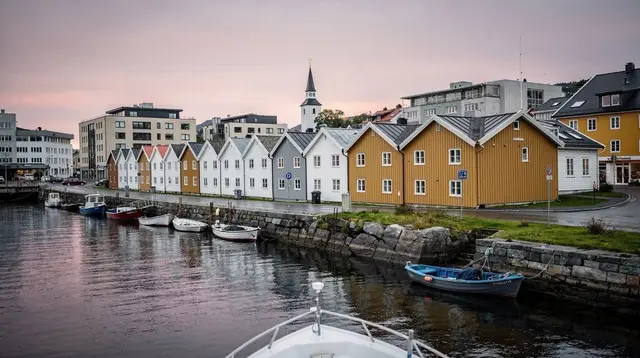
Reasonable pairings include a walk through Gamle Stavanger’s old wooden streets, a stop at the colourful houses of Øvre Holmegate, or — if the Viking angle appealed to you here — a visit to the Viking House in central Stavanger for a more immersive, screen-based take on the same era, or a longer trip north to Avaldsnes for a proper Viking farm reconstruction.
If you’d rather see the fjords themselves from the water, Stavanger’s harbour is also the departure point for a range of boat trips; a guided paddle session such as the two-fjord SUP and sauna outing puts you directly on the water the swords look out over, and for a faster, more dramatic angle, a RIB tour or a scenic flight over the wider Lysefjord and Preikestolen area gives you an aerial sense of just how much fjord and coastline this region actually has.
For travellers who like getting a bird’s-eye view of a landscape before or after walking through it on foot, a helicopter flight over the Stavanger fjords and Pulpit Rock is a memorable way to see how Hafrsfjord fits into the wider coastline. Closer to sea level, a guided stand-up paddle and sauna session on the Stavanger fjords is a gentler, unhurried way to spend an afternoon on the water.
If you’d rather cover more distance quickly, a RIB boat tour out into the Lysefjord or a combined boat trip to the Lysefjord and Pulpit Rock both depart from the Stavanger area and pair naturally with a morning spent at Sverd i Fjell.
A Half-Day Around Hafrsfjord and Central Stavanger
If you want to build a loose half-day itinerary around this stop, a workable order looks like this: start at Sverd i Fjell in the morning while the light is soft and the site is quiet, head back into the centre for a walk through Gamle Stavanger and Øvre Holmegate, then finish near the harbour with lunch and, if you’re interested, a stop at the Viking House. This keeps driving or bus time to a minimum and mixes an outdoor monument with the walkable old town. For a fuller structured plan, this site’s one-day Stavanger itinerary lays out a similar loop with more stops and timing.
Families travelling with children will find Sverd i Fjell easy going — flat ground, no entry fee, and a subject (giant swords) that tends to land well with kids regardless of how much saga history they absorb. It also works as a rainy-day stop, since there’s nothing indoors to seek shelter in but also nothing that requires good weather to appreciate; a bronze sword against grey clouds is arguably more atmospheric than one against a flat blue sky.
Practical Notes and Common Pitfalls
A few things worth knowing before you go. First, Norway is not in the EU or the eurozone — prices here, as everywhere in the country, are in Norwegian kroner, and card payment is close to universal, so there’s no need to carry cash for this stop or any other. Second, while Sverd i Fjell itself is free, don’t assume every nearby attraction is: the Viking House, Avaldsnes, and most boat and helicopter tours in the area charge normal Norwegian prices, which run higher than most visitors expect. Third, because the site is unstaffed, there’s no shelter, toilet, or café on site — plan around the harbour area in central Stavanger for facilities before or after your visit.
Finally, resist the temptation to treat the 872 date as a settled fact when you’re telling other people about the visit. It’s a genuinely old and important tradition in how Norway tells its own founding story, and the monument is a fair and moving tribute to that tradition — but it is a tradition, assembled from sagas written centuries after the events, not a battlefield confirmed by archaeology. Presenting it that way is both more accurate and, honestly, a more interesting way to talk about it.
Questions About Visiting Sverd i Fjell
What is Sverd i Fjell?
Sverd i Fjell is a monument of three bronze swords, each about 10 m tall, planted point-down into rock at Hafrsfjord near Stavanger. It was unveiled in 1983 and commemorates the Battle of Hafrsfjord.
How do I get to Sverd i Fjell from Stavanger?
It’s about 15-20 minutes by car from central Stavanger, with free parking near the site and a short flat walk down to the swords. Kolumbus buses also serve the general area; check current timetables before travelling if you don’t have a car.
Is Sverd i Fjell free to visit?
Yes. It is an open-air public monument with no entry fee, no ticket booth, and no fixed opening hours — you can visit at any time of day.
What is the Battle of Hafrsfjord?
It’s a sea battle that Norwegian saga tradition places at Hafrsfjord and traditionally dates to 872 CE, in which a coalition of local chieftains was defeated by Harald, who is then said to have become sole king over a newly unified Norway.
Is the story of Harald Fairhair uniting Norway at Hafrsfjord historically accurate?
It’s best treated as a national tradition rather than an established fact. The account comes mainly from sagas written centuries after the events, and there’s no archaeological evidence confirming a battle at this precise site and date; most historians see Norwegian unification as a longer, more gradual process than one battle could explain.
How tall are the swords, and why three?
Each of the three bronze swords stands roughly 10 m tall. They’re generally understood to represent the sides involved in the traditional battle — one larger sword for the eventual unifying king, two smaller ones for the defeated chieftains.
How much time should I plan for a visit?
Thirty to sixty minutes is enough to walk to the swords, read the on-site information, take photographs, and walk back. Most visitors combine it with other stops rather than treating it as a half-day destination on its own.
Can I combine Sverd i Fjell with other things to do near Stavanger?
Yes — it pairs naturally with a walk through Gamle Stavanger and Øvre Holmegate, a stop at the Viking House in central Stavanger, or a longer trip north to Avaldsnes. It’s also close to Sola and the airport, making it an easy stop on arrival or departure days.