Skogsprett Adventure Park: A Family Climbing Day Near Sandnes
What is Skogsprett Adventure Park and who is it for?
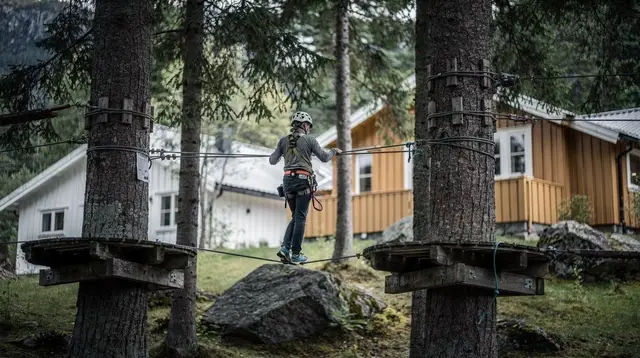
Skogsprett is a treetop rope and zip-line park in the forest near Sandnes, built mainly for families with children rather than serious climbers or hikers. Courses are colour-coded by height and difficulty, with harnesses, a safety briefing and staff on site throughout. It has no real connection to the exposed mountain routes at Kjeragbolten or Preikestolen.
A forest of ropes, not a mountain of chains
Search “adventure park Stavanger” for long enough and you will eventually land two very different activities in the same mental folder: a harnessed climbing course in a forest near Sandnes, and a genuinely serious mountain hike out at Kjeragbolten with chained sections above a thousand-metre drop. They share the word “adventure.” They share almost nothing else. Skogsprett is the forest park — a net and zip-line course built for families, school groups and anyone who wants an active few hours without hiking boots, elevation gain or exposure. This guide treats it as exactly that: a good half-day out near Sandnes, not a training run for anything harder.
If you came here looking for the actual mountain routes, you want the guides on Preikestolen or Kjeragbolten instead. If you came here to plan a family-friendly day that will tire out the kids without putting anyone on a cliff edge, Skogsprett is a solid answer, and this page covers what it actually involves.
Where Skogsprett is and how to get there
Skogsprett sits in wooded terrain close to Sandnes, Stavanger’s larger neighbour a short drive or bus ride south of the city centre. It’s the kind of place that works well as a stop on a Sandnes-focused day rather than a destination you build an entire itinerary around — pair it with a walk through Sandnes itself, or with the short climb up Dalsnuten, the popular local hill on the town’s edge, and you have a full, varied half-day without needing a car for anything more demanding.
Most visitors drive or take a taxi from central Stavanger or Sandnes, since the park sits away from the densest bus routes. If you’re not driving, it’s worth checking Kolumbus routes toward Sandnes before you go and confirming the last stretch on foot, since forest-park sites like this one are rarely served by a bus stop at the gate.
Who this park is actually for
Skogsprett is built around families with children, and that shapes almost everything about the place: the course design, the safety systems, the pacing, and the way staff run the day. It is not a climbing gym for people chasing technical routes, and it is not aimed at hikers looking to test their nerve before a bigger mountain day.
A few things worth knowing before you book:
- Course levels vary by height and difficulty. Lower, shorter courses suit younger children; higher and longer routes are built for older kids, teenagers and adults. Minimum height and age requirements are set by the park and worth checking at the time of booking, since they can shift between seasons.
- Harnesses and briefings are standard, not optional extras. Everyone gets fitted with equipment and walked through how the safety systems work before starting.
- Mixed-age groups work well here. It’s common for parents to climb a demanding course while younger children take an easier one nearby, so a family with a wide age range doesn’t need to split into two separate outings.
- This is not real rock climbing. There’s no rope work on natural rock, no belaying skills to learn, and no crossover with the region’s genuine outdoor climbing terrain. Treat it as a supervised playground built in a forest canopy, which is exactly its appeal.
If your group is specifically after a real hike with views, Dalsnuten or the wider roundup of easy hikes near Stavanger are better matches than a rope park.
What’s inside: courses, zip lines and difficulty
Skogsprett’s layout follows the format used by most Scandinavian forest adventure parks: platforms built into the trees, connected by a mix of net bridges, wobbly planks, tension wires, climbing nets and short zip lines, arranged into colour- or level-coded circuits so visitors can choose routes that match their comfort with height.
| Course type | Typical audience | What it involves |
|---|---|---|
| Low / junior courses | Young children, first-time climbers | Short height off the ground, simpler obstacles, close supervision |
| Mid-level courses | Older children, teenagers, less confident adults | Longer circuits, more varied obstacles, moderate height |
| High courses | Teenagers and adults comfortable with height | Greater height, longer traverses, longer zip lines |
| Zip-line-focused routes | Anyone wanting the zip lines without a full climbing circuit | Fewer climbing obstacles, more emphasis on the lines themselves |
Exact course names, heights and the number of obstacles can change as the park updates its layout, so treat the table above as a guide to the shape of a visit rather than a fixed map. What stays constant is the format: harness on, safety briefing, then a self-paced route through the trees with staff nearby to help.
Two ticket types are worth knowing about before you book. A straightforward entry ticket gets you into the net and rope courses for a session — book Skogsprett’s net park entry ticket here if that’s all you’re after.
If the zip lines are the main draw, there’s a version of the experience built specifically around them — reserve the zip-line route through Skogsprett’s forest. And for groups who want to do both without choosing, a combined pass covers the net courses, climbing and zip lines together — check the combined net, zip-line and climbing pass.
Tickets, prices and what to check before booking
Rather than quoting fixed prices here — adventure park pricing tends to shift with the season and with any bundled options — the practical approach is to check current prices and availability directly through the ticket you’re considering, since that page will always be more current than a static guide. A few things worth confirming before you commit:
- Age and height minimums for the course level you want. These are set by the park for safety reasons and enforced at check-in, so it’s worth confirming before you drive out with a child who might not clear the bar for a particular course.
- Session length and whether time is fixed or open-ended. Some tickets cover a set window; others let you stay until the park closes once you’re in.
- Group and family pricing, if you’re booking for more than two or three people, since parks like this often bundle family tickets differently from single entries.
- What’s included versus what’s rented separately. Harnesses are typically included; gloves or extra safety gear sometimes are not.
A typical visit: how much time to plan
Budget two to three hours at the park itself once you count the safety briefing, working through a course or two, and the inevitable breaks a few metres up a tree with kids in tow. That makes Skogsprett a comfortable half-day activity rather than something that eats an entire day — useful if you’re trying to fit it around another Sandnes-area plan, such as the Dalsnuten hike or a look around the town centre on a guided walking tour with city highlights.
If you’re building a longer Sandnes day, a reasonable shape looks like: morning at Skogsprett, lunch in Sandnes, afternoon on Dalsnuten or a shorter walk if the kids are tired from climbing. Families planning a broader Stavanger trip with children can find fuller day-by-day structures in the Stavanger with kids guide and the matching itinerary for families.
Safety, briefing and what staff actually do
The reason parks like Skogsprett work for families with limited climbing experience is that the safety system is designed to remove most of the judgment calls from the visitor. Before anyone climbs, staff fit harnesses, explain how the clipping and safety-line systems work, and usually run a short practice section at ground level so everyone understands the mechanics before they’re several metres up.
Once on course, most systems use continuous-attachment lanyards, meaning you stay clipped to a safety line for the whole route rather than manually clipping and unclipping at each obstacle — this removes a common source of error at parks with older-style equipment. Staff remain on the ground and at key platforms to help hesitant climbers, unstick a nervous ten-year-old halfway across a wobbly bridge, or simply keep an eye on busier sections.
None of this makes the experience risk-free — falls onto a harness still happen, and any activity at height carries some risk — but it is a fundamentally different risk profile from an unprotected mountain trail. That distinction matters for the next section.
The comparison people keep making: Skogsprett vs Kjeragbolten
It’s an easy leap to make: “we did the adventure park, the kids liked heights, maybe Kjeragbolten next.” Resist it. The two activities share almost nothing beyond the vague idea of “adventure.”
| Skogsprett Adventure Park | Kjeragbolten | |
|---|---|---|
| Setting | Forest, built platforms and rope courses | Exposed mountain terrain above the Lysefjord |
| Safety system | Continuous harness attachment, staff supervised | Fixed chains on steep sections, no harness, self-reliant |
| Typical duration | 2-3 hours | 6-8 hours round trip |
| Physical demand | Moderate, short bursts | Sustained hiking over rough terrain |
| Suitable for children | Yes, with course levels by age and height | Not recommended for young children |
| Consequence of a serious mistake | Caught by harness | Falls have been fatal |
A detailed comparison of Kjeragbolten and Preikestolen covers just how different those two mountain routes are from each other — and both sit in a completely separate category from Skogsprett. If you’re weighing whether your group should attempt Kjerag at all, the honest starting point is do you need a guide for Kjeragbolten, not a rope park visit. A day at Skogsprett tells you whether your kids enjoy climbing in a harness. It tells you nothing about whether anyone in your group is ready for a long, exposed mountain trail with chained sections and a real fall risk.
Combining Skogsprett with the rest of the Rogaland experience
Because Skogsprett is a half-day activity, most visitors pair it with something else in the Sandnes or Stavanger area rather than treating it as a standalone trip. A few combinations that work well:
- Skogsprett plus Dalsnuten: climbing in the morning, an easy summit walk with fjord views in the afternoon — see the Dalsnuten hike guide for the route. If you’d rather have a local guide along, there’s also a guided Dalsnuten hike from Sandnes that removes the need to navigate the trail yourself.
- Skogsprett plus a Sandnes walking tour: a gentler pairing if the family is tired after climbing, taking in the town’s centre and harbour rather than another physical activity — see what’s on offer among city walking tours.
- Skogsprett as a rain-day backup: much of the park’s structure sits under tree cover, which makes it a more forgiving choice than an exposed hike on a wet Rogaland day. Check the rain-proof Stavanger itinerary for other options that hold up when the forecast turns.
- A car-free day around Sandnes: if you’re not driving, build the day around what’s reachable from central Stavanger and Sandnes without a rental car — the Stavanger without a car itinerary is a useful starting point, and do you need a car in Stavanger covers the general logistics.
What to bring and when to go
- Footwear: closed shoes with good grip. Sandals and flip-flops are a poor match for rope bridges and wobbly planks.
- Clothing: something you can move in freely, plus a light layer — forest canopies can be breezy even on a mild day, and Rogaland’s weather changes quickly regardless of season.
- Rain gear: worth carrying even if the forecast looks clear when you leave the house. Stavanger’s rainfall is frequent enough that a dry morning is not a guarantee of a dry afternoon.
- Timing: forest adventure parks like Skogsprett typically run a seasonal schedule, busier and more fully staffed through the warmer months. If you’re visiting outside peak season, confirm opening days before you drive out, since hours can be reduced.
- Booking ahead: popular days, especially school holidays and summer weekends, can fill course slots. Booking your ticket in advance avoids arriving to find the level you wanted is full.
Planning the rest of your Rogaland trip
Skogsprett earns its place as one piece of a Stavanger-area trip built around families, easy outdoor time and a day that doesn’t require anyone to test their nerve on an exposed ridge. For the bigger picture — how many days to allow, what else fits around children’s ages and energy levels, and which of the region’s bigger hikes are realistic with kids in tow — the Stavanger with kids guide and its matching family itinerary are the natural next stops after this page.
And if the adventure-park format turns out to be a hit with your group, it’s worth remembering what it is and isn’t: a genuinely fun, safely harnessed few hours in the trees near Sandnes — not a stepping stone toward Kjeragbolten, Preikestolen, or any of the region’s real mountain routes. Those stay a separate decision, made on their own terms, when everyone in the group is actually ready for them.
tours.climbing-adventure-parks
Verified deep-linked GetYourGuide tours. Book through these links and we earn a small commission at no cost to you.
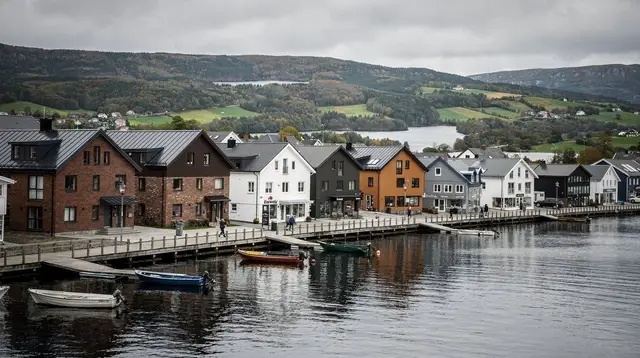
GetYourGuide does not provide a product photo for this activity — the image shows the meeting point, photographed by us.