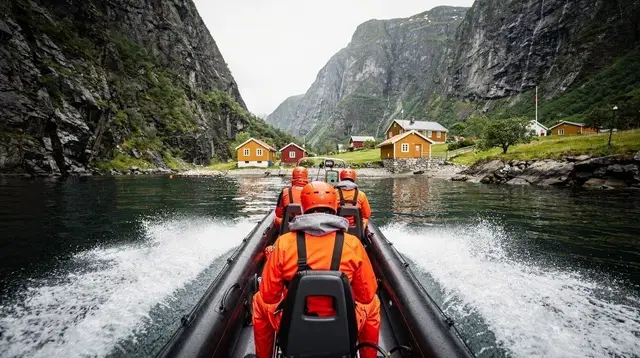
Sea Fishing Trips from Stavanger
What is a sea fishing trip from Stavanger, and how is it different from a RIB safari?
A sea fishing trip is a boat outing built around actually catching fish in the fjords and skerries around Stavanger, usually with rods, bait or jigs and a guide who helps you land and often fillet cod, mackerel or coalfish. A RIB safari covers similar water but is built around speed and scenery, not a catch, so the pace, stops and purpose of the two trips are genuinely different.
A different way to be on the water
Most visitors who get onto the water around Stavanger do it to look at something: the walls of the Lysefjord, the profile of Preikestolen from below, or the open horizon off the Jæren coast. A sea fishing trip is built around a different goal. The boat still leaves from somewhere near Vågen harbour or one of the fjord piers, and the water is often the same water, but the pace, the stops and the point of the outing are not about sightseeing at all. It is about getting a line in the water, working out where the fish are holding, and bringing something home.
That distinction matters more than it sounds like it should, because the two kinds of trip get mixed up constantly in trip planning. If you want speed, spray and a scenic run past dramatic cliffs, that is a RIB safari, and this guide is not that. If you want to spend a few hours anchored or drifting over a bank while cod or mackerel come up on a jig, this is the activity you are looking for, and it is worth understanding on its own terms before you book anything.
What a sea fishing trip actually involves
A typical guided outing, of the kind sold as a five-hour fishing trip with equipment and a guide included, follows a fairly consistent shape. The group meets at a harbour, boards a boat sized for a small party rather than a large tour group, and motors out toward known fishing grounds — this can mean deeper channels in the fjord itself, the skerries and rocky islets closer to open water, or banks further out depending on conditions and season. Once on site, the boat usually drifts or anchors rather than keeps moving, because staying over a productive spot is the entire strategy.
From there, the guide’s job is less about narration and more about outcomes: rigging rods, explaining how to jig a lure or bait a hook, pointing out where the sounder shows fish, and helping land anything that takes. Compare that to the running commentary and photo-stop rhythm of a scenic cruise, and the difference in structure becomes obvious quickly. A fishing trip has dead time waiting for a bite and short bursts of activity when something is on the line; a sightseeing trip has a fixed sequence of viewpoints. Neither is better, but they answer different moods, and knowing which one you actually want prevents a mismatched afternoon.
Trips billed with equipment and a guide typically supply rods, reels, tackle, bait and life jackets, which means a first-time visitor with zero fishing background can turn up empty-handed and still fish competently within minutes. That accessibility is one of the more underrated things about the activity in a destination otherwise associated with steep hikes and long fjord crossings — Kjeragbolten demands a full day of chained scrambling, but a fishing trip asks very little of your body beyond standing at a rail and reeling.
Where these trips go: fjords, skerries and open water
Stavanger’s geography gives sea fishing a genuine variety of grounds within a short boat ride. Close to town, the sheltered water around the city’s own fjords and inlets holds cod and coalfish, and a short crossing reaches skerries and rocky islets that break up the current and concentrate fish near structure. Further out toward the open sea past Sola, conditions get more exposed but can also open up bigger fish and different species depending on season and swell — though how far a given trip actually ranges depends entirely on the boat, the day’s weather and the operator’s plan, not on anything a visitor controls in advance.
The Lysefjord itself is deep — up to roughly 400 metres in places — and while it is better known as the setting for cruises and RIB runs past Preikestolen, its depth and structure also make parts of it viable fishing water, particularly for coalfish holding at depth.
Trips heading toward Ryfylke may pass close to the mouth of fjords near Frafjord, the area behind the Månafossen waterfall inland, though fishing grounds and waterfall access are separate activities that just happen to share a general region. None of this is a promise of a specific route on a specific trip — weather, tide and where the fish are that day genuinely dictate where a boat goes, more than on a fixed-stop sightseeing itinerary.
The catch: what you can expect to reel in
Setting realistic expectations here matters, because sea fishing is not a guaranteed-results activity anywhere in the world, Stavanger included. That said, the fjords and coastal water around the city are productive by most standards. Cod is the fish most visitors associate with Norwegian sea fishing, and it is a realistic catch for a beginner jigging near the bottom. Coalfish — known locally as sei, and sometimes called pollock or saithe in English — often shows up in numbers and puts up a decent fight relative to how easy it is to hook. Mackerel arrives seasonally, mostly through summer, and when a shoal is nearby it can mean fast, repeated action rather than the patient waiting associated with bottom fishing.
Bigger fish, including halibut, do turn up in Norwegian coastal waters and occasionally get landed on trips like these, but they are the exception rather than something any honest operator would promise. A trip billed around cod, coalfish and mackerel that also produces a surprise halibut is a good day; a trip planned around the expectation of a halibut is planning around the wrong baseline. If keeping and eating your catch matters to you, most guided trips build that in — filleting on the boat or back at the dock is a normal part of the experience, and it is worth asking about when booking rather than assuming it either way, since local rules on minimum sizes and bag limits still apply regardless of who is holding the rod.
Gear, guiding and who these trips suit
Because equipment and instruction are typically included, the barrier to trying sea fishing near Stavanger is lower than most of the region’s signature activities. There is no elevation gain, no chained scramble like the approach to Kjeragbolten, and no need to already know how to fish. A guide rigging your line and showing you how to jig is enough to get most people catching something within the first half hour, weather and fish cooperating.
That accessibility makes it a solid option for a mixed-ability group — someone who cannot or does not want to do the eight-kilometre round trip to Preikestolen can still have an active, outdoor day on the water instead of sitting it out. It also suits visitors who have already done a scenic fjord run and want something with a different rhythm on a second day, since a five-hour fishing trip and a two-hour RIB safari or Lysefjord cruise genuinely do not overlap in what they deliver, even when they launch from the same stretch of harbour.
It suits some travelers less well. Anyone prone to seasickness should treat a slow-drifting or anchored boat with the same caution as any other boat trip — arguably more, since the trip’s whole design keeps you sitting still on the water for hours rather than moving briskly from point to point. And anyone whose main goal is photographing the fjord landscape is better served by a cruise or a kayaking trip in Lysefjord, where sightlines and pacing are built around the view rather than around where the fish are.
Sea fishing trip or RIB safari: how to tell them apart
Because both activities launch by boat from the same general area and both get marketed as “getting out on the fjord,” it is worth laying the practical differences out directly.
| Sea fishing trip | RIB safari | |
|---|---|---|
| Main goal | Catching fish | Scenery and speed |
| Boat pace | Slow, anchored or drifting | Fast, moving between viewpoints |
| Typical duration | Around 5 hours | Often 2-3 hours |
| What’s included | Rods, tackle, bait, guide | Life suit, safety briefing, commentary |
| Physical demand | Low — mostly standing and reeling | Low, but braces against speed and spray |
| Best for | Anglers, curious first-timers, quieter pace | First-time fjord visitors, photographers |
| Weather sensitivity | High — wind and swell affect fishing directly | Moderate — can often still run in choppier water |
If you are choosing between the two for a single free afternoon, the honest question to ask yourself is whether you want to see the Lysefjord’s cliffs up close at speed, or whether you would rather slow down, anchor over a bank, and see what comes up on the line. Booking both on the same trip, one for each day, is a reasonable way to cover the difference rather than trying to guess which one you would have preferred.
Combining it with the rest of a Stavanger trip
A sea fishing trip fits naturally into a longer itinerary rather than standing as the single reason to visit. Many visitors pair it with a walk through Gamle Stavanger or an afternoon exploring Øvre Holmegate on the days they are not on the water, and save the fishing trip for a day when the forecast favours calmer conditions rather than a scenic hike.
If your catch includes enough cod or coalfish to actually cook, an evening looking at what to eat in Stavanger or eating around Vågen harbour becomes a genuinely different kind of restaurant decision — some places will prepare a catch you bring in, though that is always worth confirming directly rather than assuming.
Travelers building a broader outdoor itinerary sometimes stack a fishing trip alongside a guided kayak or paddleboard outing in Frafjord or a guided kayaking trip on the Lysefjord — both put you on the water at a similarly unhurried pace, just without a rod in hand, which makes for a useful contrast if one member of the group wants to fish and another would rather paddle.
For a day away from the water entirely, a private guided tour of the Jæren coast covers the region’s long sandy beaches, a landscape that looks nothing like the fjords most visitors picture before they arrive.
Cost, timing and weather
Norway is not a cheap country for organised activities, and sea fishing trips sit in line with other half-day guided experiences in the region rather than undercutting them — expect a guided outing with equipment included to cost noticeably more than a self-drive rental boat, in exchange for local knowledge of where the fish actually are that week. Prices are set in Norwegian kroner; Norway is outside the EU and does not use the euro, so quotes in euros anywhere are a sign of a third-party conversion, not the actual local price.
Season affects both comfort and catch. Summer brings the mildest conditions and the best odds of mackerel showing up in numbers, alongside Stavanger’s cool but tolerable July average of around 16-17°C — still cold enough on open water to want a proper layer. Outside summer, cod and coalfish fishing continues, but daylight is shorter and conditions rougher, and trips are more likely to be rescheduled for weather. Because wind and swell affect a fishing boat more directly than they affect a scenic cruise or a walk through Gamle Stavanger, it is worth booking a fishing trip earlier in a visit rather than on the last available day, so a weather postponement does not simply cancel the activity outright.
Sea fishing trips from Stavanger: your questions answered
Is a sea fishing trip the same thing as a RIB safari on Lysefjord?
No. Both use a boat and cover some of the same water, but a RIB safari is built for speed and views of the fjord walls, with short stops at landmarks. A sea fishing trip moves slower, anchors or drifts over fishing grounds, and the whole point is the rods going in the water.
Do I need fishing experience or my own gear?
No. Trips advertised with equipment and a guide supply rods, tackle and bait, and the guide will show first-timers how to jig or bait a line. Experienced anglers can usually bring their own gear if they prefer it, but it is not required.
What can you actually catch around Stavanger?
Cod, coalfish (also called pollock or saithe locally) and mackerel are the most common catches in the fjords near Stavanger, with mackerel more likely in summer. Larger fish such as halibut turn up occasionally but are not something any trip can promise.
How long does a typical sea fishing trip last?
Guided trips from Stavanger commonly run around five hours door to door, including the boat transfer to and from the fishing grounds, which leaves a solid block of actual fishing time without taking the whole day.
Do you get to keep and eat the fish you catch?
On most guided trips, yes — keeping your legal catch and having it filleted, and sometimes cooked or smoked, is usually part of the appeal. Local rules on minimum sizes and bag limits still apply, and the guide will normally handle that for you.
Is sea fishing in Stavanger’s fjords weather-dependent?
Yes. Wind and swell affect a fishing boat more than they affect sightseeing on land, so a booked trip can be postponed or rescheduled in poor conditions. Building in a flexible day or two around a booking, rather than scheduling it for your only free morning, avoids disappointment.
What should I wear on a sea fishing trip?
Layers, a windproof and waterproof outer shell, and closed shoes with grip, even in summer — Stavanger’s July average sits around 16-17°C and it is noticeably colder and windier on open water than on the quay. A hat and gloves are worth packing outside midsummer.
Can beginners and families do a sea fishing trip?
Yes, in general — jigging for cod or coalfish close to shore does not demand strength or technique, and guides are used to first-timers. It is a calmer, more static activity than a RIB safari, which some families and older visitors actually prefer.
tours.fishing-trips
Verified deep-linked GetYourGuide tours. Book through these links and we earn a small commission at no cost to you.
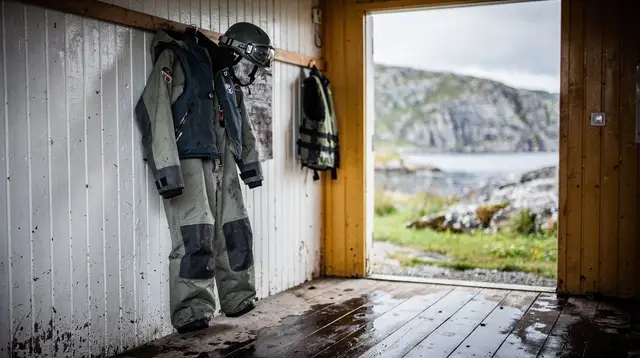
GetYourGuide does not provide a product photo for this activity — the image shows the meeting point, photographed by us.