A working oil city, not a museum piece
Stavanger has around 145,000 people, and it is often billed as Norway’s fourth largest urban area — a ranking that really belongs to the wider Stavanger/Sandnes conurbation rather than to the city proper. Either way, it is small enough to walk across in an afternoon and compact enough that you rarely need a car for the centre. What makes it useful as a travel base is not size, it is position: a short flight or drive from Oslo and Bergen, a short bus ride from /destinations/sola/, and the natural gateway to /destinations/lysefjord/, /destinations/preikestolen/ and the Rogaland interior.
This page treats Stavanger as a base — where to land, where to sleep, how the weather behaves, and how to get out to the fjord — rather than a sightseeing checklist. The old town, the cathedral, the petroleum museum, the street art scene and Sverd i Fjell each have their own dedicated pages linked below; here the focus is logistics and orientation.
Getting to Stavanger: Sola Airport
Almost everyone arrives through Sola Airport (SVG), about 14 km southwest of the city centre. It is a modest, easy-to-navigate airport with direct connections to Oslo, Bergen and a handful of European cities, which makes Stavanger a realistic first or last stop on a longer Norway trip rather than a detour.
From the terminal, Kolumbus buses run into the centre in roughly 20-25 minutes, and a taxi covers the same distance a little faster at a higher price. There is no metro or train link, so the choice is really bus versus taxi versus a pre-booked transfer. For a full breakdown of routes, tickets and timings, see /guides/stavanger-airport-to-city-guide/.
| Option | Approximate time | Notes |
|---|---|---|
| Kolumbus airport bus | 20-25 minutes | Cheapest option, frequent daytime departures |
| Taxi | 15-20 minutes | Faster, fixed or metered fare, no booking required |
| Rental car pickup | Immediate | Only useful if you plan to drive to Ryfylke or Jæren |
Getting around once you’re here
The city centre, /destinations/vagen-harbour/ and the surrounding neighbourhoods are walkable end to end in well under an hour, and most visitors never need public transport for sightseeing inside Stavanger itself. Kolumbus also runs the regional bus and ferry network that reaches Sandnes, Jørpeland and the Ryfylke villages, which matters once you start planning trips beyond the city.
A car becomes genuinely useful only if you want to drive yourself into Ryfylke, along the Jæren coast, or down toward Egersund and Dalane on your own schedule, rather than joining an organised tour. If you’re undecided, /guides/do-you-need-a-car-in-stavanger/ walks through the trade-offs, and /itineraries/stavanger-without-a-car/ shows a full multi-day plan built entirely around buses, boats and organised transport.
Where to base yourself
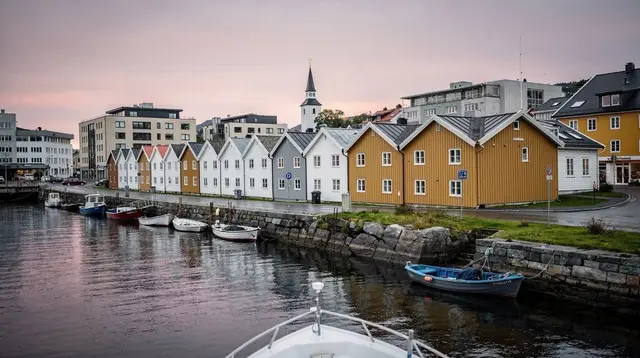
Stavanger’s neighbourhoods are small enough that “where to stay” is less about distance and more about atmosphere. Most visitors settle somewhere within a 10-15 minute walk of /destinations/vagen-harbour/, which keeps restaurants, the harbour-front cafés and the boat departure points for fjord tours within easy reach.
| Area | Character | Good for |
|---|---|---|
| Around Vågen harbour | Central, restaurants, tour departure points | First-time visitors, short stays |
| Near Gamle Stavanger | Quiet, residential, cobbled streets | Travellers wanting a calmer base |
| Sandnes | 20 minutes from central Stavanger by bus or train | Budget stays, Lysefjord ferries from Sandnes |
| Near the airport (Sola) | Suburban, close to Sola beach | Early flights, car-based Ryfylke trips |
/destinations/sandnes/ deserves a specific mention: it sits close enough to Stavanger to function as a genuine alternative base, and it is also a direct departure point for some Lysefjord boat trips, which can save you a return trip into the city centre before heading out to the fjord.
Climate: mild, wet, and windier than the postcards suggest
Stavanger sits at 58.97°N, which sounds far north, but its climate is shaped more by the Gulf Stream than by latitude. Winters are mild for the location — January averages roughly 1-2°C — while summers stay cool, with July averaging around 16-17°C. The trade-off is rain: Stavanger gets somewhere between 1,180 and 1,250 mm of precipitation a year, spread fairly evenly across the calendar rather than concentrated in one obvious wet season.
Practically, that means packing a proper waterproof layer regardless of when you visit, and treating a sunny forecast with some suspicion — conditions can change quickly, especially on exposed trails like the one up to Preikestolen. If rain is likely to shape your trip, /itineraries/rain-proof-stavanger/ is built specifically around wet-weather alternatives.
From herring port to oil capital
Stavanger’s founding is conventionally dated to 1125, the year usually given for the consecration of Stavanger Cathedral, though the settlement predates that milestone. For centuries afterward it was a modest fishing and shipping town on Norway’s southwest coast — nothing about its size or setting suggested it would later anchor the country’s energy industry.
That changed in 1969, when the Ekofisk field was discovered in the North Sea. Phillips Petroleum soon chose Stavanger as its onshore operations base, and the city transformed within a generation into Norway’s oil capital, attracting international companies, engineers and money that reshaped its economy and its skyline. That history is told in detail at the Norwegian Petroleum Museum on the harbour, but its effects are visible everywhere in the city: in the international restaurant scene, the relatively high wages, and the general sense of a place that grew fast on a single industry.
Budgeting in Norwegian kroner
One detail catches visitors off guard more than any other: Norway is not in the European Union and does not use the euro. Prices in Stavanger, as everywhere in Norway, are in Norwegian kroner (NOK), and quoting or budgeting in euros will throw off every calculation you make. Card payment is close to universal, including for small purchases, so there’s little practical need to carry cash.
Norway is also genuinely expensive by most visitors’ standards — food, drink and organised tours all cost more than equivalents in Southern or Central Europe. A realistic daily budget for food, local transport and incidentals, excluding accommodation and tours, runs roughly 800-1,600 NOK per person, with restaurant meals and alcohol pushing that figure up quickly.
For a fuller breakdown, /blog/norway-is-not-a-eurozone-country-and-your-budget-should-know-it/ and /blog/the-price-of-a-beer-as-a-measure-of-a-country/ go into specifics, and the /tools/budget/ and /tools/currency/ tools can help you plan against your own home currency.
Eating in the centre
Stavanger’s food scene punches above its size for a city this compact, largely thanks to the wealth the oil industry brought in and a strong local seafood tradition. Most of the interesting options cluster within walking distance of /destinations/vagen-harbour/ and around /destinations/gamle-stavanger/, from casual harbour-front cafés to higher-end seafood restaurants. /guides/what-to-eat-in-stavanger/ and /guides/eating-around-vagen-harbour/ cover specific dishes and neighbourhoods worth targeting.
Using Stavanger as your fjord and Rogaland base
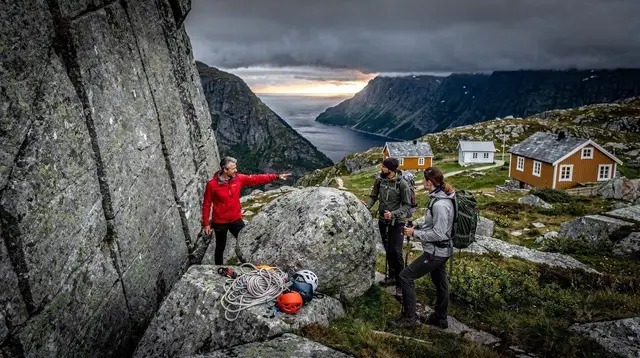
The single biggest reason to spend time in Stavanger is what lies beyond it. The city sits at the mouth of the Lysefjord, within striking distance of Preikestolen, Kjerag and the Ryfylke villages, and close to the long sandy beaches of Jæren to the south — a genuinely unusual stretch of coastline in a country otherwise defined by fjords and cliffs.
Most travellers combine a short city stay with one or two organised trips out onto the water or up onto the plateau. A combined Lysefjord cruise and Preikestolen hike departing from Stavanger is the most efficient way to see both the fjord from the water and the plateau from above in a single day, and it’s the option most first-time visitors end up choosing.
If Sandnes is your base rather than central Stavanger, a boat trip to Preikestolen departing from Forsand covers the same ground with a shorter transfer. For a faster, more adrenaline-driven view of the fjord walls, a RIB boat tour of the Lysefjord from Sandnes trades a slower cruise for speed and spray.
Kjerag and the Kjeragbolten boulder sit further out, reached via the Lysebotn road, which closes in winter — see /destinations/kjeragbolten/ and /guides/kjeragbolten-vs-preikestolen-how-different/ before committing a day to it. Closer to the city, /destinations/manafossen/ and the Jæren beaches at /destinations/orre-beach/ make easier half-day or full-day trips that don’t require the same level of fitness or planning. /day-trips/ lists the full range of options organised by distance and difficulty.
For structured multi-day plans built around exactly this base-and-branch-out pattern, /itineraries/two-days-in-stavanger-and-preikestolen/ and /guides/two-day-stavanger-and-lysefjord-itinerary/ both walk through a realistic two-day version, while /itineraries/four-days-with-a-car-in-ryfylke/ extends the same idea to a full Ryfylke loop.
Stavanger travel questions, answered
How many days do you need in Stavanger?
Two days is enough to see the compact city centre and fit in one fjord cruise or hike. Three to four days lets you add a Kjerag or Ryfylke day trip, or a slower pace with a beach day on the Jæren coast.
Is Stavanger expensive?
Yes, by most international standards. Norway overall is one of the more expensive countries in Europe for food, drink and organised tours, and Stavanger’s oil-driven economy keeps local prices high rather than pulling them down.
Does Stavanger use the euro?
No. Norway is not a member of the European Union and does not use the euro. All prices are in Norwegian kroner (NOK), even though Norway participates in the Schengen area for border rules.
Do I need a car in Stavanger?
Not for the city centre itself, which is walkable, or for reaching most organised tours, which include transport. A car becomes useful mainly if you want to explore Ryfylke, Jæren or Dalane independently rather than joining a guided trip.
How do I get from Sola Airport into the city?
Kolumbus buses connect Sola Airport to central Stavanger in roughly 20-25 minutes and are the cheapest option; a taxi covers the same 14 km distance a little faster.
What’s the best time of year to visit Stavanger?
Late May through September gives the longest daylight, the driest trail conditions for Preikestolen, and open access to the Lysebotn road for Kjerag, which is closed for much of the winter.
Is Stavanger a good base for visiting the Lysefjord?
Yes — it’s the most common starting point for Lysefjord cruises, Preikestolen hikes, RIB tours and Kjerag trips, all of which depart from the city or from nearby Sandnes and Forsand.