Stavanger in the Rain: A 2-Day Itinerary
Why This Itinerary Assumes The Worst Weather
Stavanger gets somewhere between 1,180 and 1,250 mm of rain a year, which puts it closer to a soggy Atlantic coastline than to the postcard idea of Norway most visitors arrive with. Most itineraries for the region are built around a single headline event — the hike up to Preikestolen — and then apologise for the weather when it doesn’t cooperate. This one does the opposite: it assumes two straight days of rain and builds a full, satisfying trip out of what’s left when you take the cliffs and the fjord off the table entirely.
That’s a real sacrifice, and it’s worth saying plainly. Preikestolen is a flat plateau at 604 m with no barrier at the edge, and the entire point of standing there is the view down the Lysefjord. In fog and driving rain that view simply isn’t there, the rock underfoot gets slick, and the walk stops being scenic and starts being a liability.
If the forecast is genuinely bad for your whole visit, this is the itinerary. If instead you have one clear or clearing day somewhere in your trip, save it and follow the two-day Stavanger and Preikestolen itinerary on that day instead — swapping the order around a weather window, rather than gambling on it, is the actual skill here.
Everything below happens indoors, under awnings, or on streets narrow enough that an umbrella does the job. No transfers to trailheads, no fjord crossings, no gear beyond a proper rain jacket and shoes that don’t mind puddles.
Day 1: Oil, Vikings And A Cathedral That’s Never Been Rebuilt
Morning: The Norwegian Petroleum Museum
Start at the Norwegian Petroleum Museum — Norsk Oljemuseum — which opened in 1999 right on the harbour, in a building shaped to echo an offshore platform. It’s the single best explanation of why Stavanger looks and feels the way it does: a fishing and canning town that became Norway’s oil capital almost overnight after the Ekofisk field was discovered in the North Sea in 1969. Budget two to three hours; the exhibits are hands-on enough that families don’t rush through, and every square metre of it is roofed. The full Norwegian Petroleum Museum guide has opening hours and ticket details if you want to check before you go.
Midday: Lunch Around Vågen
Walk the short, covered-enough stretch around Vågen harbour for lunch. This is the working waterfront the museum has just explained to you, now lined with cafés under awnings rather than derricks. The guide to eating around Vågen harbour has specific recommendations; the broader what to eat in Stavanger guide covers the wider city if you want more options for the rest of the trip.
Afternoon: Viking House And The VR Sagas
Cross into the old streets for Viking House, a small, entirely indoor attraction built around a virtual-reality reconstruction of the Battle of Hafrsfjord and the sagas around it — the same battle, traditionally dated to 872, that the three towering bronze blades of Sverd i Fjell at Hafrsfjord commemorate.
It’s a good pairing: the VR gives you the story, and if the rain genuinely lets up for twenty minutes later in your trip, the swords themselves are a five-minute stop rather than a detour. The Viking House VR experience guide and the Sverd i Fjell guide both go into more depth than fits here.
Late Afternoon: Stavanger Cathedral
Finish the day at Stavanger Cathedral, consecrated around 1125 and, unusually for Norway, still standing and in use without a major post-medieval rebuild — Trondheim’s Nidaros Cathedral, by comparison, was extensively reconstructed. It’s the building the city’s founding date is actually pegged to. Fifteen minutes get you the highlights; give it forty if you like old stone. It sits close enough to Valbergtårnet that you can duck up for a covered-enough look at the harbour below before calling it a day, weather permitting.
| Stop | Time needed | Indoor? |
|---|---|---|
| Norwegian Petroleum Museum | 2-3 hours | Fully indoor |
| Lunch around Vågen | 1 hour | Covered seating available |
| Viking House VR sagas | 1-1.5 hours | Fully indoor |
| Stavanger Cathedral | 15-40 minutes | Fully indoor |
Day 2: Gamle Stavanger, Colour In The Rain, And What To Do If It Clears
Morning: Gamle Stavanger
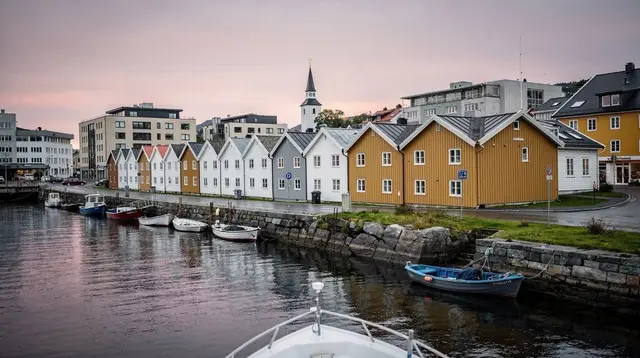
Spend the morning in Gamle Stavanger, roughly 170 white wooden houses from the 18th and 19th centuries on cobbled lanes west of the harbour — the largest concentration of preserved wooden houses left in Northern Europe.
It’s free, it’s outdoors, and it’s also the one outdoor stop on this whole itinerary that genuinely works in the rain: the streets are narrow enough that an umbrella covers you completely, there’s no exposure, and wet cobblestones and white timber under grey skies are arguably more atmospheric than the same scene in bright sun. The self-guided walk through Gamle Stavanger lays out a route that takes 45 minutes to an hour and a half depending on how many doorways you stop to photograph.
Midday: Øvre Holmegate
From there it’s a short walk to Øvre Holmegate, the street of candy-coloured shopfronts that was repainted in the 2000s and has been a photo stop ever since. Colour reads just as well under a grey sky, and the street is short enough that it’s not a detour even in steady rain. The Øvre Holmegate guide has the background on why it’s painted the way it is.
If you’re curious about the city’s other outdoor art, the Stavanger street art and Nuart guide covers the mural trail that’s grown around the Nuart festival, running since 2001 — mostly a fair-weather activity, but worth bookmarking.
Afternoon: Choose Your Own Indoor Ending
Stavanger has more roofed things to do than most two-day itineraries admit. Pick one for your second afternoon depending on who you’re travelling with:
| Option | Best for | Notes |
|---|---|---|
| Second pass through the petroleum museum’s temporary exhibits | Anyone who liked Day 1 | Exhibits rotate; ask at the desk |
| An escape game | Groups, teens | See the Stavanger escape games guide |
| Café crawl back around Vågen | Slower pace, no plan needed | Same area as Day 1 lunch |
If you’d rather be wet on purpose than wet by accident, this is also where a guided paddle makes more sense than it sounds: you’re already dressed for rain, and finishing in a fjordside sauna turns the weather into the point rather than the obstacle. The Two Fjord SUP N Sauna guided paddle tour runs on the city’s sheltered fjord arms rather than out on the open Lysefjord, which is exactly why it survives a forecast that would cancel everything else on this list.
If The Forecast Actually Clears
Keep checking the sky. If a window opens — even a few clear hours — Preikestolen and the fjord are worth rearranging your whole trip around, and this itinerary is not the place to spend that window. Two options if that happens:
- Swap to the two-day Stavanger and Preikestolen itinerary and move your museum day to whichever day stays wet.
- If you only have a few clear hours rather than a full day, a helicopter flight over Pulpit Rock and the Lysefjord compresses the view into well under an hour and doesn’t need dry trail conditions the way the hike does — though it still needs flyable weather, which fog and low cloud rule out just as effectively as they ruin the hike.
- If a full clear day does show up, the Lysefjorden cruise and Preikestolen hike combines the water-level view with the clifftop one, which is the single best use of one good day in this region.
The Pitfall: Booking The Hike “Just In Case”
The single most expensive mistake travellers make with Stavanger weather isn’t skipping Preikestolen — it’s booking a shuttle or tour to it anyway, on a forecast they already suspect is bad, on the logic that it might clear up. Without a flexible cancellation policy, that’s the most reliable way to pay full price for a return trip into fog: no view, a slick trail, and a plateau with no barrier at the edge that’s genuinely more dangerous wet than dry. If the forecast the night before looks like this itinerary, book this itinerary.
The Preikestolen in the rain guide and what’s closed in winter at Preikestolen and Kjerag both go deeper into exactly when the hike stops being worth attempting, and the honest-expectations guide to what Stavanger is not is worth reading before you build any Stavanger trip around a single weather-dependent day.
Rain-Proof Stavanger: Questions People Actually Ask
Is two days really enough if it’s raining the whole time?
Yes. The Norwegian Petroleum Museum, Viking House, Stavanger Cathedral and Gamle Stavanger together fill roughly two full days without repeating themselves, and none of them depend on visibility or dry trail conditions.
Do I need a car for this itinerary?
No. Every stop on both days is within walking distance in central Stavanger, and this itinerary is built assuming you don’t have one. The guide on whether you need a car in Stavanger covers the wider region if you’re adding days.
Should I still book a Preikestolen tour “just in case” the weather clears?
Only if the cancellation policy is genuinely flexible. Otherwise you risk paying for a shuttle to a plateau with no barrier, in fog, on wet rock — the worst version of a hike that’s excellent in good conditions.
What should I pack for two days of Stavanger rain?
A proper waterproof jacket rather than an umbrella alone once you’re outside Gamle Stavanger’s narrow lanes, waterproof shoes, and layers — January averages around 1-2°C and even summer only reaches roughly 16-17°C, so rain here is rarely warm.
Is Gamle Stavanger worth it in bad weather, or should I skip it too?
Worth it. It’s the one outdoor stop on this itinerary that holds up in rain: narrow, covered-enough streets, no exposure, and wet cobblestones under white 18th-century timber arguably look better under grey light than in full sun.
What if it only rains on one of my two days?
Put the museums and Viking House on the wet day and see if Day 2 clears enough for at least Gamle Stavanger and Øvre Holmegate outdoors — both work fine in light rain but are genuinely nicer dry.
Does this itinerary work in winter as well as summer?
Yes, arguably better — winter already rules out the hike for most visitors, so this indoor route avoids competing with expectations of a summer plateau view. The Stavanger in winter guide has more on what else opens up in the colder months.
tours.2 days
Verified deep-linked GetYourGuide tours. Book through these links and we earn a small commission at no cost to you.
GetYourGuide does not provide a product photo for this activity — the image shows the meeting point, photographed by us.