Bryne: the Jæren that isn’t a beach
Most people who come to this part of Norway come for the coast: the long sandy beaches at Orre and along Jæren, the lighthouses, the wind. Bryne is the other half of the story, and it’s easy to miss if you only follow the coast road. It’s a market town sitting inland, in the middle of the flat farmland that makes Jæren geologically unusual for Norway — a country otherwise defined by fjords and mountains, not by open, cultivated plains.
That inland character is the whole point of stopping here. Bryne isn’t a smaller, quieter version of a beach town. It doesn’t have a beach at all. What it has is grain fields, dairy farms, greenhouses and a working agricultural economy that has shaped this corner of Rogaland for longer than tourism has existed here. If you’ve spent a day on the sand at Orre or driven the coast road past Kvassheim lighthouse, Bryne is the version of Jæren that looks nothing like what you just saw — and that contrast is the reason to come.
Where Bryne sits, and why it’s inland by design
Jæren is unusual in the Norwegian landscape: instead of fjords and steep rock, it’s a broad, gently rolling plain of farmland running along the southwest coast, with the beaches forming its western edge. Bryne sits well back from that edge, roughly in the middle of the plain, between Sandnes to the north and Egersund further south. It grew as a market and rail town serving the farms around it, not as a coastal settlement, and that inland position is still what defines it today.
If you’re coming from Stavanger, Bryne is close enough for an easy half-day trip but far enough inland that the character changes completely once you arrive — flat horizons, working barns, and none of the wind-and-salt feel of the coast a short drive away.
Getting to Bryne from Stavanger and Sandnes
Bryne sits on the Jærbanen local train line, which runs between Stavanger, Sandnes, Bryne and Egersund on a regular timetable — one of the more useful and least-touristed pieces of public transport in the region. Driving covers the same ground in a similar amount of time, with the advantage of letting you detour onto the smaller farm roads once you’re there.
| From | By train (Jærbanen) | By car |
|---|---|---|
| Stavanger | ~40-45 minutes | ~35-40 minutes |
| Sandnes | ~20-25 minutes | ~20 minutes |
A car isn’t essential for Bryne itself, since the town centre is walkable from the station, but it makes a real difference if you want to see the farmland beyond the town rather than just the town centre. For the wider question of whether you need one for this whole trip, see do you need a car in Stavanger.
Farms, greenhouses and a working landscape
The single thing that separates Bryne from every other stop on this site is that its surrounding landscape is a working one, not a scenic one arranged for visitors. The fields around Bryne grow grain and grass for the dairy and livestock farms that dominate this part of Jæren, and the region has a long-standing reputation within Norway for greenhouse tomato growing — glasshouses scattered among the open fields are a genuinely local sight, not something staged for tourists.
None of this is dramatic in the way a fjord or a waterfall is dramatic. It’s flat, orderly, and quietly productive, and that’s exactly the point: it’s the inland Jæren that most visitors never see, because the coast road pulls them straight past it toward the beaches. If you want a sense of the same plain from above rather than at ground level, the hill at Dalsnuten, a short drive north near Sandnes, gives a wide panoramic view over the farmland that stretches down toward Bryne — see the Dalsnuten hike guide for the route.
Bryne town centre: what’s actually there
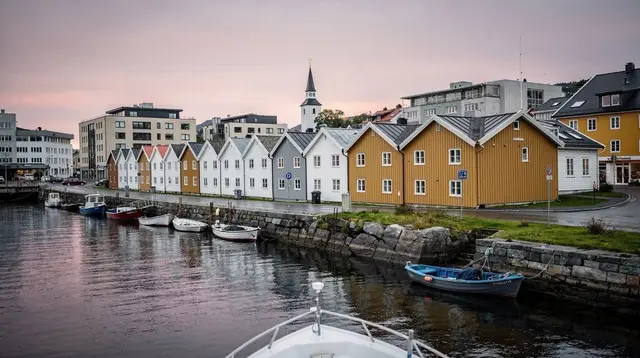
Be honest with yourself about what Bryne is before you go: it’s a functioning small town, not a curated attraction. There’s a compact centre, ordinary shops and cafés serving the surrounding farming community, and a Saturday rhythm to local life rather than a tourist one. It rewards a walk through rather than a long list of sights ticked off.
The one thing Bryne is genuinely known for outside its own region is football. Bryne FK has an outsized place in Norwegian football history as a small-town club that reached the top division and won league honours in the 1970s, at a time when Norwegian football was dominated almost entirely by clubs from Oslo and Bergen. It’s a point of local pride that tells you something about the town’s character: a small agricultural community that punched above its size.
Bryne as a base or a detour: pairing with the Jæren coast
Bryne works best as a half-day addition to a coastal Jæren day, not as a destination on its own. Most people are here to see the beaches, and Bryne’s role is to be the deliberate contrast once they’ve had enough sand and wind.
| Jæren coast (Orre, Borestranden, Kvassheim) | Bryne and the inland farmland | |
|---|---|---|
| Landscape | Long sandy beaches, dunes, lighthouses | Flat farmland, grain fields, greenhouses |
| Feel | Open, windswept, coastal | Quiet, agricultural, small-town |
| Typical activity | Walking, cycling, watching the surf | Walking the town, driving the farm roads |
| Time needed | Half a day to a full day | A couple of hours to a half day |
For the coast itself, the day trip to the Jæren beaches and the Orre and Borestranden guide cover that side properly, as does the Kvassheim and Obrestad lighthouses walk if you want the coastal walking route. Cyclists touring the whole plain should look at cycling the Jæren coast, which can be extended inland toward Bryne for exactly this kind of contrast. The Jæren beach coast itinerary is the easiest way to see how a Bryne detour fits alongside a beach day without overloading either.
If you’re already out this way: fjord options back toward Stavanger
Bryne itself has no fjord and no boat traffic — that’s not a gap in the coverage, it’s the nature of the place. But because Bryne and Sandnes sit close together, many travelers doing a Jæren farmland-and-coast day are also basing themselves in or near Sandnes for a separate fjord day, and it’s worth knowing what departs from there.
Sandnes is a departure point for fjord trips into the Lysefjord, including a RIB boat tour into the Lysefjord for those who want speed and spray rather than a slow cruise, and a boat tour that combines the Lysefjord with a view up at Pulpit Rock from the water for a longer, calmer trip.
From nearby Forsand there’s also a boat option up to Preikestolen from Forsand. None of these connect directly to Bryne, but if your itinerary already has you moving between Sandnes and the Jæren plain, they’re worth slotting into a different day rather than treating farmland day and fjord day as unrelated trips.
Food and produce around Bryne
Jæren’s farming economy shows up on plates as much as in fields. This is dairy country, and it’s grain and vegetable country, with the greenhouse tomato tradition mentioned earlier being one of the more distinctive local specialties. Farm shops and local produce stands appear along the roads around Bryne more often than in central Stavanger, and they’re a straightforward way to taste the region rather than just look at it.
Keep the ordinary Norwegian cost reality in mind here as everywhere else in the country: prices for food and drink run well above what visitors from many other countries expect, and everything is priced in Norwegian kroner (NOK) — Norway is not in the eurozone, so don’t plan a budget in euros. A simple café lunch in a town like Bryne will typically cost less than the same meal in central Stavanger, which is one practical argument for building it into a day trip.
Practical planning: quick facts
A short checklist for fitting Bryne into a Rogaland trip:
- Time needed: a couple of hours for the town, a half day if you add farm roads or a stop at Dalsnuten.
- Season: May to September shows the farmland at its most active and green; winter is flatter and greyer with shorter daylight.
- Transport: the Jærbanen train from Stavanger or Sandnes is simple and doesn’t require a car; a car adds flexibility for the surrounding countryside.
- Pairing: works best combined with a Jæren coast day — see the day trip to the Jæren beaches — rather than as a standalone full-day destination.
- Wider context: if you’re planning more than a couple of days in the region, the seven-day full Rogaland itinerary has room for an inland stop like this alongside the fjords and the coast. For a broader menu of day trips from Stavanger, see the day trips hub.
Common questions about visiting Bryne and the Jæren farmland
Is Bryne on the coast, like Orre or Borestranden?
No. Bryne sits inland, in the middle of the Jæren agricultural plain, away from the beaches. It’s the interior counterpart to the coastal towns, not another stop along the sand.
How do I get from Stavanger to Bryne?
The easiest way is the local train (Jærbanen), which runs from Stavanger through Sandnes to Bryne and on to Egersund, taking roughly 35-45 minutes. Driving takes a similar amount of time on the E39 and local roads.
What is there actually to do in Bryne itself?
Bryne is a working market town rather than a sightseeing destination: a compact town centre, a Saturday feel to local life, and easy access on foot or by short drive to the surrounding farmland. Most visitors treat it as a half-day stop, not a full day.
Can I visit Bryne without a car?
Yes. The Jærbanen train connects Bryne to Stavanger and Sandnes on a regular schedule, and the town centre itself is small enough to walk. A car helps if you want to explore the farm roads and smaller villages around it.
Is Bryne worth adding to a Jæren beach day, or does it need its own day?
Most travelers pair Bryne with a Jæren coast day rather than giving it a separate one — a couple of hours in and around the town, then back out to the beaches, fits comfortably into a single day trip from Stavanger or Sandnes.
Why is Bryne known outside Rogaland?
Bryne is best known in Norway as a footballing town — Bryne FK has a notable place in Norwegian league history as a small-town club that competed at the top level. Outside football, it’s known regionally for its farming and greenhouse produce.
What season is best for seeing the farmland around Bryne?
Late spring through early autumn, roughly May to September, when fields are green or being worked. Winter farmland is flatter and greyer, and daylight hours are shorter.