3 Days in Stavanger on a Budget
Why Three Days in Stavanger Doesn’t Have to Cost a Fortune
Norway routinely tops the list of Europe’s most expensive countries, and Stavanger is no exception — a coffee, a sandwich or a short taxi ride here can cost noticeably more than the equivalent back home. The currency is the Norwegian krone (NOK), not the euro, which matters for budgeting: Norway sits outside the EU and the eurozone, so every price you see is already in kroner, and there’s no favourable exchange trick to lean on. What actually controls the cost of a Stavanger trip isn’t the currency in your wallet — it’s which activities you choose.
The single most expensive line items in a typical visit are a guided Lysefjord cruise and the entry ticket to the Norwegian Petroleum Museum, and this itinerary drops both. What’s left is genuinely the best of the region: a full day exploring free city sights, a full day hiking to one of Norway’s most famous viewpoints for the cost of a bus ticket and a car park fee, and a third day with room to breathe, eat cheaply and see a few more free corners of town.
One myth to clear up before you land: carrying cash will not save you money here. Card payment is close to universal across Norway, contactless machines are everywhere from bakeries to bus drivers, and there is no cash discount anywhere in this itinerary. Bring a card with low foreign transaction fees and leave the idea of a “cash budget” behind.
Day 1: Free Stavanger, on Foot
Spend your first day almost entirely in the city centre, where the best sights don’t charge admission.
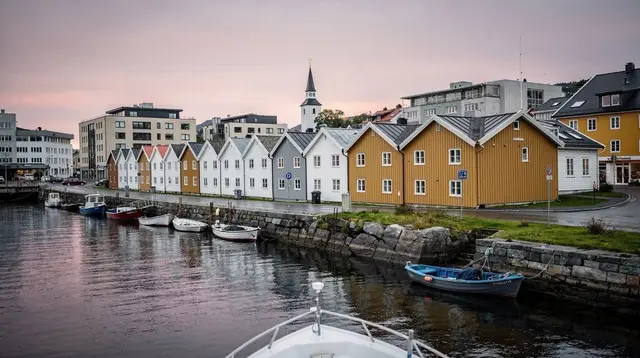
Start in Gamle Stavanger, the old town on the west side of Vågen harbour. Around 170 white wooden houses from the 18th and 19th centuries line cobbled lanes here — it’s described as the largest concentration of preserved wooden houses in Northern Europe, and it costs nothing to walk through. These are private homes, not a museum village, so keep the visit to the streets and public areas rather than doorsteps and gardens. A self-guided walking route through Gamle Stavanger takes an hour or two at an unhurried pace.
From there, walk into the centre to find Øvre Holmegate, a short street painted in bright pinks, yellows, blues and greens. It’s one of the most photographed corners of Stavanger and, again, free to wander — a guide to the colourful street points out a few details easy to miss on a quick pass. Nearby, Stavanger Cathedral marks the city’s founding: it was consecrated around 1125 and is the only medieval cathedral in Norway still standing and in use without a major rebuild. Entry to look inside is typically free or by small donation.
In the afternoon, take a local Kolumbus bus (or walk, if you’re up for around an hour each way) out to Sverd i Fjell at Hafrsfjord. Three bronze swords, each roughly 10 metres tall, were planted point-down into the rock here in 1983 to mark the Battle of Hafrsfjord in 872 CE — the battle traditionally credited with unifying Norway. There’s no ticket booth and no opening hours; it’s a public monument on open ground, and one of the more striking free sights anywhere in the region. A short guide to the swords in the rock covers the history if you want context before or after.
Round out the day back near Vågen harbour, where grocery-store sandwiches or a bakery lunch will cost a fraction of a sit-down restaurant meal. If you want ideas that don’t assume a big food budget, see what to eat in Stavanger for cafes and bakeries rather than the priciest harbourside tables.
Day 2: Preikestolen — Free to Stand On, Paid Only to Park
This is the day worth planning carefully, because it’s also the day people overspend on without realising it.
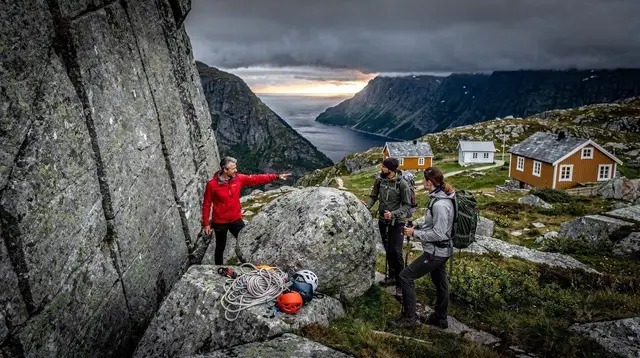
Preikestolen, or Pulpit Rock, is a flat plateau at 604 metres above the Lysefjord, and it draws around 300,000 visitors a year. The hike out to it is roughly 8 kilometres round trip, takes 4 to 5 hours, and climbs about 350 metres from the trailhead at Preikestolen fjellstue. None of that costs anything — the trail is open ground and the plateau itself is free to reach and stand on, with no barrier at the cliff edge, so keep well back from the drop regardless of how confident the crowd around you looks.
The only real cost on this day is getting to and from the trailhead. If you drive, parking at Preikestolen fjellstue is paid. If you don’t have a car — and this itinerary is built assuming you don’t — the seasonal shuttle bus from Stavanger is the standard budget route; a guide to reaching Preikestolen without a car and a breakdown of the shuttle bus options will tell you current schedules and pickup points. If you’re weighing whether the shuttle or a rental car works out cheaper for your dates, the parking cost guide lays out both sides of that math.
Pack your own food and water rather than buying at the trailhead kiosk, wear proper hiking shoes even though the trail is well marked, and check conditions before you go — outside roughly May to September, snow and ice change the difficulty considerably. If rain is forecast, which is common here, a look at trail conditions after rain is worth ten minutes before you leave.
If you’d rather not hike the full round trip yourself, or want company and a bit of local knowledge on the trail, a guided option exists without needing a car of your own:
a locally guided hike in the area around Preikestolen bundles transport and a guide into one booking, which can work out simpler — if not necessarily cheaper — than arranging the shuttle and hiking solo.
Day 3: A Cheaper Taste of the Fjord, and the City’s Free Corners
By day three you’ve covered the two big-ticket items for free. Use this day to see a slice of the Lysefjord without paying for a full guided cruise, then wind down back in the city.
A full guided Lysefjord cruise is one of the most expensive single activities in the region, and this itinerary skips it on purpose. A lighter-weight alternative is a point-to-point boat crossing rather than a scenic round-trip cruise:
a Stavanger boat trip to Preikestolen via Forsand gets you a stretch of fjord scenery as part of getting from A to B, at a lower cost than a dedicated sightseeing cruise, since you’re paying for transport rather than a tour.
If seeing the full 42-kilometre length of the Lysefjord from the water — walls over 1,000 metres in places, up to roughly 400 metres deep — actually matters more to you than the savings, be honest with yourself about it: our three-day itinerary built around a Lysefjord cruise is the better plan, and trying to force a full cruise into a tight budget usually means cutting something else instead.
One thing to actively avoid on a budget day: the helicopter option over the fjord and plateau is spectacular by every account, but it sits at the opposite end of the price scale from everything else in this itinerary —
the Pulpit Rock helicopter tour is worth knowing exists for a future, less budget-conscious trip, but it isn’t part of this plan.
Spend the rest of the day back in Stavanger on free ground: a slower second pass through Gamle Stavanger at a different time of day, a walk along Vågen harbour watching the boats, or simply sitting somewhere central with a grocery-store lunch. If you want a fuller list of no-cost activities beyond what’s in this itinerary, Stavanger on a budget: free things to do collects more of them in one place.
Before flying out, getting between Stavanger Airport and the city by bus rather than taxi is one more easy saving on the way home, and if you’re still deciding whether a car would have been worth it at all, do you need a car in Stavanger settles that question for most budget itineraries: no.
What This Three-Day Plan Actually Costs
| Item | Typical cost | Budget approach in this itinerary |
|---|---|---|
| Petroleum Museum entry | Moderate ticket price | Skipped entirely |
| Guided Lysefjord cruise | One of the trip’s biggest single costs | Replaced with a point-to-point boat trip, or skipped |
| Preikestolen trail and plateau | Free | Free — no change needed |
| Preikestolen trailhead parking | Paid, per car | Avoided by taking the shuttle bus instead of driving |
| Gamle Stavanger, Øvre Holmegate, Sverd i Fjell | Free | Free — no change needed |
| Local transport (Kolumbus buses) | Low, per ride or day pass | Used instead of a rental car for all three days |
| Food | Restaurant prices are high | Grocery stores and bakeries over sit-down meals |
| Cash vs. card | No difference | Card only — cash brings no saving |
One more myth worth naming directly, since it changes how people plan around Norway’s reputation for expense: don’t count on cash payments, tipping in cash, or currency exchange tricks to bring costs down. Norway’s card infrastructure is thorough enough that cash simply isn’t a lever here — the savings in this itinerary come entirely from which activities you choose to pay for, not from how you pay for them.
Frequently Asked Questions About a Budget Trip to Stavanger
How much does a 3-day budget trip to Stavanger cost?
Excluding flights, a frugal three days can run in the range of a few thousand Norwegian kroner per person for a hostel bed, groceries or budget cafes, local buses, and the shuttle bus to Preikestolen. Skipping the petroleum museum and a paid Lysefjord cruise removes two of the largest single line items from a typical Stavanger visit.
Is Preikestolen really free to hike?
Yes. There’s no entry fee for the trail or the plateau itself. The only cost is parking at the Preikestolen fjellstue trailhead, and if you arrive by public bus or shuttle instead of driving, even that disappears.
Do I need cash in Norway to save money?
No. Card payment is close to universal in Norway, and carrying cash brings no discount or advantage anywhere in Stavanger. Relying on cash to cut costs is a myth worth dropping before the trip, not during it.
Should I skip the Lysefjord cruise to save money?
This itinerary does, since a guided cruise is one of the more expensive add-ons in the region. If seeing the fjord from the water matters more to you than saving that money, our three-day itinerary built around a boat trip is the better fit.
Is public transport cheaper than renting a car for this trip?
For this three-day route, yes. Kolumbus buses and the seasonal Preikestolen shuttle cover every stop in this plan, and skipping a rental avoids fuel, parking and insurance costs that a car isn’t needed for here.
Where can I sleep cheaply in Stavanger?
Hostel dorms and budget guesthouses cluster around the city centre and Vågen harbour, within walking distance of Gamle Stavanger and the bus routes used in this itinerary, so there’s no need to pay more for a central location.
tours.3 days
Verified deep-linked GetYourGuide tours. Book through these links and we earn a small commission at no cost to you.
GetYourGuide does not provide a product photo for this activity — the image shows the meeting point, photographed by us.