A 4-Day Winter Itinerary for Stavanger and Preikestolen
Why This Itinerary Has No Kjerag In It
Most Rogaland itineraries put Kjeragbolten and Preikestolen side by side, as if they were interchangeable versions of the same hike. In winter they are not even in the same category, because one of them depends on a road. Kjerag is reached by driving the Lysebotn road to the trailhead at Øygardstølen, and that road closes with snow for a large part of the year. When it is shut, Kjeragbolten is not simply harder to reach — it is not reachable at all, whatever a summer blog post or an old itinerary might suggest.
This itinerary accepts that constraint instead of fighting it. It keeps Preikestolen, because the trail stays open year-round, but treats it as the technical outing it becomes once ice enters the picture. In place of Kjerag, it adds a full day in Sirdal, where the mountains actually hold snow, and a day in Haugesund, a coastal city that works well when hiking is off the table. If your dates fall between May and September, the calculation flips entirely and the five-day Kjerag and Jæren itinerary is the better fit — this one is built specifically for the months when that trip is not an option.
The Trap: Mild City, Serious Mountain
Stavanger’s winter numbers are genuinely mild. January averages around 1-2°C at sea level, and the city rarely holds snow for more than a few days at a time. It is easy to read those numbers, pack a city coat, and assume the whole region behaves the same way. It does not.
The plateau at Preikestolen sits 604 metres above the fjord, and the terrain up there answers to a completely different set of conditions than the harbour in Stavanger — wind, ice, and shorter daylight all arrive earlier and harder at altitude than they do at the waterfront. What actually closes in winter is worth reading before you finalise dates, because the gap between “mild city” and “closed mountain road” is exactly where trips go wrong.
Day 1: Stavanger and Gamle Stavanger
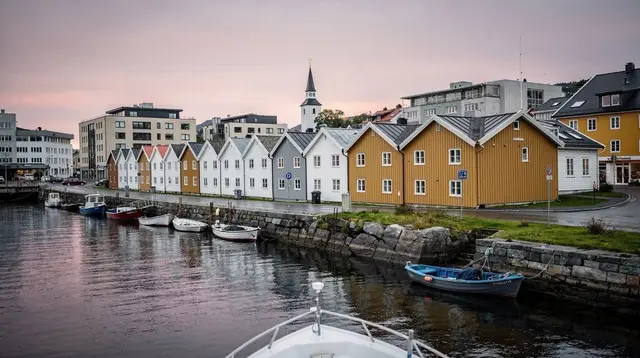
Start in the city itself, where winter is at its most forgiving. Stavanger in the low season is quiet, walkable, and short on daylight rather than short on things to do — plan a full day here and you will not run out of it. Spend the morning in Gamle Stavanger, the roughly 170 white wooden houses on the west side of the harbour, most of them dating to the 18th and 19th centuries. It is the largest concentration of preserved wooden houses in Northern Europe, still lived in rather than preserved as a museum, and a self-guided walk through the cobbled lanes needs no more than a warm layer and a couple of hours.
In the afternoon, cross to Stavanger Cathedral, consecrated around 1125 and the only medieval cathedral in Norway still standing and in use without a major rebuild — a genuinely rare survival by Norwegian standards. Round out the day around the harbour and the colourful houses of Øvre Holmegate, both short walks from the centre, before an early dinner; with sunset arriving mid-afternoon in deep winter, plan the outdoor half of your day before 3pm rather than after it.
| Day 1 at a glance | Detail |
|---|---|
| Base | Stavanger city centre |
| Weather to expect | Mild, wet, short daylight (roughly 1-2°C average) |
| Walking | Easy, paved streets |
| Car needed | No |
Day 2: Preikestolen in Winter — A Technical Hike, Not a Summer Stroll
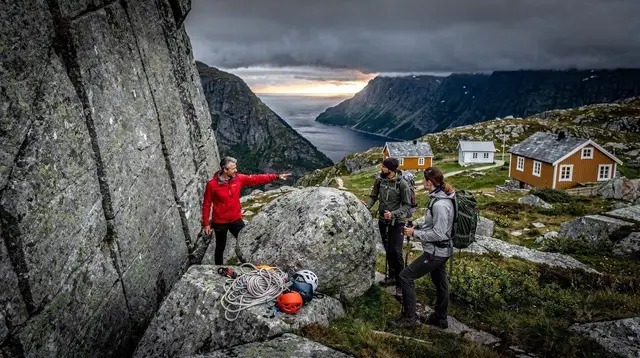
This is the day the itinerary is built around, and the one where the mismatch between coastal mildness and mountain conditions matters most. Preikestolen itself does not close in winter — the plateau and the standard 8 km round-trip trail remain accessible year-round, weather permitting. What changes is everything about how the hike behaves.
The path that carries around 300,000 people a summer becomes a quieter, often icy or snow-covered route, and the roughly 350 metres of elevation gain that feels routine in July asks for proper boots, poles, and frequently crampons or ice cleats once temperatures dip below freezing. Preikestolen in winter covers what that actually looks like on the ground, month by month.
The exposed cliff edge at the top has no railing in any season, and ice on approach to that edge is a materially different risk than bare rock. If you are not confident reading trail conditions, this is the one day on this itinerary where a local guide earns its cost — someone who checks the mountain that morning rather than a forecast the night before.
a locally guided hike into the Preikestolen area, run by people who check the day’s conditions before you set outIf the trail is closed, icy beyond your comfort level, or the short daylight simply does not allow it, two alternatives let you see the plateau without walking it. A flight over the rock and fjord skips the ice entirely:
a helicopter flight over Pulpit Rock and the LysefjordOr take the view from below, on the water, where a winter fjord is calmer than the trail above it ever gets in January:
a boat trip up to the base of Preikestolen from ForsandWhichever version of the day you end up with, pack for it properly — see what to pack for hiking in Rogaland before you leave home, not after you arrive.
| Preikestolen | Summer | Winter |
|---|---|---|
| Trail surface | Dry rock and gravel | Ice, packed snow, mud patches |
| Crowd level | Very busy (~300,000 visitors/year) | Quiet |
| Gear needed | Sturdy shoes | Winter boots, poles, often crampons |
| Daylight | Long, flexible timing | Short — start early |
| Cliff edge railing | None | None |
Day 3: A Snow Day in Sirdal
With Kjerag off the itinerary, Sirdal is where this trip gets its mountain-snow day instead. It sits inland in the mountains bordering Rogaland and holds snow far more reliably than the coast, which makes it the natural stand-in for a winter trip that still wants real alpine scenery. This is a driving day rather than a hiking one — the roads inland can carry snow and ice themselves, so check conditions before you set out and allow more time than the map suggests.
Treat the day as flexible rather than fixed to a single trailhead: a slow drive through snow-covered valleys, a stop for a short walk wherever conditions look reasonable, and time built in for the drive back before dark is a better winter plan than committing to a specific summit or route in advance. This is also a good day to leave hiking boots for spring and lean on car-based sightseeing instead — the point of Sirdal on this itinerary is snow scenery you can reach safely, not a summit to tick off.
Day 4: Haugesund, Off the Beaten Track
Close the trip somewhere that does not depend on trail conditions at all. Haugesund sits north of Stavanger and rarely makes it onto standard Rogaland itineraries, which is exactly its appeal on a winter trip built around a closed mountain road — it gives you a full day of city and harbour without betting on the weather. Wander the harbourfront, cover the town’s older streets on foot, and treat it as a low-key counterpart to the more polished centre of Stavanger.
If the sea is calm, a short boat outing shows Haugesund from the water rather than the quayside:
a guided electric boat tour around Haugesund’s harbour and coastlineTravellers with an extra day or two could extend this into the fuller Haugesund and Karmøy weekend, which folds in Viking-era sites further along the coast — worth knowing about even if this particular trip stops at four days.
Practical Notes for This Route
A few logistics matter more in winter than in summer. Norway uses the krone (NOK), not the euro — Norway is outside the EU and the eurozone, so budget in kroner rather than converting from a euro figure. Card payment is close to universal, so carrying cash is rarely necessary.
A car makes Days 2 to 4 considerably easier, since winter shuttle schedules to Preikestolen run less frequently than in summer and Sirdal is impractical without one — see whether you actually need a car in Stavanger for a fuller breakdown by day. Whatever your plan, build slack into the schedule: short winter daylight and weather-dependent mountain roads both push toward starting earlier and having a fallback ready, rather than a itinerary with no room to move.
| Item | Winter note |
|---|---|
| Currency | Norwegian krone (NOK) — not euros |
| Car | Recommended for Days 2-4 |
| Daylight | Short — plan outdoor time before mid-afternoon |
| Kjerag access | Closed once the Lysebotn road shuts for snow |
| Preikestolen access | Open, but trail conditions vary sharply |
Frequently Asked Questions About a Winter Trip to Stavanger and Preikestolen
Is Kjeragbolten open in winter?
Not reliably. The Lysebotn road to the Øygardstølen trailhead closes when snow makes it impassable, and without that road there is no practical way to reach Kjerag. Treat winter Kjerag access as closed by default rather than checking case by case.
Is Preikestolen safe to hike in winter?
It can be done, but it is a different hike from the summer version. The trail is often icy or snow-covered, the plateau still has no safety railing, and daylight is short, so proper boots, poles or crampons, and a realistic turnaround time matter far more than in July.
Do I need crampons for Preikestolen in winter?
Often, yes, or at minimum ice cleats for boots. Conditions swing from bare rock to sheet ice within the same week depending on temperature and recent rain, so check current trail conditions rather than assuming either extreme.
How cold does it get in Stavanger in winter?
Stavanger’s January average is only around 1-2°C, which is mild for the latitude thanks to the coast. That mildness is a city-and-fjord-level number, though, and says nothing about conditions 350 metres higher up on an exposed mountain trail.
Is there snow in Stavanger itself in winter?
Sometimes, but it rarely settles for long at sea level, and rain is more common than snow in the city centre. Snow cover is far more consistent and reliable once you climb into the hills around Sirdal.
Can I do this itinerary without a car?
Day 1 in Stavanger works entirely on foot. Days 2 to 4 are easier with a car, since Preikestolen shuttle buses run a reduced winter schedule, Sirdal is not practical by public transport, and Haugesund is more flexible by road than by the coastal express boat alone.
What should I do if the Preikestolen trail is closed by weather?
Have a fallback ready rather than forcing the hike. A helicopter flight over the plateau or a boat trip below it both show you Preikestolen from a different angle without putting you on an icy trail in poor visibility.
Is Haugesund worth a day trip in winter?
Yes, and arguably more so in winter, when it works as an indoor-friendly, low-crowd city day rather than a fair-weather beach detour. Harbour walks, museums, and a boat tour on a calmer winter sea all hold up without hiking conditions.
tours.4 days
Verified deep-linked GetYourGuide tours. Book through these links and we earn a small commission at no cost to you.
GetYourGuide does not provide a product photo for this activity — the image shows the meeting point, photographed by us.