Haugesund and Karmøy: A Viking Coast Weekend
Why Give the Viking Coast Its Own Weekend
Most first-time visitors spend their whole trip around Stavanger, Preikestolen and the Lysefjord, and never make it north. That’s the gap this itinerary fills. Haugesund and Karmøy sit far enough up the coast that they don’t work as a half-day add-on — they need a car, a proper overnight, and their own pace. This plan sacrifices the fjord side of Rogaland entirely: no Preikestolen, no Lysefjord cruise, no Kjerag. If you’ve already seen those, or you’re saving them for another visit, this weekend fills in a different, older layer of the region.
If you’d rather see both halves of Rogaland in one trip, don’t try to force them into two days. The seven-day Rogaland itinerary is built to cover the fjords and the Viking coast without rushing either, and the dedicated Viking Rogaland itinerary links this weekend with other historical sites around the region if that’s your main interest.
Weekend at a Glance
| Morning | Afternoon | Evening | |
|---|---|---|---|
| Day 1 | Drive north to Haugesund, settle in | Boat trip around the island communities | Skudeneshavn, dinner in Haugesund or Karmøy |
| Day 2 | Avaldsnes: Viking farm and Nordvegen | Himakånå ridge hike | Drive back to Stavanger |
Getting There: Stavanger to Haugesund
Plan on roughly 90 minutes to two hours by car from Stavanger, mostly along the E39, with at least one ferry or bridge crossing along the way depending on the route you take. It’s a manageable day-one drive, not a short hop — pack the car the night before and leave with breakfast already handled so you’re not eating into the afternoon boat departure. If you haven’t already worked out whether you need your own vehicle for the rest of your Rogaland trip, the do you need a car in Stavanger guide is worth a look before you commit to renting one just for this weekend.
Day 1: Haugesund and the Island Communities
Morning: Settle into Haugesund
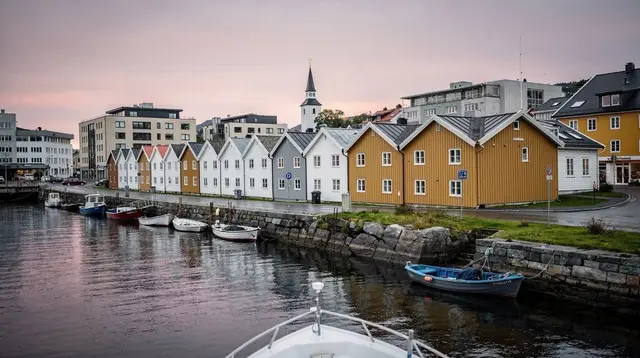
Use the first stretch of the day for the drive and a slow arrival. Haugesund is a working coastal town rather than a postcard destination, and that’s part of the appeal after the more manicured centre of Stavanger — a real harbour, ferries coming and going, and a compact centre you can walk in twenty minutes. Check into wherever you’re staying, grab lunch near the water, and use the things to do in Haugesund page to fill any gaps if you have extra time before the afternoon boat.
Afternoon: Out Among the Islands
The coastline around Haugesund is scattered with small island communities that are much easier to see from the water than from a car window. A RIB safari out to the islands around Haugesund covers more ground fast and suits anyone who wants a bit of speed and spray with their scenery. If you’d rather take it slower, with more commentary and less bouncing around, a quiet electric boat tour with a guide covers similar ground at a gentler pace — better suited to a relaxed first afternoon, or to families and anyone prone to seasickness.
Evening: Skudeneshavn
Round out the day with a drive over to Karmøy and its southern tip at Skudeneshavn. The white wooden houses here echo Gamle Stavanger’s, but the setting is different: a working fishing harbour rather than a city-centre neighbourhood, with a slower, more residential feel. It’s a pleasant place for an evening walk before dinner and a good contrast if Gamle Stavanger is still fresh in your memory from earlier in the trip.
Day 2: Avaldsnes and Himakånå
Morning: The Viking Farm at Avaldsnes
Start the day at Avaldsnes, one of the oldest continuously significant sites in Norway and the historical seat of power that later kings, including Harald Fairhair, are tied to. The Nordvegen centre and reconstructed Viking farm bring the period to life in a way that’s genuinely useful if you also plan to see Sverd i Fjell back in Stavanger, since the two sites tell overlapping parts of the same unification story.
A guided Viking cruise combining the Viking farm and Viking Planet is the most efficient way to see both in one sitting rather than working out the logistics yourself. For more background before you go, the Avaldsnes Viking farm guide covers what’s actually on site.
Midday: The Himakånå Hike
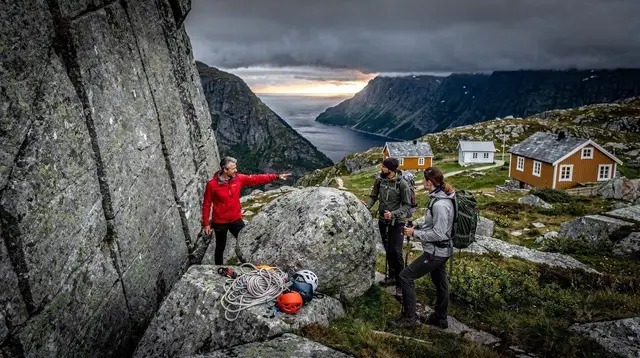
This is the hike locals half-jokingly call the Trolltunga of Haugesund — a rock ledge with a striking outlook that has become a popular photo stop. Be clear-eyed about what that nickname does and doesn’t mean: Himakånå is a good, moderately demanding regional hike with its own dramatic viewpoint, not a scaled-down version of the real Trolltunga in Hordaland, which is a far longer and more committing undertaking. Read the Himakånå hike guide before you set out, and check the what to pack for hiking in Rogaland guide — Rogaland’s weather turns quickly, and a ridge hike is not the place to be caught out in the wrong layers.
Afternoon: Back to Stavanger
Leave enough daylight for the return drive, especially outside the summer months. If you want a fuller version of this two-day loop with more stops built in, the day trip to Haugesund and Karmøy guide breaks down alternate routes and timings for the drive back.
Making the Most of a Short Trip
Two days is enough to get a real feel for the Viking coast without trying to do everything. Resist the urge to squeeze in a fjord cruise or a Preikestolen attempt on the way back — the driving alone makes that a bad trade against sleep and daylight. If Viking-era history turns out to be more interesting to you than expected, the Viking history category rounds up related sites across the wider region, including Sverd i Fjell back near Stavanger, for a future visit rather than a rushed add-on to this one.
Budget for mid-range costs across both days: fuel and any ferry tolls for the drive, one or two paid boat or guided experiences, and Norway’s generally high prices for food and drink, which apply just as much on the Viking coast as anywhere else in the country. None of it is complicated to plan around — it just needs its own two days rather than a squeezed-in afternoon.
Haugesund and Karmøy Weekend: Common Questions
Can you visit Haugesund and Karmøy without a car?
It’s difficult. Buses connect Haugesund to Karmøy and Avaldsnes, but the Himakånå trailhead and the villages around Skudeneshavn are far more practical to reach by car, and this whole area sits well outside the walkable core of Stavanger.
How is Himakånå different from the real Trolltunga?
Himakånå is a local outcrop that earned the nickname the Trolltunga of Haugesund because of its dramatic shape and viewpoint, not because it matches the scale of the original Trolltunga in Hordaland. Treat it as a good regional hike with its own character, not a substitute for the famous rock formation further north.
Do you need to book the Avaldsnes and boat tours in advance?
In peak summer months, yes, since boat capacity and guided Viking-farm slots fill up, especially on weekends. Outside July and August there’s usually more flexibility, but booking ahead still avoids arriving to a sold-out departure.
Can this weekend be combined with Preikestolen and the Lysefjord?
Yes, but not comfortably in the same two days. Most visitors treat Haugesund and Karmøy as a separate trip from the fjord side of Rogaland, and the seven-day Rogaland itinerary is built to cover both without rushing either.
What’s the best time of year for the Himakånå hike?
Late spring through early autumn gives the most reliable footing and daylight. Rogaland’s wet climate means trails can turn muddy or slippery outside that window, so check conditions before a winter or early-spring attempt.
Is Skudeneshavn worth visiting if you’ve already seen Gamle Stavanger?
Yes. The wooden houses are a similar style, but Skudeneshavn’s setting on the southern tip of Karmøy, its working harbour, and its slower pace make it a distinct stop rather than a repeat of Stavanger’s old town.
tours.2 days
Verified deep-linked GetYourGuide tours. Book through these links and we earn a small commission at no cost to you.
GetYourGuide does not provide a product photo for this activity — the image shows the meeting point, photographed by us.