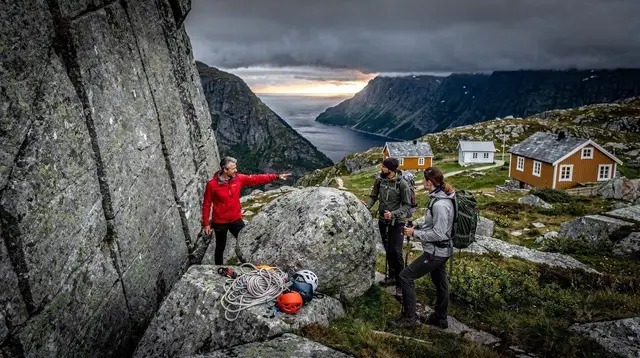
Most of what people mean when they say Ryfylke is water: fjords, boat trips, waterfalls dropping into narrow channels. Sirdal is the exception. It sits at the inland end of the same road system, in the mountains south of Frafjord, and it earns its place in a Rogaland itinerary for exactly one reason: snow. From late November to April, this is where Stavanger goes to ski. For the rest of the year, honestly, there is very little reason to make the drive.
That single fact should shape how you plan a visit. Sirdal is not a year-round extension of Ryfylke that happens to also have snow in winter — it is a winter destination whose entire identity depends on that snow being there. Treat it as such, and it is one of the more useful day-or-overnight trips inland from Stavanger. Treat it as another fjord-and-waterfall stop like Månafossen or Gloppedalsura, and you will arrive at the wrong time of year to a fairly ordinary stretch of highland.
A different Ryfylke, built for snow
Sirdal is a municipality in the mountains south of the main Ryfylke fjord network, straddling the border between Rogaland’s inland reach and the Setesdal mountain range that continues further south and east. Villages like Tonstad, Tjørhom and Sinnes sit along the valley and up toward the higher ground, and it is around Tjørhom and Sinnes that the ski infrastructure is concentrated: alpine slopes, marked cross-country trails, and terrain that draws day-trippers and weekenders from across the wider Stavanger region once the snow settles in.
What makes Sirdal distinct from the rest of Ryfylke is not just altitude — plenty of Ryfylke sits high, including the plateau around Gloppedalsura — it is that Sirdal’s whole visitor experience is organized around a season. A fjord cruise or a waterfall hike near Manafossen works, in some form, most of the year. A ski trip to Sirdal only works when there is snow to ski on, and that is not a given every week between November and April, let alone outside it.
Getting there: through Frafjord and past Byrkjedal
The drive from Stavanger runs inland through the same corridor that leads to Frafjord, continuing past the small waypoint of Byrkjedal before the road climbs into higher, more exposed terrain on its way toward Sirdal. Budget roughly two to two and a half hours behind the wheel, more if snow is falling or roads are being cleared. This is not a route to attempt without checking conditions first, and it is not one served by any practical bus or train connection — a rental car, ideally with winter tires already fitted, is effectively required.
The road itself is part of the character of the trip. As you climb past the lower farmland and forest, the landscape opens into bare granite and, in season, increasingly deep snow cover. It’s worth treating the drive as part of the day rather than an obstacle to get past quickly: fuel up before you leave the coast, carry warm clothing and some food and water in the car, and don’t assume mobile signal will be reliable the whole way.
Why the season decides everything here
It’s tempting, looking at a map, to lump Sirdal in with the rest of inland Ryfylke and assume it behaves the same way year-round. It doesn’t. Månafossen still drops ninety metres in July. The fjord still fills the valleys below Preikestolen in September. Sirdal in July, by contrast, is largely just a quiet mountain valley — pleasant enough for a scenic drive, but without the snow that gives the area its reason to be visited in the first place.
That means the honest advice is season-first, destination-second. If you’re travelling between late November and April and conditions are good, Sirdal is a genuinely worthwhile day trip or overnight from Stavanger. If you’re travelling in summer, your time and fuel are better spent on the parts of Ryfylke that don’t depend on snow: a hike near Månafossen, a paddle around Frafjord, or a longer loop through the fjord country covered in the four-day Ryfylke itinerary. Don’t build a summer Rogaland trip around Sirdal expecting a scaled-down version of its winter self — there isn’t one.
What you’ll actually do in Sirdal, in season
Once there’s reliable snow cover, Sirdal functions as a compact winter sports base. The slopes around Tjørhom and Sinnes offer a mix of terrain, from gentler runs suited to beginners and families to steeper pitches for more confident skiers and snowboarders, plus groomed cross-country trails that follow the valley and higher ground. Rental equipment, lift passes and basic facilities are available on site, so it’s possible to arrive without your own gear and still put together a full day on snow.
Beyond downhill and cross-country skiing, a typical winter visit can include:
| Activity | Typical setting | Notes |
|---|---|---|
| Alpine skiing / snowboarding | Slopes around Tjørhom and Sinnes | Terrain for beginners through to more advanced skiers |
| Cross-country skiing | Marked trails through the valley and higher ground | Popular with day-trippers from Stavanger |
| Snowshoeing / winter walking | Quieter trails away from the lift areas | Good option on days with poor visibility for skiing |
| Sledding / snow play | Areas near the main ski centres | Usually the easiest option with young children |
None of this is exotic by Norwegian standards — Sirdal is a modest, locally-used ski area rather than a large international resort — but that’s part of its appeal for a Stavanger-based trip: it’s close enough for a long day out, and unpretentious enough that you don’t need to plan a full ski holiday around it.
Sirdal and the Setesdal mountains
Sirdal sits at the point where Rogaland’s inland terrain meets the northern reach of the Setesdal mountains, the range that continues south and east into neighbouring Agder. That position is part of why the area feels different from the rest of Ryfylke: it’s less a fjord-adjacent valley than the beginning of a genuinely mountainous interior, with the kind of open, high terrain and reliable winter snow load that the fjord-cut coastline further west doesn’t get in the same way.
For visitors, this mostly matters as context rather than as an extra place to add to the itinerary. You don’t need to plan a Setesdal excursion on top of a Sirdal day trip — the two areas share a landscape and a winter character, and a single day or overnight in and around Tjørhom and Sinnes gives a fair sense of what that whole mountain belt offers without requiring a longer trip further south.
Practical planning: budget, timing, what to check first
A single day of skiing in Sirdal, including a lift pass, rental equipment if needed, and food, typically lands somewhere in the range of 1,500 to 2,500 NOK per person — not cheap by international standards, but broadly in line with what a day of skiing costs elsewhere in Norway. Fuel for the round trip from Stavanger and, if you’re staying over, a night’s accommodation in or near Sirdal are the other main costs to plan for.
Before setting out, especially between December and March:
- Check road status for the route inland — sections can close temporarily in heavy snow or high wind, and conditions can change within a few hours.
- Confirm which lifts or trails are open, since not everything runs on every day of the season.
- Pack for genuine winter conditions: proper layers, waterproof outer gear, and sun protection, since glare off snow at altitude is stronger than it looks. The general packing guidance in what to pack for hiking in Rogaland is written with hiking in mind, but the layering principles carry over to a winter day out.
- Don’t schedule Sirdal on the same day as anything else. Between the drive in, a full day on snow, and the drive back, it’s realistically a dedicated day (or better, an overnight) rather than a stop on a multi-destination route.
For a broader sense of what does and doesn’t operate around Stavanger once the days shorten, Stavanger in winter: what you can actually do and what closes in winter near Preikestolen and Kjerag are useful companion reading — Sirdal is very much the exception among Rogaland’s outdoor attractions in that winter is when it’s at its best, not its most restricted.
If you’re not chasing snow, do this stretch of Ryfylke instead
If your visit falls outside the snow season, the more rewarding way to use the same general corridor inland from Stavanger is to stop well short of Sirdal and spend your time around Frafjord and Månafossen instead, where the appeal doesn’t depend on the calendar.
A short paddle on guided kayak or SUP outing around Frafjord covers some of the same inland scenery from the water, at a pace that works from spring through autumn. For a more physical day, the via ferrata and bouldering route below Månafossen combines Rogaland’s tallest waterfall with a proper climbing challenge, no snow required.
Travellers building a longer Ryfylke stay who want to bookend an active day with something calmer might also look at the guided paddle-and-sauna outing across two fjords, which pairs well with a day spent further inland. None of these substitute for an actual Sirdal ski day, but they make far better use of a summer visit to this part of Rogaland than driving all the way to a snowless ski area and turning around.
For trip planning beyond a single day, the four-day car itinerary through Ryfylke covers this inland corridor in full without pushing as far as Sirdal, while the dedicated winter itinerary for Stavanger is the better starting point if a Sirdal ski day is genuinely what you’re after.
For a month-by-month view of when different parts of Rogaland are worth the trip, see the best time to visit Stavanger, month by month, and for a written-out Månafossen day that works whatever the season, the day trip to Ryfylke and Manafossen and the Månafossen hike guide with its companion note on the best season to see it are the more dependable picks.
Sirdal winter trip: frequently asked questions
How far is Sirdal from Stavanger?
Sirdal is around two to two and a half hours by car from Stavanger, following the road inland through Frafjord and past Byrkjedal before climbing into the mountains. There is no practical public transport link, so a car with winter tires is the only realistic way to get there in the snow season.
When is the best time to visit Sirdal?
Late November through April is the window that makes Sirdal worth visiting, since the area is built around snow rather than fjord scenery. Outside those months the slopes are bare and there is little to draw visitors away from the rest of Ryfylke.
Can you visit Sirdal in summer?
You can drive through in summer, but the appeal disappears with the snow. Sirdal’s mountains without a snow cover look like ordinary bare highland terrain, and none of the winter infrastructure operates, so most visitors are better off spending a summer day around Frafjord and Månafossen instead.
Do the mountain roads to Sirdal close in winter?
Sections of the mountain road can close temporarily during heavy snowfall or high winds, and conditions change quickly at altitude. Check the Norwegian Public Roads Administration’s road status before driving, and carry winter tires or chains, warm clothing, and a full tank as standard precautions.
Is Sirdal good for families?
Yes, in season. The ski areas around Tjørhom and Sinnes cater to beginners as well as experienced skiers, with gentler slopes, rental equipment, and marked cross-country trails suited to children, alongside steeper terrain for more confident skiers.
Is Sirdal part of the Ryfylke fjord region?
Geographically Sirdal sits at the inland, southern edge of the Ryfylke area, bordering the Setesdal mountains further south. It shares the drive-in route with places like Frafjord and Byrkjedal, but functions differently from the rest of Ryfylke: a winter mountain destination rather than a fjord one.
Do you need a car to visit Sirdal?
Yes. There is no meaningful public transport connection from Stavanger to Sirdal, and the point of the trip, reaching ski areas and mountain trailheads, depends on having your own vehicle. Rent a car with winter tires fitted if you are visiting between November and April.