Most visitors to Rogaland book a hotel in Stavanger, then spend a chunk of their Preikestolen day getting to the trailhead and back. Jørpeland, and the smaller municipality of Strand that surrounds it, sit on the opposite shore of the fjord from that trailhead — close enough that several tour operators list them as their own departure point, with their own place identifier, rather than folding them into a generic Stavanger listing. This page treats Jørpeland exactly as it functions in practice: a logistics base and an alternative place to sleep, not a sightseeing destination with its own must-see list.
What Jørpeland Actually Is
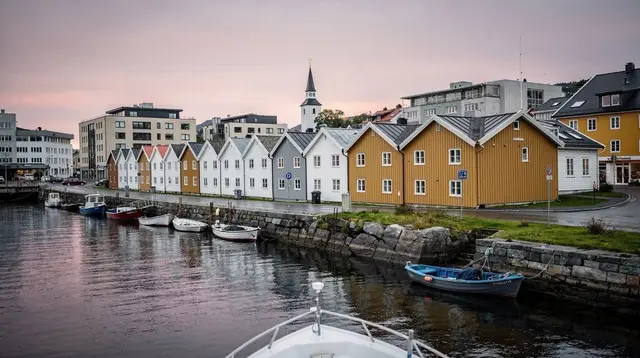
Jørpeland is a small industrial and administrative town, the centre of Strand municipality, built up in part around a ferro-silicon plant that has operated on the waterfront for decades. It is not styled for tourism the way Gamle Stavanger is, and it does not try to be. Its shopping street, harbour and residential streets serve the people who live and work there.
What makes it relevant to a trip through this region is entirely geographic: it sits on the eastern side of the Lysefjord’s mouth, a short crossing or a longer drive from the Preikestolen trailhead, and well inside the corridor that tours of the Lysefjord use to reach Kjeragbolten further up the water.
If you arrive expecting a second Stavanger — cafés, a historic quarter, an afternoon of wandering — you will be disappointed. If you arrive expecting a functional base with cheaper beds, shorter mornings and a genuine head start on the trail, it delivers exactly that.
Why Tour Operators List Jørpeland Separately
This is the detail that makes Jørpeland worth a page of its own rather than a footnote on the Stavanger entry. Most Lysefjord tours — cruises, RIB safaris, combined hikes — are sold with Stavanger as the pickup point, because that is where the visitor volume is. But because the Preikestolen trailhead itself sits on the Forsand side of the fjord, a handful of operators run their boats and hikes from departure points on this shore instead, with their own booking listing rather than a Stavanger-city one. That matters for two practical reasons: it can mean a shorter transfer if you are already staying nearby, and it can mean a smaller group, since these listings do not pull from the full Stavanger visitor pool.
A guided hike that starts from this side of the water, for instance, is sold specifically as a small-group option rather than a mass-market Stavanger pickup.
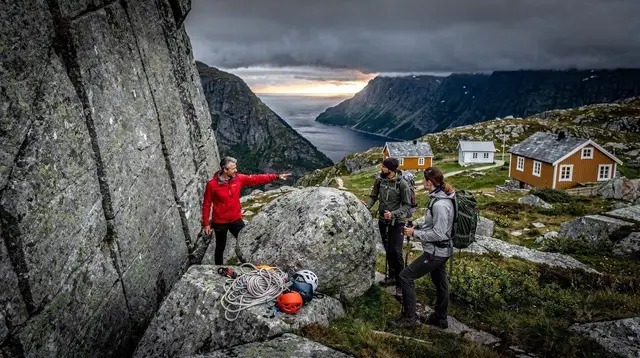
a small-group guided hike in the hills around PreikestolenThe same applies to at least one boat trip that runs from Forsand, immediately next to Jørpeland, straight to the base of the Preikestolen cliffs — a shorter crossing than the equivalent tour departing central Stavanger.
a boat trip to the foot of Preikestolen departing from ForsandGetting to Jørpeland and Strand
By car, Jørpeland is roughly 35 to 45 minutes from central Stavanger, reached via the Ryfylketunnelen, the subsea tunnel that connects Stavanger to the Ryfylke side of the fjord system without a ferry crossing. That tunnel changed the geography of this whole area: before it opened, reaching Jørpeland from Stavanger meant a ferry. Now it is a straightforward drive, which is also why day-trippers headed to Ryfylke or Månafossen often pass directly through Strand municipality without stopping.
Without a car, the connection is a combination of a local ferry across the fjord mouth and a Kolumbus bus, or a direct bus service depending on the season and timetable. It is workable but requires checking current schedules rather than assuming a fixed frequency — see our dedicated guide on reaching Preikestolen without your own vehicle for the up-to-date routing.
| From | Method | Approximate time |
|---|---|---|
| Central Stavanger | Car via Ryfylketunnelen | 35-45 minutes |
| Central Stavanger | Ferry plus local bus | 45-70 minutes, schedule-dependent |
| Sandnes | Car via Ryfylketunnelen | 40-50 minutes |
| Preikestolen fjellstue trailhead | Car | 20-25 minutes |
| Stavanger Airport, Sola | Car | 55-70 minutes |
Where Jørpeland Fits Against the Rest of the Region
Jørpeland is not equidistant from everything, and it is worth being honest about which activities it actually shortens and which it does not. It shortens the approach to the Preikestolen trailhead noticeably. It does very little for Kjeragbolten, which is reached via a much longer drive down to Lysebotn regardless of which side of the fjord you started from. It is a reasonable midpoint if you are combining Preikestolen with a look at Jørpeland itself and onward travel into Ryfylke, but it is not a base for Jæren’s beaches, which lie in the opposite direction from Stavanger entirely.
For a broader sense of how a multi-day route through this region can be sequenced, our four-day itinerary with a car in Ryfylke treats Strand as one stop among several rather than a final destination, which is the right way to think about it.
Staying in Jørpeland or Strand
Accommodation in Jørpeland and the wider Strand area tends to run cheaper than equivalent options in central Stavanger, partly because it is not competing for the same city-break visitors and partly because the town itself has less draw after dark. Options run from simple guesthouses and apartments to a handful of hotel-standard rooms aimed squarely at hikers and cabin renters heading further into Ryfylke. Camping and cabin rental is more common here than in the city, reflecting the area’s function as an outdoor-access point rather than an urban destination.
The trade-off is straightforward: fewer restaurants, a much quieter evening, and no real nightlife, in exchange for shorter mornings and often lower prices. For most travellers doing a single Preikestolen hike, this trade only pays off if you are also using Jørpeland as a stepping stone to somewhere else in Ryfylke the following day — otherwise the savings rarely outweigh the convenience of staying central in Stavanger for a one-off visit.
A Realistic Day Using Jørpeland as a Base
A typical use of Jørpeland looks less like sightseeing and more like a staging plan. Arrive the evening before, sleep close to the water, and be moving toward the trailhead before the day’s main wave of Stavanger-based hikers has finished breakfast. That head start matters more than it sounds: Preikestolen draws on the order of 300,000 visitors a year, overwhelmingly concentrated in the summer months, and the difference between arriving at seven in the morning and arriving at eleven is the difference between an empty plateau and a queue for photographs.
From Jørpeland, a hiker can be at the Preikestolen fjellstue trailhead in roughly 20 to 25 minutes by car, well ahead of the tour buses running the longer route out of central Stavanger. The same early start applies to boat-based options: a cruise or RIB trip departing from Forsand, right next to Jørpeland, gets onto the water and past the crowds at the boarding docks that build up around the more heavily used Stavanger departure points later in the morning.
If a hike itself is not the goal — because of weather, time, or physical ability — a helicopter tour over the plateau and fjord is one way to see the same landscape without committing to the trail, and it operates independently of trailhead conditions.
a helicopter flight over Preikestolen and the LysefjordFor hikers who have already done the standard trail on a previous visit, or who specifically want to avoid the main summer crowds, there are guided routes that approach the plateau from a different angle entirely.
a guided alternative route to Preikestolen away from the main trailWhat Jørpeland Does Not Offer
To be direct about the trade-offs: Jørpeland has no historic quarter comparable to Gamle Stavanger, no equivalent to Øvre Holmegate’s colour, and no museum on the scale of the Norwegian Petroleum Museum. Its harbour is a working one, shaped by industry rather than tourism. Restaurant choice is limited compared to Stavanger, and it closes down early in the evening outside of peak hiking season. None of this is a flaw in the town — it simply was not built around visitors, and treating it as a day out in its own right will leave you underwhelmed. Its value on this site is entirely as a base and a departure point, not as an attraction.
If your itinerary already includes a full day in central Stavanger, there is little reason to also carve out sightseeing time in Jørpeland. The exception is travellers heading onward into Ryfylke — toward Månafossen, Byrkjedal or further along the Ryfylketunnelen route — for whom Strand is a natural overnight stop rather than a detour.
Combining Jørpeland With Kjerag or a Second Fjord Activity
Travellers spending two nights in the area sometimes use Jørpeland as a base for both a Preikestolen morning and a second, more demanding activity the following day. Kjeragbolten is the obvious pairing for experienced hikers, though it is worth restating plainly: this is a long, exposed hike with chained sections and genuine fall risk, reached via a road that closes for winter, and it should never be treated as a casual add-on to a Preikestolen trip.
a full-day guided hike to KjeragboltenFor a gentler second day, a paddle on the fjord followed by a sauna session is a much lower-commitment way to spend time on the water without the elevation or exposure of the mountain trails.
a guided stand-up paddle and fjord-side sauna sessionJørpeland as a Base: Quick Comparison
| Factor | Jørpeland / Strand | Central Stavanger |
|---|---|---|
| Distance to Preikestolen trailhead | 20-25 minutes | 45-60 minutes |
| Accommodation cost | Generally lower | Generally higher |
| Evening dining and nightlife | Limited | Extensive |
| Public transport frequency | Lower, schedule-dependent | High |
| Access to Ryfylke and Ryfylketunnelen | Direct | Via Jørpeland/tunnel |
| Sightseeing on a rest day | Minimal | Extensive |
Jørpeland and Strand: Questions From Preikestolen Hikers
Is Jørpeland worth visiting if I am not hiking Preikestolen?
Not really. Jørpeland’s appeal on this site is almost entirely as a base for reaching the trailhead or a departure point for fjord tours. Without one of those two reasons, there is little to draw a visitor here over a day in central Stavanger.
How much time does staying in Jørpeland actually save?
For the Preikestolen hike specifically, it typically cuts 25 to 35 minutes off the one-way approach compared with driving from central Stavanger, which matters most for hikers trying to beat the midday crowds on the plateau.
Can I reach Jørpeland without a car?
Yes, via a combination of a local ferry across the fjord and a Kolumbus bus, or a direct bus service depending on season. It requires checking current timetables rather than assuming a fixed schedule; see our guide on reaching Preikestolen without a car for specifics.
Are hotel prices actually lower in Jørpeland than Stavanger?
Generally yes, though the selection is far smaller. Jørpeland is not competing for the same city-break demand as central Stavanger, so per-night rates tend to run lower, particularly for simple guesthouses and apartments.
Does staying in Jørpeland help with Kjeragbolten too?
Only marginally. The drive to Kjerag’s trailhead at Øygardstølen goes via Lysebotn regardless of which side of the fjord you start from, so the time saved is much smaller than for Preikestolen.
Is there anything to do in Jørpeland itself in the evening?
Very little. It is a working town with a limited number of restaurants and no real nightlife scene. Plan for an early dinner and an early night if you are basing yourself here before a hike.
Why do some tours list Forsand or Jørpeland instead of Stavanger as their departure point?
Because the Preikestolen trailhead and the Lysefjord’s mouth are physically on this side of the water. A small number of operators run boats and hikes directly from here, giving them a shorter crossing and often a smaller group than the equivalent Stavanger-departure tour.
Is one night in Jørpeland enough?
For a single Preikestolen hike, one night is enough and is really the whole point — arrive the evening before, hike early, then move on. Two nights only make sense if you are pairing it with a second activity, such as Kjeragbolten or a Ryfylke day trip.