Is a RIB Safari Too Rough for Kids, Seniors or a Weak Stomach?
Is a RIB safari on the Lysefjord suitable for children, older travellers or people who get seasick?
A RIB safari involves sudden acceleration, hard bumps over waves and tight, banked turns that a classic fjord cruise does not — it suits fit, willing passengers rather than everyone. Many operators set a minimum age, commonly somewhere around 4 to 8 years, and travellers with back, neck, pregnancy or motion-sickness concerns are usually better off on a classic sightseeing boat instead.
What a RIB Actually Feels Like on the Water
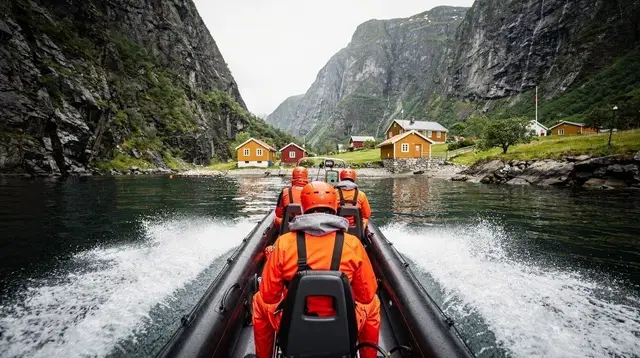
Every operator’s brochure photo of a Lysefjord RIB safari looks the same: a rigid inflatable boat cutting a white wake beneath a wall of rock, everyone on board grinning under a windproof jacket. What those photos don’t show is what your body actually experiences for the hour or two you’re strapped into one of those seats. That’s the gap this guide tries to close — not whether the Lysefjord is worth seeing by boat (it clearly is), but whether the specific vehicle you’re booking suits the specific people you’re travelling with.
A RIB, short for rigid inflatable boat, is built around a rigid hull with inflatable tubes along the sides, a powerful outboard engine, and very little in the way of weight or hull depth to absorb impact. That design is exactly what makes it fast and manoeuvrable, and exactly what makes it transmit every bump straight into the seat and your spine. Compare that to a classic sightseeing cruise boat: heavier, slower, with a hull shape built to cut smoothly through water rather than skim across it. The two experiences share a destination — the same fjord, often close to the same Preikestolen viewpoint from below — but they do not share a ride.
On a RIB, expect the boat to plane, meaning it lifts partly out of the water at speed so that only a portion of the hull is in contact with the surface. That’s what generates the thrill in the marketing photos, and it’s also what generates the jolt every time the hull comes back down onto a wave. In sheltered Lysefjord water this is usually a rhythmic bump rather than a violent slam, but “usually” is doing real work in that sentence — wind, boat traffic wake, and the skipper’s choice of route and speed all change how rough a given day feels.
The Specific Sensations: Bumps, Banking Turns and Spray
Four things define the physical experience of a RIB safari, and each one matters differently depending on who’s on board.
Sudden acceleration. Skippers typically build up to a cruising speed quickly once clear of the harbour, and that acceleration itself has a G-force feel — pressed back into your seat — that a classic cruise never produces. It’s brief but repeated each time the boat slows for a viewpoint and then speeds up again.
Repeated bumping over wave chop. This is the defining sensation of a RIB ride. Even on a calm day, water isn’t perfectly flat, and a fast-moving rigid hull turns small ripples into a series of short, sharp jolts through the seat and up the spine. On a breezier day, or when another boat’s wake crosses your path, those jolts get bigger and less predictable.
Tight, banked turns. Part of what makes a RIB feel exciting is its ability to carve a hard turn at speed, leaning the boat over so passengers feel real lateral G-force — a sensation closer to a fairground ride than a boat trip. Operators often build a few of these turns into the safari specifically because passengers enjoy them, but “enjoy” assumes a passenger who wants that sensation in the first place.
Cold spray. Because the boat moves fast and low to the water, spray comes over the sides regularly, and even in July the wind-chill at speed makes the air feel considerably colder than it does standing still on the dock. This isn’t dangerous, but it is a real part of the physical experience and one more reason a RIB safari asks more of a passenger’s tolerance than a covered cruise boat does.
None of this makes a RIB unsafe for a typical healthy adult. It does mean the honest description of the ride is “exhilarating and physically demanding,” not “a gentle boat trip with better photos.”
Who Should Think Twice Before Booking
This is the section most RIB operators’ own marketing tends to skip, and it’s the one this guide exists to cover properly. A RIB safari is not automatically wrong for any of the groups below — but each of them faces a genuinely different risk-and-comfort calculation than a fit adult traveller does.
Young children. Small children have less core strength to brace against sudden jolts, and many simply don’t have the patience or coping tolerance for an hour of cold spray and repeated bumping. This is exactly why operators set minimum ages rather than treating every RIB as suitable for every family, and it’s covered in more detail in a dedicated guide on what to expect from a Lysefjord RIB safari.
Older travellers. Age alone isn’t the deciding factor — plenty of fit seniors handle a RIB safari without issue — but repeated jolting is harder on joints, and anyone with reduced grip strength or balance concerns should weigh that honestly before committing to ninety minutes of holding on through banked turns.
People prone to motion sickness. The Lysefjord itself is sheltered, calm water compared with open sea, which sometimes creates a false sense that a RIB ride will be gentle. It’s the boat’s speed, acceleration and turning, not the fjord’s wave height, that triggers motion sickness for susceptible passengers — and a RIB produces more of all three than a classic cruise.
Anyone with back, neck, or pregnancy-related concerns. Repeated impact through the spine is a real physical load, and general safety guidance from tour operators consistently points people with back or neck problems, and pregnant travellers, toward calmer boat options instead.
Nervous first-time boat passengers. Beyond any physical condition, some people simply don’t enjoy the sensation of speed and sudden movement on water, and there’s no shame in preferring the view from a boat that doesn’t lean into a hard turn every few minutes.
None of this is a reason to avoid the Lysefjord by water altogether. It’s a reason to match the boat to the person, and a classic sightseeing cruise reaches many of the same views — including a look up at Kjeragbolten territory and the fjord walls near Flørli — at a pace almost anyone can enjoy.
Age Limits: Why “Family-Friendly” Isn’t a Blanket Claim
One of the clearest signs that a RIB safari isn’t suited to every age group is that operators themselves set limits. These vary by company and even by specific boat, so the table below should be read as an illustration of the kind of policy you’ll encounter, not a guarantee for any single tour — always check the operator’s own terms before you book.
| Passenger group | Typical operator approach |
|---|---|
| Very young children | Often a stated minimum age, commonly somewhere around 4 to 8 years old depending on the operator |
| Young children above the minimum age | Frequently required to be held or closely supervised by an accompanying adult |
| Pregnant travellers | Commonly advised against by operators due to the jolting motion |
| Passengers with back or neck conditions | Commonly advised to choose a calmer boat instead |
| Fit adults and teenagers | Generally the target audience the safari is designed for |
The pattern across most operators is consistent even where the exact numbers differ: a RIB safari is designed around able-bodied passengers who want an active, fast-paced experience, and the age and health caveats exist because the ride itself is genuinely more demanding than a sightseeing cruise, not as excessive small print.
What Actually Happens on Board
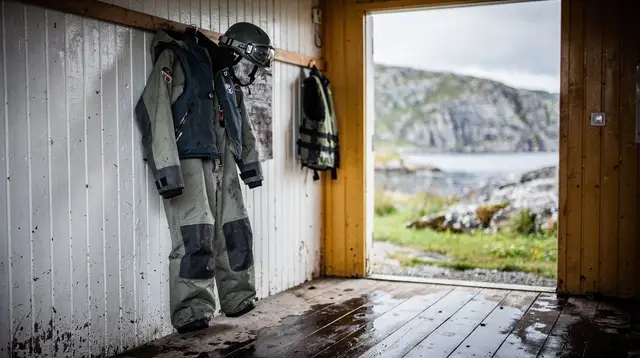
A typical Lysefjord RIB safari departs from Stavanger or a nearby port such as Sandnes or Forsand, and the specific departure point affects both the route and the overall length of the trip — a separate guide covers RIB safari departure points around Stavanger and Forsand in more detail. Before boarding, passengers are typically fitted with a flotation suit or lifejacket and briefed on how to sit and hold on, which is itself a useful early signal of how physical the ride is expected to be.
Once underway, the boat alternates between faster open stretches, where the bumping and banking are most pronounced, and slower passes near cliffs, waterfalls or historic sites where the skipper cuts speed so passengers can look up and take photos. Many routes head toward the base of the cliffs below Preikestolen, giving a genuinely different vantage point on the plateau than the view most visitors get from the hiking trail above. The full experience of that itinerary — what you actually see and how the sights compare with a classic boat — is covered separately in a guide to what a Lysefjord cruise actually shows you from the water.
Trip length varies by operator and route, generally running somewhere between one and two and a half hours, and that duration matters for the comfort question too: a shorter, calmer route asks much less of a nervous stomach or a stiff back than a longer, faster one. A guide comparing how long different Lysefjord cruise options take is useful background if duration, rather than the type of boat, turns out to be your main concern.
RIB or Classic Cruise: A Quick Way to Decide, Without Repeating the Full Comparison
This site covers the fuller RIB-versus-cruise decision — pricing, scenery differences, seasonal timing and more — in a dedicated comparison guide, so this section stays narrowly focused on the physical-suitability angle this page is built around. If you’re weighing the two options mainly because of who’s travelling with you, a few honest questions tend to settle it quickly:
- Is anyone in the group under the typical minimum age, or would a young child need to be held through sharp turns for an hour or more?
- Does anyone have a back, neck, pregnancy or heart condition where a doctor has advised against sudden jolting?
- Has anyone in the group struggled with motion sickness on boats, jet skis or amusement rides before?
- Is the appeal of the trip mainly “see the fjord” rather than “feel the speed”?
Answering yes to any of these points meaningfully toward a classic cruise instead of a RIB. If none of them apply, and everyone in the group is looking forward to a faster, bumpier, more active boat trip, a RIB safari genuinely delivers a different — many would say more memorable — experience of the same fjord. For the fuller side-by-side breakdown of price, scenery and timing between the two, see the dedicated RIB safari versus classic cruise comparison.
Families weighing this decision more broadly may also find it useful to read a general guide to Stavanger with kids, and the matching Stavanger-with-kids itinerary, both of which flag which activities around the fjord suit younger travellers and which are better suited to older kids and adults. Anyone planning a single day around the water, regardless of which boat type they choose, may also want the one-day Lysefjord cruise itinerary as a starting point.
Booking a RIB Safari
Several operators run RIB safaris on the Lysefjord, departing from Stavanger, Sandnes and Forsand, with routes that vary in length and how close they bring you to the cliffs below Preikestolen. The Lysefjorden Pulpit Rock RIB Safari from Stavanger is one of the more established options, following the fjord toward the base of the plateau at speed before slowing for photos.
A closely related route runs as the Lysefjorden Pulpit Rock Safari by RIB, with a similar itinerary but a different operator and boat, worth comparing on departure time and group size if the exact schedule matters to your day.
Travellers who prefer a smaller group and a more flexible pace, particularly useful if you’re travelling with someone who might need the skipper to ease off the throttle, can look at the private RIB safari cruise to the Lysefjord from Stavanger, which allows more control over speed and route than a fixed-departure group tour.
For those departing from the Sandnes side rather than central Stavanger, the Lysefjord RIB Fjord Tour from Sandnes covers similar ground with a shorter transfer for anyone staying in that part of the region.
Whichever operator you choose, ask directly about their minimum age policy and any health guidance before booking, rather than assuming every RIB tour applies the same rules — the physical ride is similar across operators, but the fine print around who should book it is not always identical.
RIB Safari Suitability: Common Questions
Is a RIB safari on the Lysefjord suitable for children, older travellers or people who get seasick?
It depends on the person, not just the age on their passport. A RIB bounces, slams and turns sharply in a way a classic cruise never does, so fit adults and older kids who like a bit of thrill generally do fine, while young children, frail seniors and anyone prone to seasickness should think carefully first.
Do RIB safari operators on the Lysefjord have a minimum age?
Many do. Age limits vary by operator and boat, and commonly sit somewhere around 4 to 8 years old, sometimes with a requirement that an adult holds or seats a small child for the whole trip. Always check the specific operator’s policy before booking rather than assuming a family-friendly age limit applies everywhere.
How bumpy is a RIB compared with a normal boat?
Noticeably bumpier. A rigid inflatable boat is built to go fast and turn hard, which means it slaps against wave chop, lifts off the water at speed and leans into tight turns — sensations a heavier, slower classic cruise boat is specifically designed to avoid.
Can you get seasick on a Lysefjord RIB safari?
Yes, and the rapid acceleration, sudden stops and sharp turns make motion sickness more likely on a RIB than on a classic cruise, even though the Lysefjord itself is sheltered water rather than open sea. Anyone who knows they are prone to seasickness should weigh that risk honestly before choosing a RIB over a calmer boat.
Is a RIB safari safe for older travellers or people with back or neck problems?
The repeated jolting over waves puts real strain on the spine and neck, so operators and general guidance typically steer people with back, neck, pregnancy or heart conditions toward a classic cruise instead. This is a genuine physical consideration, not just excessive caution.
What should I wear on a RIB safari to handle the ride and the spray?
Warm, windproof, waterproof layers are essential even in summer, since speed and spray make the boat feel far colder than the air temperature on shore. A separate guide on this site covers exactly what to wear for a Lysefjord RIB safari in more detail.
If I am unsure, should I book a RIB safari or a classic Lysefjord cruise?
If you are travelling with young children, older relatives, or anyone with motion sickness or a bad back, a classic cruise gives you the same fjord scenery without the physical demands of a high-speed boat. The dedicated RIB safari versus classic cruise comparison on this site walks through the fuller decision between the two.
tours.rib-safaris
Verified deep-linked GetYourGuide tours. Book through these links and we earn a small commission at no cost to you.
GetYourGuide does not provide a product photo for this activity — the image shows the meeting point, photographed by us.