Kayaking Stavanger's City Fjords: A Calm-Water Guide
Can you go kayaking in Stavanger itself, without hiking or fjord experience?
Yes. The waters around Vågen harbour and the inner city fjords are sheltered and flat, and guided sessions are built for complete beginners. This is a different, much shorter outing than a Lysefjord kayak trip, which covers open, deep fjord water and demands more preparation.
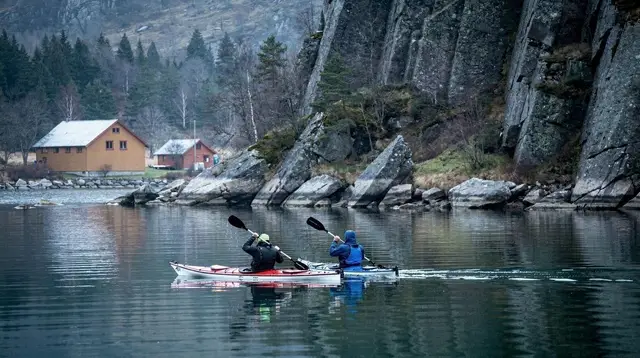
Most people who search for kayaking near Stavanger picture a long paddle beneath the Lysefjord’s cliffs. That is one option, and it is a serious one. But the waters right around the city itself offer something quieter: sheltered bays, flat inlets and a paddle you can do in an afternoon without a single steep climb or exposed drop involved. This guide is about that second option — the calm-water city paddle, not the fjord expedition.
Stavanger’s other waterfront: calm, close and forgiving
Stavanger sits on a cluster of inlets and skerries rather than a single open coastline, which is exactly why the city works so well for beginner-friendly kayaking. Paddling out from Vågen harbour, you’re moving through water that is shielded from open-sea swell by the surrounding islands and headlands. There’s boat traffic to be aware of, particularly near the harbour mouth, but nothing like the fetch and depth of a real fjord.
This distinction matters more than it might seem. The Lysefjord is around 42 km long, with walls exceeding 1,000 metres in places and water depths reaching roughly 400 metres. A kayak trip there is a genuine fjord crossing, planned around wind, boat wakes from tour vessels, and a much longer return distance if conditions change. The city fjords around Stavanger are a different category of outing altogether — shorter, shallower in exposure if not in water depth, and forgiving of a late start or an unsure paddler in the group.
If you’re choosing between the two, treat this page as the answer for a short, low-commitment session, and treat a Lysefjord paddle as a separate, bigger day out that needs its own planning. Our kayaking Lysefjord guide covers that version in full, including how it differs in scale and preparation from what’s described here.
Where you actually paddle
A typical city session launches from a point near Vågen harbour or one of the sheltered bays just outside the centre, and stays within a network of inlets rather than heading out toward open water. Along the way, guides commonly route past:
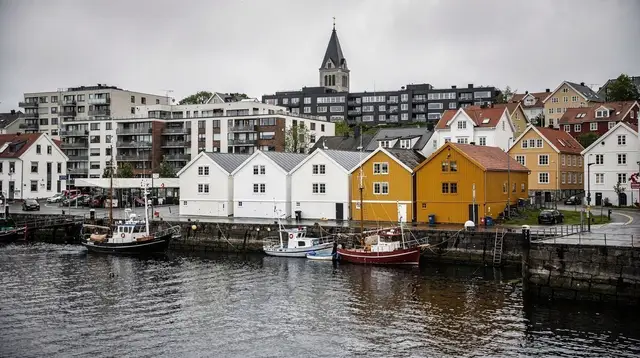
- The waterfront edge of Gamle Stavanger, seen from the water rather than the cobbled streets — a different angle on the same white wooden houses.
- Small skerries and rocky islets a short paddle from the harbour, used as rest points or turnaround markers.
- Quiet residential shorelines that most land-based visitors to Stavanger never see, since they sit behind private gardens and boathouses.
None of this is dramatic in the way Preikestolen or the Lysefjord is dramatic. That’s the point. It’s a paddle for people who want to be on the water, see the city from an unusual vantage point, and be back on dry land within a couple of hours — not for people chasing a single big-ticket adventure photo.
Guided or self-guided: what actually fits a first-timer
Independent kayak rental exists around Stavanger, but availability for short-stay visitors is inconsistent, and renting alone means you’re responsible for route planning, tide timing and gear checks with no local backup. For most visitors, a guided session removes that friction entirely.
| Option | Experience needed | Typical duration | What’s included |
|---|---|---|---|
| Guided kayak or SUP session | None | 2-3 hours | Kayak or paddleboard, safety gear, briefing, guide |
| Independent rental | Some paddling confidence | Flexible | Equipment only; route and timing are on you |
| Guided Lysefjord kayak trip | Basic paddling comfort | Full day | Transport, guide, gear, longer open-water route |
For a first attempt at paddling in Stavanger, the guided route is the more sensible choice, and it’s the option most visitors actually book. The guided kayak or SUP session departing from Stavanger is built exactly for this: no experience required, all gear supplied, and a route chosen around the day’s conditions rather than a fixed itinerary regardless of weather.
What a session actually looks like, hour by hour
A typical guided outing follows a predictable rhythm, which is worth knowing before you book so the pace matches your expectations.
- Arrival and briefing (20-30 minutes). Gear fitting, a land-based paddling demonstration, and a safety talk covering capsizing, group signals and the day’s route.
- Launch and warm-up (15-20 minutes). A short paddle in the immediate launch area to get comfortable with balance and steering before heading further out.
- Main paddle (60-90 minutes). The core of the trip, following sheltered inlets and passing skerries or waterfront viewpoints, usually with a couple of stops to regroup or rest.
- Return and wrap-up (15-20 minutes). Paddling back to the launch point, unloading gear, and a brief debrief from the guide.
Most operators keep total time, including the land-based briefing, to two to three hours. That leaves the rest of a day free for a walk through Gamle Stavanger or a visit to the Norwegian Petroleum Museum if the paddle is a morning activity, or dinner near the harbour if it’s an afternoon one.
Gear, conditions and what to wear
Rogaland’s weather is milder than Norway’s reputation suggests, but it is genuinely wet — the Stavanger area sees somewhere around 1,180 to 1,250 mm of rain a year — and coastal wind can make even a mild day feel colder on the water than on land. Dress for that rather than for a sunny brochure photo.
- Base layer: quick-drying synthetic or wool, never cotton, since cotton stays wet and cold once splashed.
- Mid-layer: a warm fleece or similar, even in July — water reflects and cools air faster than land does.
- Outer layer: a windproof, ideally waterproof shell. Guided operators usually supply a splash jacket or dry top over this.
- Footwear: old trainers or water shoes that can get wet; bare feet or flip-flops are a poor fit for getting in and out of a kayak on rock or gravel.
- Sun and eye protection: even under cloud, glare off the water is stronger than expected — sunglasses with a strap are worth packing.
Guided sessions typically provide the kayak or paddleboard, paddle, personal flotation device, and a waterproof top layer. Confirm exactly what’s included when you book, since this varies slightly by operator and season.
Tides, boat traffic and staying safe near the harbour
The inlets around Stavanger have mild tidal movement rather than the strong currents you’d find in an exposed coastal strait, which is one of the reasons this stretch of water suits beginners. That said, a few safety basics are worth knowing regardless of experience level:
- Boat traffic concentrates near the harbour mouth. Ferries, fishing boats and pleasure craft all use the same approach lanes as Vågen harbour; guides route around this, but it’s not water to paddle inattentively.
- Wind changes faster than forecasts suggest on this coast. A calm morning can turn breezy by early afternoon, which is exactly why guided operators build flexibility into departure times rather than fixing a rigid schedule.
- Cold water shock is a real risk even in summer, since North Sea-fed water stays cool year-round. A flotation device and a guide briefed on capsize procedure are not formalities — they’re the actual safety margin.
None of this should discourage a first-timer. It’s the same level of caution any coastal paddling activity requires, and it’s precisely why a guided session, rather than an unsupervised rental, is the more sensible starting point.
Kayaking with kids or with zero paddling experience
Because the water is sheltered and the pace is set by a guide rather than a fixed schedule, city kayaking in Stavanger is one of the more approachable water activities for families and total beginners — more so than anything involving the open Lysefjord. That said, minimum ages and tandem-kayak policies vary by operator, so check the specific listing before booking if travelling with children.
For a broader sense of what else works well with kids in the area, our guide on things to do in Stavanger with kids and the dedicated one day in Stavanger without a car itinerary cover activities that pair naturally with a short paddle — museums, harbour walks and the colourful streets of central Stavanger among them.
If a land-based alternative on the same day suits your group better, a guided city walking tour taking in Stavanger Cathedral and the harbour covers similar ground at a slower, dry pace, and works well as a complement rather than a substitute.
When the calm water isn’t enough: the Lysefjord option
It’s worth repeating this clearly, because it’s the single most common mix-up visitors make when researching kayaking near Stavanger: a city-fjord paddle and a Lysefjord kayak trip are not the same activity, and one does not prepare you for the other.
The city session covers a few kilometres of sheltered inlet close to town, over two to three hours, with no significant open-water exposure. A Lysefjord paddle covers a stretch of a roughly 42-kilometre fjord with depths near 400 metres and walls over 1,000 metres high — a full-day undertaking with transport, longer distances, and real exposure to fjord winds funnelling between the cliffs. Tour boat wake and colder, deeper water are also part of the calculation there in a way they simply aren’t in the city bays.
If the calm-water session leaves you wanting more, the natural next step is a guided version of the bigger trip rather than an independent attempt. The guided kayaking trip on the Lysefjord is built for exactly that step up, with a guide, transport and a route matched to the day’s fjord conditions — treat it as a separate booking and a separate day, not an extension of the city paddle. Our Lysefjord kayaking guide sets out what that bigger trip actually involves before you commit to it.
For those who’d rather see the Lysefjord from a boat than a kayak, a Lysefjord cruise from Stavanger or a faster RIB safari on the Lysefjord cover the same water at a different pace and effort level — both worth comparing against a full kayak day if paddling for hours doesn’t appeal.
Getting there and booking logistics
Most guided city kayaking sessions launch from a point within walking distance of central Stavanger, which makes this one of the easier water activities to fit into a car-free visit. If you’re arriving via Sola airport, the city centre and harbour area are roughly 14 km away and reachable by Kolumbus bus, so a rental car isn’t a prerequisite for this particular activity. Our guide on whether you need a car in Stavanger covers this in more detail if you’re planning the rest of a car-free trip.
Booking in advance is worth doing in the busier summer months, when good-weather windows fill guided slots quickly, but the sheltered nature of the water means sessions run across a longer season than more exposed activities. Outside peak summer, availability tends to loosen up, though water temperature and shorter daylight hours become bigger factors — our Stavanger in winter guide covers what’s realistic to plan across the colder months.
A few practical notes worth keeping in mind when booking:
- Confirm what’s included — wetsuit or splash top, flotation device, dry storage for phones and cameras — since this varies by operator.
- Ask about the minimum group size and cancellation policy, particularly if you’re booking around a tight travel schedule.
- Check the specific meeting point, since departure spots can shift slightly by season or tide.
- Bring a dry bag or waterproof phone pouch if you want photos; most operators don’t guarantee a fully dry ride even in calm water.
If you’d rather bundle a paddle with other city sights on a fixed schedule, a private driving tour of Stavanger’s city highlights before or after a kayak session is a straightforward way to see more of the city without needing your own transport.
Kayaking around Stavanger: your questions answered
Is kayaking around Stavanger suitable for complete beginners?
Yes. A guided city-fjord session covers paddling basics on the water before you go anywhere, and the sheltered bays around Stavanger stay calm in most weather. No prior kayaking or hiking experience is expected.
How long does a typical Stavanger city kayak trip take?
Most guided sessions run two to three hours, including a briefing and gear fitting on land. That is short enough to fit into a single afternoon alongside other things to do in Stavanger.
Is this the same as kayaking in the Lysefjord?
No. Stavanger’s city fjords are narrow, sheltered inlets close to the harbour, while the Lysefjord is a roughly 42 km fjord with open water, boat traffic and walls over 1,000 m high. They are not interchangeable outings, and a city paddle does not prepare you for Lysefjord conditions.
Do I need to book a guide, or can I rent a kayak alone?
A guided session is the more reliable option for visitors, since it includes gear, a safety briefing and local knowledge of the water. Independent rental exists locally but is less consistently available to short-stay travellers, so most visitors book a guided slot in advance.
What should I wear kayaking in Stavanger?
Quick-drying layers, a warm mid-layer even in summer, and a windproof outer shell, since Rogaland’s coastal wind can cut through cotton fast. Guides typically supply a splash jacket, spray skirt or dry top, plus a personal flotation device.
Is Stavanger kayaking affected by tides or currents?
The inner harbour and city fjords have mild tidal movement rather than strong currents, which is part of why they suit beginners. Guides plan routes and timing around the day’s tide, so this is handled for you rather than something you need to calculate yourself.
Can children come on a city kayaking trip?
Many guided operators accept children above a set age or in a tandem kayak with an adult, though minimum ages vary by operator and season. Check the specific listing before booking if you are travelling with kids.
What happens if the weather turns bad on the day?
Because the city fjords are sheltered, light rain or overcast skies rarely cancel a session, but strong wind can. Guided operators typically monitor conditions and will reschedule or refund rather than send a group out into an unsafe bay.
tours.kayaking-paddling
Verified deep-linked GetYourGuide tours. Book through these links and we earn a small commission at no cost to you.
GetYourGuide does not provide a product photo for this activity — the image shows the meeting point, photographed by us.