What a Week in Stavanger Really Costs
I did not expect the spreadsheet to embarrass me the way it did.
I’d planned this trip the way I plan most trips: book the flights, pin down a hotel, check whether the big-ticket attraction needs a reservation. For Stavanger, that meant Preikestolen and, further out, a look at Lysefjord. I assumed those two would be where the money went. They weren’t even close.
The week I actually tracked
I kept every receipt for seven days, mostly out of curiosity rather than discipline, and added it all up on the flight home. The trailhead parking for Preikestolen came to a few hundred kroner. The Norwegian Petroleum Museum ticket was a similarly modest, one-time cost. A morning wandering Gamle Stavanger cost nothing at all — it’s a real neighbourhood, not an admission-gated site. Even the fjord itself, seen properly on a a Lysefjorden cruise combined with the Preikestolen hike, was a single line item I’d budgeted for in advance and that landed almost exactly where I expected.
None of that was what blew the total past what I’d planned. It was dinner. Then lunch the next day. Then the coffees and the two beers I hadn’t bothered to think about because they felt too small to matter individually. By day four, restaurant meals and drinks had quietly become the largest category in the whole spreadsheet, ahead of the hotel, ahead of every activity combined.
Why the natural sights don’t cost what you’d expect
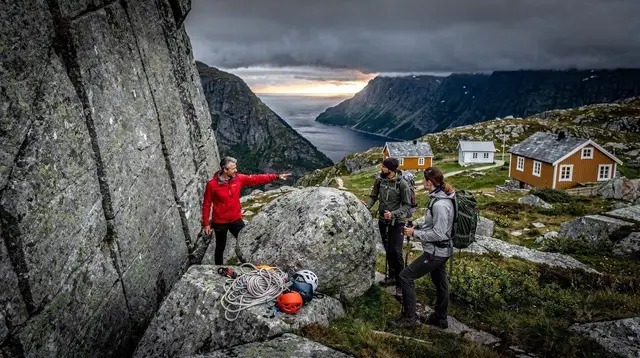
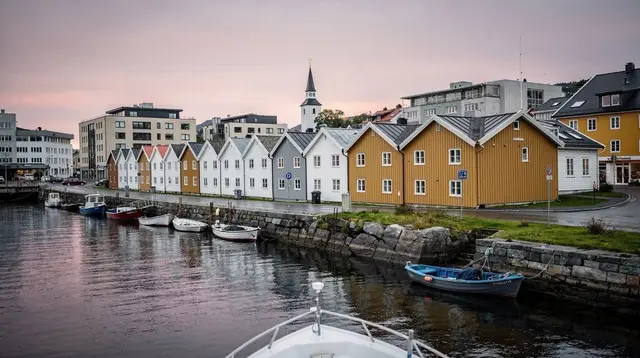
This is the part that surprises people who haven’t been, and it surprised me too, going in. Rogaland’s biggest draws are, for the most part, free once you’ve arrived. Preikestolen has no entrance fee — you pay for parking at the trailhead, and the plateau and the roughly 8 km round-trip trail cost nothing beyond that. Sverd i Fjell, the three bronze swords at Hafrsfjord, costs nothing to see. Walking through Gamle Stavanger’s 170-odd white wooden houses costs nothing, because people actually live there. Even much of the Jæren coastline, with its beaches at Manafossen and beyond, is open access.
That’s the trap. If you build your mental budget around “the sights,” a week in Stavanger looks cheap, maybe even suspiciously so for a country with Norway’s reputation. So you relax on the categories that don’t show up on a list of attractions — and those turn out to be the ones that repeat every single day.
The math that actually matters
Here’s roughly how my week broke down by category, ranked by what actually hurt:
| Category | Roughly how it felt | Frequency |
|---|---|---|
| Restaurant meals and drinks | Highest single cost of the trip | 3x daily |
| Accommodation | Planned for, no surprises | Nightly, fixed |
| Transport (bus, parking, one boat trip) | Small, predictable | A handful of times |
| Attraction entrance fees | Almost negligible | Once each |
I’m not going to pretend these numbers are a precise accounting — a real, itemised breakdown lives on our budget planning tool, and that’s the better place to look if you want actual figures for your own trip. What I can vouch for, because I lived it, is the ranking. Food and drink outweighed everything else, and it wasn’t close.
Why this catches people off guard specifically here
Norway’s reputation for being expensive is well known in the abstract, but abstract knowledge doesn’t stop you from ordering a second course. Norway is not in the eurozone — prices are in Norwegian kroner, not euros — and that alone means a lot of visitors don’t have an instinctive feel for whether a number is high or normal until the bill arrives. Add to that a genuinely high cost of dining and drinking by European standards, and a week of eating out becomes expensive in a way that’s easy to underestimate and hard to notice day to day, because each individual meal doesn’t feel outrageous on its own.
Compare that to how forgiving the rest of the trip is on a budget. A day hiking to Preikestolen costs the parking fee. A day around Lysefjord on a a boat trip to Preikestolen from Forsand is a single, known cost you can plan for months ahead. A day paddling at Frafjord on a a guided kayak or SUP tour is the same. It’s the unglamorous, repeating spend — coffee, lunch, dinner, a couple of drinks — that never gets its own line in anyone’s pre-trip planning and ends up being the biggest number by the end.
This is not a “Norway is unaffordable” argument
I want to be careful here, because it would be easy to walk away from this thinking Stavanger is off-limits unless you’re wealthy. That’s not what a week taught me. What it taught me is that the shape of your spending is a choice, and the restaurant-versus-self-catering decision matters more than which attractions you pick.
A trip built around eating out for every meal, three times a day, for a week, is a genuinely different financial proposition from a trip where you buy groceries, cook some meals yourself, and treat restaurant dinners as an occasional thing rather than a default. I met other travellers doing the second version, staying in places with a kitchen, and their week cost noticeably less than mine for what looked, from the outside, like an equivalent trip. There’s no single “cost of a week in Stavanger” — there’s a camping-and-cooking week, a self-catering-apartment week, and an eating-out week, and they land in genuinely different brackets. Anyone quoting you one number without asking which of those you’re planning is guessing.
If you want the honest, itemised version of this rather than my anecdote, our budget page and our piece on what Stavanger actually looks like once expectations meet reality — what Stavanger is not — go further than I can here. For a broader sense of what’s genuinely free, see our guide to budget-friendly things to do and, if you’re deciding how long to stay, how many days you actually need.
What I’d tell myself before the trip
If I could redo the planning, I’d spend less time double-checking whether Preikestolen needed a booking (it doesn’t, beyond parking) and more time deciding, honestly, whether I was going to cook. I’d have looked harder at where to eat around Vågen harbour with an eye on value rather than convenience, and I’d have built at least a couple of self-catered days into an otherwise activity-heavy two-day Stavanger and Preikestolen plan or a longer budget-focused itinerary.
None of that would have stopped me from also getting out on the water — a morning on a a two-fjord SUP and sauna paddle tour was one of the best parts of the week, and it cost exactly what I expected it to, because I’d planned for it. The lesson from my spreadsheet isn’t “spend less on experiences.” It’s that the experiences were never the risk. The three meals a day I stopped thinking about were.
If you’re planning your own trip, whether you’re weighing a beach day at Jæren or a longer loop through the region, do the one thing I didn’t: decide on your food strategy before you land, not somewhere around day four when the spreadsheet starts looking uncomfortable.
tours.Budget travel
Verified deep-linked GetYourGuide tours. Book through these links and we earn a small commission at no cost to you.
GetYourGuide does not provide a product photo for this activity — the image shows the meeting point, photographed by us.