The Right to Roam and Its Limits
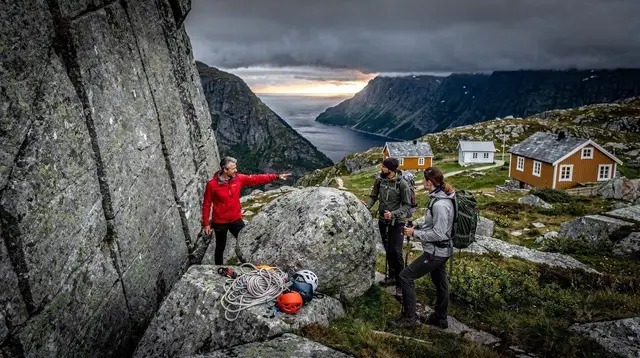
I did not learn about allemannsretten from a sign, a leaflet, or the airport arrivals hall at Sola. I learned about it from a man in his sixties named Tor, who found me pitching a one-person tent on a grassy shelf above the Lysefjord one July evening, somewhere past the point where the trail thins out and the day-trippers heading to Preikestolen turn back.
He was not alarmed. He was curious, in the specific way Norwegians get curious about foreigners doing something Norwegian without quite realising it. “You know you can just do that,” he said, nodding at my tent stakes, “but I’m surprised you knew you could.” He told me he had camped on that same stretch of ground as a teenager, decades before either of us stood there, and that nobody had ever needed to ask anyone’s permission. That conversation is the reason this page exists.
What allemannsretten actually buys you
Allemannsretten — the right to roam — is one of the genuinely rare pieces of infrastructure in modern Europe that makes something more free the longer you use it, rather than less. In most of the continent, spending a night outdoors near a scenic body of water means a campsite fee, a booking system, or a ranger with a form. Along the Ryfylke fjords and the hills behind Stavanger, it can mean none of that.
Concretely, the right lets you:
- Walk, ski or cycle across uncultivated land — forest, moor, mountain, most coastline — without asking whoever owns it.
- Pick berries, mushrooms and wildflowers for personal use, wherever they grow on that same uncultivated land.
- Pitch a tent for up to two nights in one spot, for free, without booking anything, as long as you are a sensible distance from an inhabited house or cabin.
That last point is what surprised Tor about me, and it is what surprises most visitors about Norway once they hear it stated plainly. A one-day guided walk exists precisely because most people arrive not knowing any of this is available to them — see our guided vs. self-guided walking tour comparison if you are weighing the two. But knowing the rule exists is only half the picture, and it is the half that gets repeated in travel articles far more often than the half that follows.
The limits nobody puts on the postcard
Here is the part of that evening’s conversation I actually remember best. Tor did not just explain what I was allowed to do — he spent longer explaining what the same right does not cover, because he had clearly watched other visitors get it wrong.
Allemannsretten does not apply to cultivated land. A hayfield, a planted garden, a fenced yard around someone’s home — none of that is “nature” in the legal sense, however open and uncultivated it might look from the road on the way to Forsand or Jørpeland. You can generally cross an obvious path through farmland without doing damage, but you cannot camp on it, and you certainly cannot treat a farmer’s field as your own patch of Norway for the night.
The right also does not put you closer to a house than roughly 150 metres if that house is occupied. This is not a suggestion so much as the actual boundary of the law. Along a working fjord community, where houses, boathouses and holiday cabins sit tucked into inlets that look uninhabited from a boat deck, that distance matters more than it seems like it should. If you can see washing on a line or a light in a window, you are almost certainly too close.
Fire is its own category entirely. Norway bans open fires in or near forest and vegetation from 15 April to 15 September, full stop, allemannsretten or not — the risk of a dry-season wildfire in Rogaland’s hills outweighs the tradition. Outside that window, common sense about wind direction and dry ground still applies.
Where the right to roam has nothing to say
The most important thing Tor said that evening, and the thing I now think about every time I read a comment thread underestimating Kjeragbolten, was this: “The mountain doesn’t know you’re allowed to be there.” Allemannsretten is a legal and social framework about land ownership and access. It has precisely nothing to do with whether a trail is dangerous.
Kjeragbolten sits wedged in a crevasse roughly 984 metres above the fjord, reached by a route with three chained, exposed sections that has claimed lives. Being legally free to walk there changes nothing about the exposure on those sections — see how Kjeragbolten actually compares to Preikestolen before you decide which one, or whether either, is right for your trip, and read honestly about whether you should stand on the boulder itself.
Preikestolen, similarly, has no railing at the 604-metre drop despite the roughly 300,000 people who visit it every year; the crowd does not make the edge safer, and the right to walk up there for free does not either.
If you would rather have someone else manage the exposure and the route-finding, both cliffs are reachable on guided routes: the Adventurous Hike to Kjeragbolten from Stavanger and the guided Kjerag hike with transportation included both put an experienced local ahead of you on the chained sections. If cliffs are not your thing at all, a Lysefjorden cruise combined with the Preikestolen hike lets you see the same drop from below the water, which is its own kind of humbling.
The same logic applies to the Lysebotn road that leads to Kjerag’s trailhead at Øygardstølen: it closes for winter, and no amount of legal access to the surrounding land reopens it. Check what actually closes at Preikestolen and Kjerag over winter before you build a shoulder-season itinerary around either.
What I’d tell someone before their first night outside
If you take one thing from an evening I still think about years later, take this: allemannsretten is real, it is generous, and it is one of the best reasons to build a trip that includes a night or two actually sleeping near the Lysefjord rather than just passing through it on a coach. For a longer plan that uses that freedom properly, three days exploring Lysefjord by water or a solo hiking itinerary around Stavanger both lean on nights spent outdoors rather than in a hotel.
But it is a right about land, not a suspension of judgement. Pitch away from houses and fields, skip fires in the dry months, and treat every warning sign near a cliff edge as if the law had nothing to do with it — because it doesn’t. For the fuller checklist of distances, litter rules and what counts as cultivated versus open land, our travel tips section covers the practical detail this page deliberately doesn’t try to replace. Pack properly too; see what to pack for hiking in Rogaland before you commit to a night outside.
Tor, if you ever read this: I moved the tent ten metres further from the water the next morning, exactly as you suggested. It was a better pitch anyway.
tours.Planning
Verified deep-linked GetYourGuide tours. Book through these links and we earn a small commission at no cost to you.
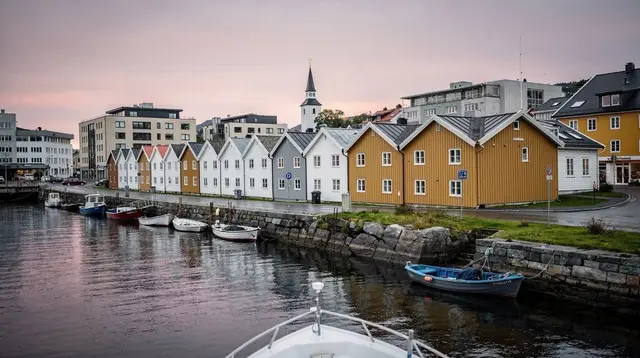
GetYourGuide does not provide a product photo for this activity — the image shows the meeting point, photographed by us.