No, You Will Not See the Northern Lights in Stavanger
A message from a reader in February
A few winters ago I got a message from someone who had just spent four nights in Stavanger and seen nothing. No green ribbons over the harbour, no photo to show for it, just a flight home and a flat sense of having missed something everyone else seemed to get. He wasn’t angry, exactly. He was confused. He’d booked the trip after scrolling a feed full of aurora photos captioned “Norway,” packed a tripod, checked the weather app every evening, and stood outside Vågen on two clear nights hoping the sky would do something it was never going to do.
I’ve thought about that message more than almost any other I’ve received running this site, because the honest answer isn’t a tip. It isn’t “try again in a different month” or “drive somewhere darker.” The honest answer is that he was in the wrong part of the country for what he wanted, and no amount of patience or clear sky was going to fix that.
The number that actually matters
Stavanger sits at 58.97°N. That single figure is more useful than any weather forecast. For comparison, that’s close to the latitude of Aberdeen or Inverness in Scotland — genuinely northern by British standards, genuinely southern by Norwegian ones. Tromsø, sitting at nearly 70°N, lies inside the auroral oval, the band around the magnetic pole where displays are frequent enough that tour operators can more or less schedule around them.
The Lofoten Islands sit similarly far north. Stavanger does not. It is over a thousand kilometres further south than Tromsø, and in aurora terms a thousand kilometres is not a rounding error — it’s the difference between a phenomenon you can plan a trip around and one you will, on an ordinary night, simply not see.
This is the part that’s hard to say without sounding like I’m scolding someone for a reasonable mistake, so let me be clear: it was a reasonable mistake. The country markets itself as one thing — “Norway” — when what a visitor actually needs to know is which region of Norway they’re looking at. A photo taken above Lysefjord and a photo taken above Tromsø both get filed under the same word, the same hashtag, the same glossy campaign, and nothing in that presentation tells you they come from places as different, for this specific purpose, as Edinburgh and the Arctic Circle.
Not a lie, but a convenient blur
I don’t think anyone is deliberately lying. National tourism marketing sells a country, not a latitude chart, and Norway’s coastline runs far enough — from Kristiansand in the south to Nordkapp in the north — that treating it as one undifferentiated aurora destination is a kind of laziness rather than fraud. But the effect on a visitor is the same either way. If you arrive in Stavanger in February expecting what you saw in someone else’s Tromsø photos, you are chasing a promise the region never made, sold to you by association rather than by anyone actually claiming Stavanger delivers it.
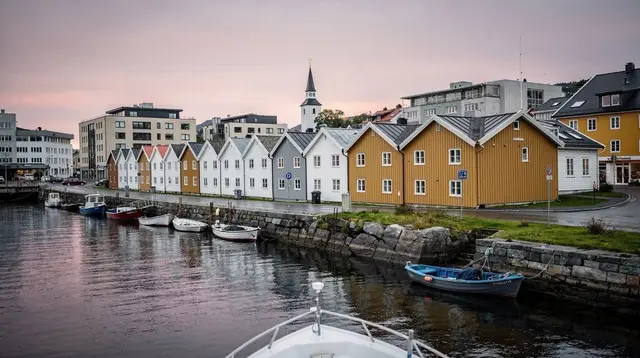
I’d rather say it plainly on a page like this than let another reader stand on the quay at Vågen harbour at 9pm in January, certain that one more clear night will do it. It won’t. Not because the weather was unlucky, not because he stood in the wrong spot, not because the moon was too bright — but because the sky above Stavanger, on a normal night, is south of where the aurora reliably reaches.
Why a clear sky here doesn’t change the geography
This is the trap I want to flag directly, because it’s the one that keeps people hoping when they shouldn’t. A dry weekend in Rogaland feels like it should count for something — clear air, dark skies away from the city, maybe a moonless night. All of that genuinely improves your view of ordinary stars. None of it moves the auroral oval.
Extreme solar storms can occasionally push the aurora far enough south to be glimpsed from unusually low latitudes for a night, but that’s a rare event tied to space weather, not something Stavanger’s ordinary climate — roughly 1,180-1,250mm of rain a year — has any power to arrange for you. If you came here specifically hoping for the lights, don’t wait out a clear night thinking your luck is about to turn. It’s the latitude, full stop, not the forecast.
What Stavanger actually gives you instead
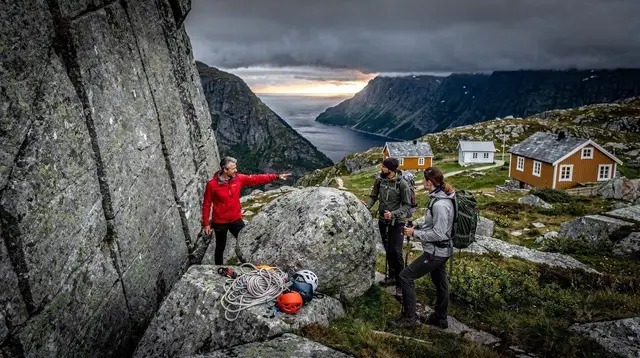
None of this makes Stavanger a consolation prize. It makes it a different kind of trip, and a genuinely good one on its own terms. This is a region built around water and rock rather than sky: the walk through Gamle Stavanger, the cliffs above Preikestolen, and the fjord itself, which you can meet properly on a Lysefjorden cruise combined with the Preikestolen hike or, for a lower-effort version of the same water, a boat trip from Forsand that takes you right under the cliffs.
If you’d rather be at water level than looking down on it, a guided kayak or paddleboard outing near Frafjord gets you onto the fjord itself. It’s a landscape trip, not a sky trip — and it rewards people who show up expecting exactly that.
If you’re planning how many days to spend here, or wondering what’s actually open in winter, those are useful questions. “Will I see the aurora” isn’t one I can answer with anything but a straight no, and I’d rather tell you that on day one than let you find out on the flight home.
Northern Lights in Stavanger, answered plainly
Can you see the Northern Lights in Stavanger at all?
It is not impossible in an absolute sense — a very strong geomagnetic storm can occasionally push the aurora as far south as central Norway or beyond for a night — but this is a rare space weather event, not something you can plan a trip around. On a normal night, Stavanger is too far south.
Why doesn’t Stavanger’s latitude work for the aurora?
The Northern Lights are most reliably seen inside the auroral oval, a band roughly centred on the magnetic pole. At 58.97°N, Stavanger sits well south of that band. Tromsø, at close to 70°N, sits inside it, which is why aurora sightings there are frequent rather than exceptional.
Does a clear winter night in Stavanger improve the odds?
It improves how many stars you can see, not your odds of seeing the aurora. Clear skies and low light pollution matter once you’re already at a latitude where the aurora reaches — they don’t move Stavanger closer to that latitude.
Is this the same as saying Norway doesn’t have the Northern Lights?
No. Northern Norway, including Tromsø and the Lofoten Islands, is one of the more reliable places in the world to see them. The confusion is treating “Norway” as one aurora zone when the country actually spans latitudes as different, for this purpose, as southern Scotland and the Arctic Circle.
If I really want to see the aurora, should I add Stavanger to a longer trip?
That’s a fair way to think about it, though it’s outside what I can advise on here — this site covers Stavanger, the Lysefjord and Rogaland specifically, not aurora logistics for the rest of the country.
Is there a season when Stavanger’s odds get better?
No season changes the latitude. Winter gives you longer, darker nights here, which matters for stargazing generally, but it doesn’t shift Stavanger into the auroral oval.
What should I actually plan a winter visit around instead?
The fjord, the coastline and the hikes hold up in winter better than most visitors expect, with some routes needing more caution and better gear once snow and ice arrive. It’s a landscape and weather-watching trip, not a sky-chasing one.
Was the marketing that showed me aurora photos under “Norway” technically false?
Not false, exactly — those photos were genuinely taken in Norway. But filing them under a single national label without naming the region misleads by omission, and Stavanger visitors are the ones who pay for that blur.
tours.Opinion
Verified deep-linked GetYourGuide tours. Book through these links and we earn a small commission at no cost to you.
GetYourGuide does not provide a product photo for this activity — the image shows the meeting point, photographed by us.