A quiet detour on Norway’s southern coast road
Most visitors to this part of Norway spend their time on the Lysefjord side of things — Preikestolen, boat cruises, Kjeragbolten if they’re up for it. Flekkefjord sits in a different direction entirely: south along the coast, past Egersund, on the stretch of shoreline this site groups together as the Dalane coast. It’s not a place that shows up on a first-time Stavanger itinerary, and that’s more or less the point. If you’ve already done the big-name hikes and fjord cruises and want a day that looks nothing like them, Flekkefjord and its old quarter, Hollenderbyen, are worth the drive.
This is a small town. It won’t fill a week, and it isn’t trying to. What it offers is a genuinely different kind of Norwegian streetscape — low white wooden houses on narrow lanes, built around a working harbour, with a name and history tied to Dutch trading ships rather than Viking history or oil money. It’s a good stop if you’re driving the coast road south of Stavanger, and a slightly odd one if you’re trying to reach it without a car.
Where Flekkefjord sits on the map
Flekkefjord is roughly 100 km south of Stavanger by road, at the southern end of the Dalane coast that this site covers alongside Egersund and Jøssingfjord. The drive follows the E39 and connecting roads down past Egersund, hugging a coastline that’s rockier and quieter than the sandy beaches of Jaeren further north.
There’s no fast train connection and no ferry shortcut worth planning around — a car is the realistic way to get there, and the drive itself, at around 1.5 to 2 hours each way from central Stavanger, is a meaningful part of the day. Long-distance buses do run the route, but schedules are thin enough that a same-day round trip by bus is impractical for most travelers. If you’re weighing whether you actually need a car for this kind of trip, it’s worth reading do you need a car in Stavanger before you commit to a Flekkefjord day out — the short answer for this particular destination is yes.
| From | Distance | Typical drive time |
|---|---|---|
| Central Stavanger | ~100 km | 1.5-2 hours |
| Egersund | ~30 km | 30-40 minutes |
| Jøssingfjord | ~25 km | 30-40 minutes |
Hollenderbyen: the town’s historic quarter
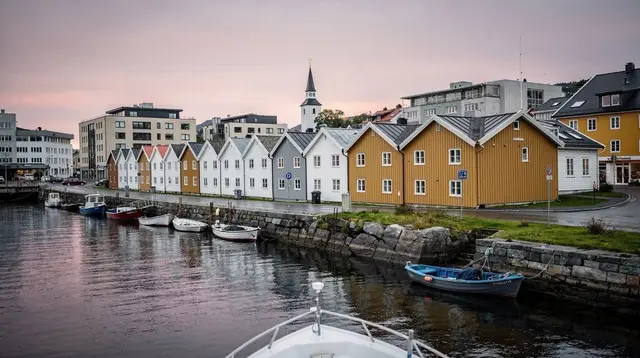
The reason most people mention Flekkefjord at all is Hollenderbyen — literally, “the Dutch town.” The name reflects a real piece of trading history: Dutch merchant ships came to this stretch of coast over a long stretch of centuries to buy timber, and that trade left its mark on the town in the form of a compact old quarter that still stands today. Rather than assign it a precise construction date or a particular architectural style, it’s more accurate to describe Hollenderbyen for what it clearly is: Flekkefjord’s historic core, a small area of narrow lanes and white-painted wooden buildings that has survived as the town’s most distinctive neighborhood.
Walking through it doesn’t take long — this isn’t a sprawling old town, it’s a handful of streets — but it rewards an unhurried pace. There’s no admission fee to walk Hollenderbyen itself, and no fixed route; wandering is the whole activity. If you’ve spent the rest of your trip on marked hiking trails and timed fjord cruises, an hour of aimless walking through a quiet historic quarter is a genuine change of pace.
For a broader look at how this quarter fits into the rest of the Dalane coast’s history and geography, see Dalane coast: lighthouses, Egersund and Flekkefjord, which covers the wider stretch this town belongs to.
What to see and do in Flekkefjord
A visit to Flekkefjord isn’t built around a single headline attraction the way a Preikestolen hike or a Lysefjord cruise is. It’s a town best explored on foot, in roughly this order:
- Hollenderbyen’s streets. The core experience — narrow lanes, white wooden houses, a working small-town feel rather than a museum-piece one.
- The harbour. Flekkefjord grew up around its harbour, and it’s still the town’s practical and visual center. Worth a slow walk regardless of what else is open.
- The local museum, when it’s open. Flekkefjord has a small museum covering the town’s trading and maritime history — check opening hours before planning your day around it, as small-town museums on this coast tend to keep limited or seasonal hours.
- A coffee or lunch stop. There isn’t a large restaurant scene here, but a handful of cafes and eateries around the harbour make a reasonable lunch stop if you’re driving through mid-day.
None of this requires advance booking or a guide. If you’d rather add a paid activity to the day rather than just walk around, one of the more fitting options actually tied to this stretch of coast is a local fishing trip out of Flekkefjord itself — a way to see the coastline from the water rather than just the harbourfront.
Best time to visit and what to budget
Flekkefjord works best between May and September, the same window that suits most of the Rogaland and Dalane coast. Outside that stretch, days are short, some small businesses reduce hours or close, and the coastal weather — already changeable — gets considerably rougher. None of this is unique to Flekkefjord; it’s the same seasonal pattern that shapes the rest of this coastline, covered in more general terms in best time to visit Stavanger, month by month.
Budget-wise, a day trip to Flekkefjord is inexpensive by Norwegian standards precisely because there isn’t much to spend money on beyond fuel, a meal, and possibly a small museum entry fee. Reckon on NOK 800-1,500 per person for lunch, museum admission if the museum is open, and a share of fuel costs if you’re splitting a rental car between a few people. Remember that Norway uses the krone, not the euro — it’s outside the eurozone entirely — so don’t budget in euros or assume card terminals will offer euro conversion; NOK is what you’ll be charged in everywhere.
For more on this, see Norway is not a eurozone country, and your budget should know it and, if you want the practical version, the cash you will never need in Norway — card payment covers almost everything here, Flekkefjord included.
| Item | Typical cost (NOK) |
|---|---|
| Lunch for one | 150-300 |
| Small museum entry | 80-150 |
| Fuel share (round trip from Stavanger, per person in a full car) | 150-250 |
| Coffee / snack stop | 50-90 |
If you’re tracking your whole Norway trip against a tighter budget, Stavanger on a budget: free things to do is a useful companion — Hollenderbyen itself costs nothing to walk through, which fits that approach well.
Combining Flekkefjord with the rest of the Dalane coast
Flekkefjord rarely stands entirely alone on an itinerary — it’s usually one stop on a longer drive down (or up) the Dalane coast. Two natural pairings:
North toward Egersund. Egersund sits about 30 km up the coast and has its own separate identity worth treating as a distinct stop rather than folding into a Flekkefjord write-up — this page deliberately doesn’t detail it. If you’re driving the full stretch, Egersund and Flekkefjord fit naturally into the same day.
South toward Jøssingfjord and Sirdal. Jossingfjord, a narrower and more dramatic fjord setting further south, and the inland valley of Sirdal, make sense as extensions if you have more than a single day free. Again, this page isn’t the place for their detail — they’re separate destinations with their own character — but geographically they’re close enough that a two-day version of this trip is realistic for anyone with a rental car and no fixed return time.
For travelers building a longer southern-coast itinerary rather than a single day trip, Dalane, the southern coast lays out how Egersund, Flekkefjord, Jøssingfjord and Sirdal can be sequenced together, and seven days, full Rogaland shows where a stop like this fits into a longer trip that also covers Lysefjord and Ryfylke.
Practical tips for visiting
A few things worth knowing before you set off:
- A car is close to essential. Public transport along this stretch of coast exists but isn’t built for a same-day round trip from Stavanger. If you’re renting specifically for this, plan the whole day around the drive rather than treating it as a quick add-on.
- Fuel up before you leave Stavanger or Egersund. Options thin out the further south you go.
- Check museum hours in advance. Small-town museums on this coast often keep reduced hours outside the May-September season, and some are only open on specific days even in summer.
- Card payment works everywhere. As with the rest of Norway, cash is rarely needed; a contactless card covers lunch, museum tickets and parking.
- Weather changes fast on this coast. Pack for wind and rain even on a sunny forecast day — this is the same coastal climate pattern that affects Stavanger itself, just a little further from shelter.
If Flekkefjord is one stop among several on a longer Stavanger visit, it’s worth stepping back and reading what Stavanger is not: honest expectations — a day like this one, built around a quiet historic quarter rather than a dramatic natural landmark, is a useful corrective to the idea that every day here needs to be a hike to a cliff edge. Sometimes a walk through Hollenderbyen’s streets, followed by a coastal drive back, is exactly the contrast a Rogaland trip needs.
Flekkefjord and Hollenderbyen: your questions answered
Is Flekkefjord worth a day trip from Stavanger?
Yes, if you enjoy small coastal towns and don’t need another fjord view. It’s a longer drive than a quick errand — plan for the better part of a day once you count the road there and back — but Hollenderbyen’s streets are genuinely different from anything in central Stavanger.
What is Hollenderbyen in Flekkefjord?
Hollenderbyen, meaning roughly “the Dutch town,” is Flekkefjord’s historic quarter: a small area of narrow streets lined with white wooden houses. Its name comes from the Dutch merchant ships that once called at Flekkefjord to buy timber, and today the quarter is the town’s best-preserved historic core rather than a reconstructed or dated open-air museum.
How far is Flekkefjord from Stavanger?
It’s around 100 km by road, which usually takes about 1.5 to 2 hours by car depending on traffic and where in Stavanger you start from. There is no direct fast train or ferry link, so a car or a long-distance bus is the practical way to get there.
Do I need a car to visit Flekkefjord?
Effectively yes. Long-distance buses do run along the Dalane coast, but they’re infrequent enough that they don’t suit a same-day round trip comfortably. Most visitors combine Flekkefjord with a rental car and a wider drive along the coast.
Is Flekkefjord in Rogaland?
Flekkefjord sits at the southern edge of the coast this site covers, on the Dalane stretch between Rogaland and the county border further south. Practically speaking, treat it as an extension of a Rogaland road trip rather than a separate region with its own infrastructure.
What can you actually do in Flekkefjord in a few hours?
Walk Hollenderbyen’s streets, spend time around the small harbour, and stop at the town’s local museum if it’s open. It’s a slow, on-foot kind of visit rather than a checklist of paid attractions, which is part of the appeal after a day of hiking or fjord cruises further north.
Can I combine Flekkefjord with Egersund or Jøssingfjord?
Yes, and most people do. Egersund lies further north on the same coast road and Jøssingfjord further south, so a single day trip from Stavanger can string two or three of these stops together if you start early and accept that you’ll be spending most of the day in the car. If a museum stop appeals more than a fishing trip, an entrance ticket to the Fayance Museum in Egersund pairs naturally with a Flekkefjord afternoon on the same route.
What is the currency used in Flekkefjord?
Norwegian krone (NOK), the same as everywhere else in Norway — the country is not in the eurozone. Card payment is accepted almost everywhere in town, including small cafes, so carrying cash isn’t necessary. If you’d rather not think about it at all while planning, the site’s own currency tool converts prices on the fly.
If Flekkefjord ends up being the quietest day of your Rogaland trip, that’s not a bad thing — after Preikestolen’s crowds or a full-day Lysefjord itinerary, some visitors book a less-crowded alternative route up to Pulpit Rock for the days around a trip like this one, trading the busiest trail for a quieter version of the same view.