The Cash You Will Never Need in Norway
A banknote that never left my jacket pocket
Before my first trip to Stavanger, I did what felt like the responsible thing: I went to a currency exchange desk and changed a modest amount of money into Norwegian kroner. Not much, just enough to feel covered. A backup, in case a card reader failed, a machine only took coins, or some small kiosk turned out to be cash-only the way they sometimes are in other countries.
That note rode in my jacket pocket for eleven days. It paid for a coffee near Vågen harbour. It did not pay for parking at the Preikestolen trailhead, which took my card without hesitation. It did not pay for the ferry ticket, the bus from Sola airport, or a single item in a single shop in Gamle Stavanger. By the time I flew home, it was still folded in the same pocket, untouched, effectively a souvenir of a worry that never materialised.
Why I brought cash in the first place
The instinct makes sense. Most of us have travelled somewhere where card machines are patchy, where a market stall wants notes, or where a broken terminal leaves you stuck without a backup plan. Norway gets lumped into vague ideas about “Europe” and “abroad” that make cash feel like basic due diligence.
But Norway is not the European Union, and it does not use the euro. It runs on the Norwegian krone, a fact that surprises some first-time visitors who assume a Schengen country must also share the currency. What that fact does not change is how easy it is to pay. If anything, Norway is one of the most thoroughly cashless societies I have travelled through. Card and contactless payment are the default, not the exception, and that default reaches into places you would not expect: kiosks, ice cream stands, public toilets with a payment terminal, and yes, the machine that charges you for parking at a hiking trailhead.
Where I actually used my card
Over eleven days between Stavanger, the Lysefjord and the Jæren coast, my card worked everywhere I tried it, without a single failed transaction that cash would have solved.
| Where | Payment I expected | What actually happened |
|---|---|---|
| Kiosk near Øvre Holmegate | Possibly cash-only | Card and contactless, no minimum spend |
| Preikestolen trailhead parking | Coins or notes | Card-only machine |
| Local bus (Kolumbus) | Cash fallback | Card, app or ticket machine |
| Small bakery in Sandnes | Cash preferred | Card accepted without comment |
| Fjord cruise ticket office | Card with cash backup | Card, booked online in advance |
| A one-off summer market stall | Card assumed | Cash preferred, card not offered |
That last row matters, and I don’t want to overstate the case. On one trip out toward Jæren, a small, informal seasonal stall selling produce did prefer cash, and a couple of similar pop-up situations exist around Rogaland if you go looking for them. That is a real, if narrow, exception. It is not a reason to build your whole trip around carrying notes, any more than one closed shop on a Sunday is a reason to assume nothing in Norway is ever open.
Booking tours is where the “card only” habit paid off
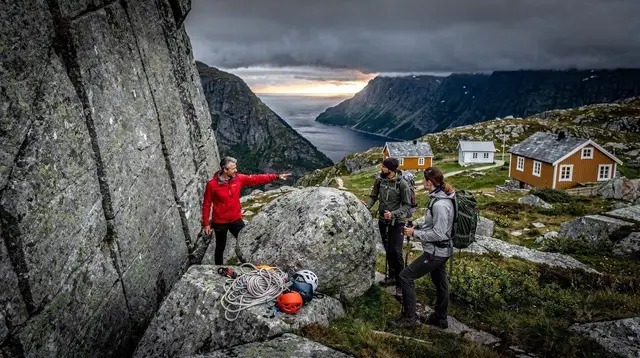
The moments where a working card mattered most were not everyday purchases but the bigger-ticket bookings: the boat, the guided hikes, the paddle trips. I booked a Lysefjord cruise combined with the Preikestolen hike from my phone the night before, paid in kroner converted automatically at the checkout, and never touched a till in person.
The same went for a paddleboard and fjord sauna session I added on a whim after checking the weather, and later for a guided day out to Kjerag with transport included, which would have been logistically painful to arrange with cash even if I had wanted to.
None of these transactions cared what currency I was thinking in. What mattered was whether my card worked abroad and what it cost my bank to let it.
The habit that actually matters
If there is one piece of preparation worth doing before a Norway trip, it is not visiting a currency exchange counter. It is calling your bank, or checking your account app, to confirm two things: that your card is enabled for use abroad, and what fee, if any, it charges on foreign transactions. Some cards charge nothing. Others quietly take a percentage on every single purchase, which adds up fast in a country that is genuinely expensive for food, drink and organised activities. That fee, not a lack of banknotes, is the real cost you are likely to hit.
I am not arguing that cash is useless everywhere on earth, or even that Norway is unique in this respect. I am arguing that the specific, common precaution of exchanging cash before a Norway trip solves a problem that essentially does not exist here, while the problem that does exist — foreign transaction fees, or a card that gets declined because your bank flagged unusual activity — gets no attention at all. Tell your bank you are travelling. Check the fee structure. Bring a card as backup to your card. Leave the currency exchange queue for a country where it is actually needed.
For the wider picture on what a trip here costs and how to manage it day to day, our budget guide to Stavanger and our notes on getting around without a car cover the practical ground this piece deliberately leaves out. This one is about a single, specific habit worth dropping, and the one worth adopting instead.
Paying with cash in Norway: the questions people actually ask
Do I need to bring Norwegian kroner before I arrive?
No. Card payment is accepted almost everywhere in and around Stavanger, from supermarkets to trailhead parking machines, so arriving with pre-exchanged kroner is a precaution most travellers never end up using.
Does Norway use the euro since it is in Europe?
No. Norway is not a member of the European Union and does not use the euro. Its currency is the Norwegian krone, though this has no practical effect on how easy it is to pay by card.
Can I pay for trailhead parking at Preikestolen by card?
Yes. Parking machines at Norwegian trailheads, including Preikestolen fjellstue, are set up for card payment, and many also support payment apps, so you rarely need coins or notes.
Are there places in Rogaland where cash is genuinely useful?
Occasionally. Some small, informal stalls at local markets or one-off community events may still prefer cash, but this is the exception rather than a reason to carry a wallet full of kroner.
What should I check about my card before travelling to Norway?
Confirm with your bank that your card works abroad, ask about foreign transaction fees, and consider a card designed for travel that waives them, since this saves more money than exchanging cash ever would.
Is Norway an expensive country to pay for with a foreign card?
Norway is genuinely expensive for food, drink and organised tours, and a card with poor foreign exchange terms will make that worse. The fix is choosing the right card, not switching to cash.
What happened to the cash I brought on my own trip?
I exchanged a banknote before leaving home as a precaution, carried it through Stavanger, the Lysefjord and Jæren, and brought it home unspent because no till, machine or guide ever asked for it.
tours.Budget travel
Verified deep-linked GetYourGuide tours. Book through these links and we earn a small commission at no cost to you.
GetYourGuide does not provide a product photo for this activity — the image shows the meeting point, photographed by us.