What Restoration Erased in Gamle Stavanger
Walking Through a Postcard That Used to Be a Workshop
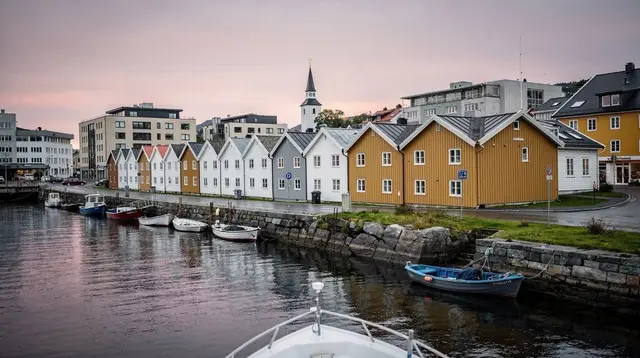
The first time I walked through Gamle Stavanger, I kept stopping to look at doors. Every one of them seemed to have been painted within the year — deep red, forest green, a blue so saturated it looked wet. The white clapboard walls behind them were immaculate. Geraniums sat in window boxes at exactly the height a photographer would want. It took me a full loop of the cobbled lanes on the west side of Vågen harbour before I let myself admit what was bothering me: I could not smell anything. No brine, no tar, no fish. Just cold air and, faintly, someone’s woodsmoke.
That absence is the whole point of this piece. Gamle Stavanger holds close to 170 wooden houses, mostly built in the 18th and 19th centuries, and it is described, correctly, as the largest concentration of preserved wooden houses left in Northern Europe. That is a genuine achievement. It is also, I think, a kind of disappearing act — and the more successful the restoration, the more complete the disappearance.
A Working Quarter, Not a Merchant’s Showcase
It is easy to mistake these houses for the homes of shipowners or wealthy traders, because that is what beautifully kept wooden architecture tends to signal to a modern eye. It was not that. This part of Stavanger grew up as housing for people who worked the harbour and, above all, the canneries — the small factories that packed brisling and other fish into tins for export, an industry that shaped the city’s economy long before oil ever entered the picture.
The houses are small and set close together for a reason: this was dense, practical housing for cannery workers, fishermen and their families, not spacious retreats for the well-off. Narrow lanes, shared walls, outdoor privies until well into living memory — a working-class quarter, built cheaply and used hard.
Standing in front of one particular house on a quiet street near Øvre Holmegate, I tried to picture it as it might have looked in, say, 1920: laundry strung between buildings, the low reek of the canneries drifting up from the water, children underfoot, a dozen more people per square metre than live here now. I couldn’t quite do it. The house in front of me was too clean, too finished, too obviously the product of someone’s careful, expensive renovation. That gap — between what I knew intellectually and what I could actually picture — is the erasure I mean.
The Cost of Doing Preservation Well
Gamle Stavanger survived because, starting in the mid-20th century, the city chose restoration over demolition at a moment when plenty of other Norwegian towns were tearing down their old wooden quarters for modern development. That decision deserves real credit. It is a rare and difficult thing to keep a neighbourhood standing rather than replacing it, and Stavanger did it thoroughly enough that the district is now one of the best-preserved wooden townscapes anywhere in Europe.
But preservation of the buildings and preservation of the social history inside them turned out to be two different projects, and only one of them was actually undertaken. As the houses were restored, they were also, inevitably, made desirable — and desirable, well-restored wooden houses in a small, wealthy Norwegian city do not stay working-class housing. Today they are mostly owned by professionals who can afford both the property and the upkeep a listed wooden house demands. The restoration succeeded so completely that it produced exactly the kind of quarter its original residents could never have lived in.
I want to be careful here, because the easy version of this argument turns Gamle Stavanger into a museum piece, and it is not one. These are private homes. People sleep behind those red and green doors, hang real laundry on real lines on ordinary Tuesdays, and have every right to be left alone by tourists peering through their windows. Nothing here is staged for visitors, and nothing is open for a paid tour of the interiors. That is precisely what makes the erasure so effective: it isn’t a museum pretending to be a neighbourhood. It’s a neighbourhood that has simply stopped being able to tell you what it used to be, because the people who could have told you were priced out of it long ago.
A Different Kind of Restoration, a Few Streets Over
You can see a related version of the same pattern at Øvre Holmegate, the street of candy-coloured house fronts a short walk away, which started life as an ordinary shopping street and was repainted into its now-famous rainbow only in the 2000s — a deliberate, recent act of place-making rather than an inherited historic look. It’s a useful contrast. Øvre Holmegate never pretends to be anything but a curated, photogenic street; Gamle Stavanger’s restoration is quieter, more historically grounded, and for that reason more likely to be mistaken for the past itself rather than a careful, modern version of it.
None of this is unique to Stavanger. It’s the same pattern that plays out in old harbour quarters across Northern Europe: the buildings survive, the industry that built them disappears, and the people who did the work are replaced by people who can afford the result. What makes Gamle Stavanger worth dwelling on is the completeness of it — the fact that the physical fabric is so well kept that it’s genuinely hard, walking through it on a quiet afternoon, to hold onto the knowledge that this was once loud, crowded and smelled of tinned fish rather than fresh paint.
Where the Water Still Tells the Story
If you want a sense of the working waterfront that fed those canneries, the sea itself is a better guide than the streets now. A Frafjord kayak or SUP tour puts you on the same water the fishing boats used to work, and a slower two-fjord SUP and sauna paddle tour around Stavanger gives you time to actually look at the harbour from the water rather than the promenade.
Further out, a Lysefjord cruise combined with the Preikestolen hike shows you the scale of the fjord system that this whole economy — fishing, canning, later shipping and oil — was built around. None of it will bring the smell back, but it’s a more honest encounter with the working coast than the restored streets can offer.
For the practical side of visiting — where to walk, how long it takes, what’s worth photographing — that belongs on a dedicated page, not here; see the self-guided walk through Gamle Stavanger or the comparison of guided versus self-guided walking tours if you’d rather have someone narrate the history as you go. A guide, in fact, is one of the few remaining ways to get any of that social memory back — someone standing on the cobbles telling you what used to be here, because the houses themselves no longer will.
I still go back to Gamle Stavanger most times I’m in the city. It’s a genuinely lovely place to walk, especially early, before the petroleum museum crowd and the cathedral crowd have both spilled into town. But I’ve stopped expecting the streets to tell me anything about the people who built them. That story survived in the buildings’ shape, not in their surfaces — and it’s worth knowing it’s there, even when a very good restoration has made sure you can’t quite see it.
Frequently Asked Questions About Gamle Stavanger’s History
Is Gamle Stavanger an open-air museum you can pay to enter?
No. Gamle Stavanger is a real, inhabited residential neighbourhood. The streets are public and free to walk, but the houses themselves are privately owned homes, not museum buildings, and there are no interiors open for public visits.
How many wooden houses are in Gamle Stavanger?
Around 170, most dating from the 18th and 19th centuries. It’s widely described as the largest concentration of preserved wooden houses in Northern Europe.
Who originally lived in these houses?
Mostly working-class families connected to Stavanger’s harbour and its fish-canning industry — cannery workers, fishermen and their households — not wealthy merchants, despite how polished the houses look today.
Why don’t the houses show any trace of that history now?
Decades of careful, successful restoration preserved the buildings’ exteriors but did nothing to preserve the social conditions inside them. As the houses became desirable and expensive, their original working-class residents were gradually replaced by wealthier owners, and most visible signs of the earlier use disappeared with them.
Is Gamle Stavanger free to visit?
Yes, walking through the streets costs nothing. It’s a public neighbourhood, not a ticketed attraction.
How long should I spend walking through Gamle Stavanger?
Most visitors spend somewhere between thirty minutes and two hours, depending on pace and photo stops; for a suggested route and timing, see the self-guided walk linked above rather than this page.
tours.History
Verified deep-linked GetYourGuide tours. Book through these links and we earn a small commission at no cost to you.
GetYourGuide does not provide a product photo for this activity — the image shows the meeting point, photographed by us.