What Oil Did to This City
A Museum Shaped Like a Platform
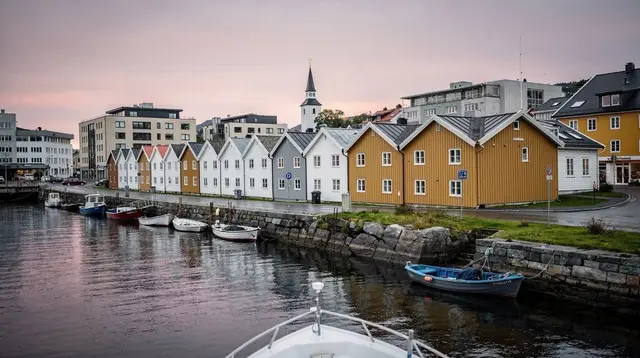
I walked to the Norwegian Petroleum Museum from my guesthouse in Gamle Stavanger, which took about ten minutes, and I mention the ten minutes because it is the whole point of this piece. The white wooden houses of Gamle Stavanger and the concrete-and-steel bulk of the museum on the opposite side of Vågen harbour are close enough to see each other. They are not close enough to feel like they belong to the same city.
Norsk Oljemuseum opened in 1999, and its architects clearly wanted you to feel something specific before you buy a ticket. The building is deliberately modeled on offshore platform structures - concrete legs, steel decks, the geometry of something built to survive the North Sea rather than to look pretty on a harbour front. It works. Standing in front of it after a stroll through streets of 18th and 19th century timber houses, the contrast is not subtle. One version of Stavanger is wood, herring barrels and hand tools. The other is steel, drilling rigs and helicopter pads. Both are real. Only one of them gets a building that announces itself from across the water.
Before 1969
It is easy to forget, walking around a city this well-off, that Stavanger’s money is recent. For most of its modern history the city ran on fishing and fish canning - sardines packed in oil and tin, shipped out to European markets by the crate. It was a working port town: useful, moderately prosperous, not remarkable on a European scale. Stavanger Cathedral, consecrated around 1125, is the oldest continuous thread running through the city, but the economy around it for most of the 20th century was closer to hard, seasonal, physical work than to boardrooms.
Then, in 1969, Phillips Petroleum found the Ekofisk field in the North Sea, and within a few years Stavanger had been chosen as the onshore base for an industry nobody in the city had built infrastructure for. The transformation that followed is the actual subject of the museum, even if the wall text mostly calls it something more polite - “the history of Norwegian oil and gas.” What it really documents is a fishing town rewiring itself, in about one generation, into one of the wealthiest cities in one of the wealthiest countries in the world.
What the Museum Is Proud Of, and What It Skips
Inside, the exhibits are genuinely impressive as engineering storytelling. There are full-scale sections of drilling equipment, models of platforms standing in water depths that are hard to picture from land, and a clear, well-told account of how Norway managed to negotiate ownership terms that kept much of the oil wealth inside the country rather than handing control to foreign companies, the way some other oil-producing nations did. That decision - captured in the sovereign wealth fund that still backs Norway’s economy - is a legitimate point of national pride, and the museum tells it well.
What gets less space is the other half of the story: what it cost the city’s older identity to become this. The fishing fleet did not simply retire gracefully into a supporting role. Canning factories closed. A harbour economy built around boats and processing sheds gave way to one built around service contracts, engineering firms and offshore rotations.
Some of that history survives as backdrop in Gamle Stavanger’s preserved houses, which are protected today largely because oil money made restoration affordable - a slightly uncomfortable irony the museum does not dwell on. I don’t think this is dishonesty on the museum’s part so much as a natural bias: it is a museum built by and largely about the industry that funds a great deal of the region’s institutions, and pride in what was built tends to crowd out an accounting of what was replaced.
I’d recommend going anyway. If you want the practical version - hours, layout, what’s worth your time inside - there is a full Norwegian Petroleum Museum guide for that; this piece is about what the visit made me think, not how to plan it.
Not History - Present Tense
The trap I’d flag to anyone visiting is treating oil as something Stavanger used to do. It isn’t. Walk through the city on a weekday and you will hear about offshore rotations, engineering contracts and rig schedules the way another Norwegian city might talk about fishing quotas or tourism seasons - because oil and gas are still the industry that sets wages, fills apartments and pays for a lot of what makes Stavanger comfortable to visit. The museum’s newest wings increasingly cover the energy transition and offshore wind, which tells you something too: this is a city trying to figure out what it becomes after oil, not one that has already moved past it.
That present-tense reality sits oddly against some of Stavanger’s older symbols. Down at Hafrsfjord, the three ten-metre bronze Sverd i Fjell swords, planted in 1983, commemorate a battle from 872 said to have unified Norway - a piece of half-legendary national origin story installed, not coincidentally, in the same decade the oil money started reshaping the region around it.
I’ve written more about how that monument gets used and misused elsewhere; there’s a longer piece on Sverd i Fjell and the myth of national unity if that interests you, and a practical Sverd i Fjell guide if you just want to visit it.
Seeing the Water That Made All This Possible
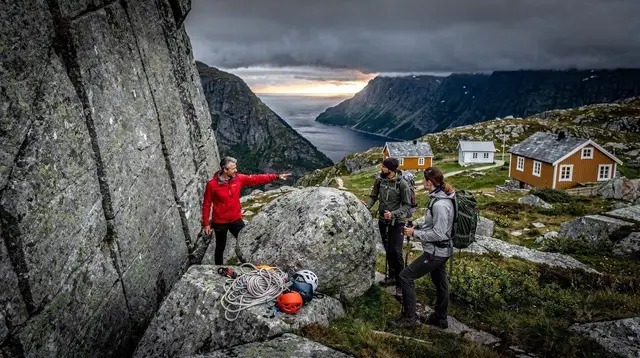
Whatever the museum tells you about platforms in the North Sea, it can’t put you on the water. If you want to actually feel the scale of the fjord landscape this entire industry operates against, a Lysefjorden cruise combined with the Preikestolen hike puts you underneath the same cliffs and water that the offshore world quietly depends on for crew transfers and supply routes further out.
There’s also a simpler option departing from Forsand, a boat trip to Preikestolen from Forsand, if you’d rather keep the day shorter. And if you want something calmer and closer to town, a guided fjord paddle and sauna session is a good way to sit with the landscape rather than rush through it.
Where the Two Cities Meet
I ended my day back in Gamle Stavanger, eating dinner near the harbour - there’s a decent rundown of options if you’re eating around Vågen harbour, and a broader what to eat in Stavanger guide if you want more range. Sitting there, looking back across the water at the museum’s platform-shaped silhouette lit up at night, both versions of the city felt equally true. Stavanger before 1969 wasn’t a poorer, lesser draft of the city that exists now - it was a functioning, self-sufficient port town that happened to sit on top of something nobody had found yet.
What oil did wasn’t just add money. It replaced one identity with another, quickly enough that the join is still visible if you know where to look, and honest enough visitors should leave having seen both halves, not just the one with the bigger building. If you’re building out a full day around the city centre, our one day in Stavanger itinerary and the piece on the cathedral that never got rebuilt both sit on the other side of that same divide - the Stavanger that came before the rigs.
For a longer hike into the landscape the oil industry sits beneath, the guided hike to Kjeragbolten from Stavanger is a full-day way to see just how much wild, empty fjord country surrounds this comparatively small, comparatively rich city.
Stavanger’s Oil History, Answered
When did Stavanger become an oil city?
The shift dates to 1969, when Phillips Petroleum discovered the Ekofisk field in the North Sea. Phillips soon set up its onshore operations in Stavanger, and the city grew into Norway’s oil capital over the following decade.
What was Stavanger before oil?
A fishing and shipping town, known especially for herring and for its fish-canning industry, which packed and exported tinned sardines and other seafood across Europe through much of the 19th and 20th centuries.
Is Stavanger still dependent on oil today?
Yes. Oil and gas remain central to the regional economy, employing engineers, service companies and offshore workers, and shaping salaries and prices in the city. It is a live industry here, not a historical footnote.
What is the Norwegian Petroleum Museum?
Norsk Oljemuseum, opened in 1999 on Stavanger’s harbour, tells the history of Norway’s oil and gas industry since the Ekofisk discovery, in a building designed to echo offshore platform architecture.
Is the Norwegian Petroleum Museum worth visiting?
For understanding modern Stavanger, yes - it is one of the few places that explains why the city looks and feels the way it does. For hours, tickets and what to expect inside, a dedicated visit guide covers the practical details.
Did everyone benefit equally from Stavanger’s oil wealth?
Not evenly. The industry brought high wages, infrastructure and civic wealth, but it also displaced the older identity of a working port and canning town, and that cost is told with less weight than the technical achievement.
tours.History
Verified deep-linked GetYourGuide tours. Book through these links and we earn a small commission at no cost to you.
GetYourGuide does not provide a product photo for this activity — the image shows the meeting point, photographed by us.